In the rapidly evolving landscape of industrial automation and quality control, multi-axis laser sensors have emerged as indispensable tools for achieving unparalleled precision in non-contact measurement. These advanced optical devices utilize laser triangulation or time-of-flight principles to capture dimensional data across multiple axes simultaneously, providing comprehensive spatial information that single-point sensors cannot match. By projecting a structured laser line or pattern onto a target surface and analyzing the deformation of this pattern with a high-resolution CMOS or CCD camera, these sensors can calculate not only height (Z-axis) but also width and length (X and Y axes), enabling full 3D profiling of complex components.
The core technology behind multi-axis laser sensors often involves sophisticated algorithms for point cloud data processing. As the sensor scans an object, it generates millions of data points, each representing precise coordinates in three-dimensional space. This point cloud is then reconstructed into a detailed digital model through software integration, allowing for real-time analysis of parameters such as flatness, volume, contour, and surface defects. Industries ranging from automotive manufacturing to electronics assembly leverage this capability for tasks like weld seam inspection, gap and flush measurement, PCB warpage detection, and robotic guidance. For instance, in automotive body-in-white assembly, multi-axis sensors ensure panel alignments are within tolerances of less than 0.1 millimeters, directly impacting vehicle safety and aesthetics.
One significant advantage of multi-axis laser sensors is their ability to compensate for environmental variables and target surface characteristics. Advanced models incorporate features like automatic exposure control, which adjusts laser intensity based on material reflectivity—whether measuring shiny metallic surfaces or dark, absorbent composites. Furthermore, integrated ambient light suppression filters minimize interference from factory lighting, ensuring stable performance in harsh industrial settings. The integration of Ethernet-based communication protocols, such as EtherCAT or PROFINET, facilitates seamless data exchange with PLCs and industrial PCs, supporting Industry 4.0 initiatives for smart manufacturing and predictive maintenance.
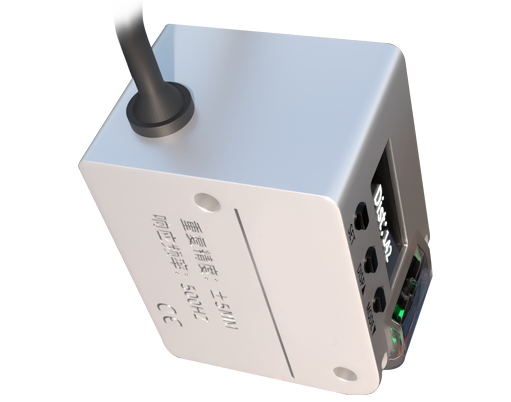
When selecting a multi-axis laser sensor, engineers must consider key specifications including measurement range, resolution, scanning speed, and environmental ratings. A typical high-end sensor might offer a Z-axis resolution of 1 micron, with scanning speeds exceeding 10,000 profiles per second, suitable for high-speed production lines. The field of view (FOV) and working distance are also critical; larger FOVs enable inspection of bigger parts without sensor repositioning, while compact sensor designs allow integration into confined spaces. Additionally, robustness against vibration, dust, and temperature fluctuations—often meeting IP67 protection standards—is essential for longevity in demanding applications like metal machining or outdoor logistics.
Looking ahead, the convergence of multi-axis laser sensing with artificial intelligence and edge computing is set to redefine precision measurement. AI-enhanced sensors can autonomously classify defects, learn from historical data to predict measurement drift, and adapt to new product variants without extensive reprogramming. As industries push toward zero-defect manufacturing and customized production, the role of these sensors will only expand, offering not just data collection but actionable insights for continuous process optimization. By delivering sub-micron accuracy across multiple dimensions, multi-axis laser sensors are truly bridging the gap between physical objects and digital twins, driving efficiency and innovation in the smart factory era.
