In the rapidly evolving landscape of industrial automation and precision measurement, vision-based laser ranging sensors have emerged as a cornerstone technology. These sophisticated devices combine the principles of optical triangulation, laser projection, and advanced image processing to deliver non-contact, high-accuracy distance and profile measurements. Unlike simple proximity sensors, they provide rich dimensional data, making them indispensable for tasks requiring detailed inspection, guidance, or quality control.
The core operating principle is elegantly straightforward yet powerful. A precisely focused laser line or dot is projected onto the target object's surface. A high-resolution CMOS or CCD camera, positioned at a known angle relative to the laser emitter, captures the image of this laser pattern. When the target's distance changes, the position of the laser line or dot shifts on the camera's sensor plane. Using the fixed geometric relationship between the laser, the camera, and a calibrated reference plane—a method known as triangulation—the sensor's onboard processor calculates the exact distance or height profile with remarkable speed and precision. Advanced models utilize specialized algorithms to filter ambient light, compensate for surface reflectivity variations, and handle challenging materials.
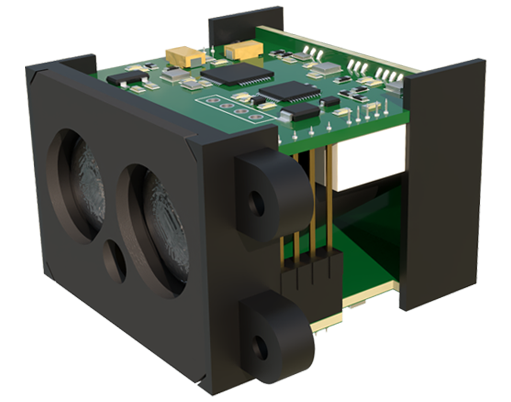
The applications for these sensors span virtually every sector of modern manufacturing and beyond. In automotive assembly, they are deployed for precise gap and flush measurement between body panels, ensuring perfect fit and finish. In electronics manufacturing, they verify component coplanarity, solder paste volume, and PCB warpage. Robotics heavily relies on them for accurate bin-picking, providing 3D guidance for arms to locate and grasp randomly oriented parts. In logistics, they measure parcel dimensions for automated sorting and volumetric pricing. Furthermore, they are critical in roll diameter monitoring in web processes, tire tread inspection, and even in civil engineering for structural deformation monitoring.
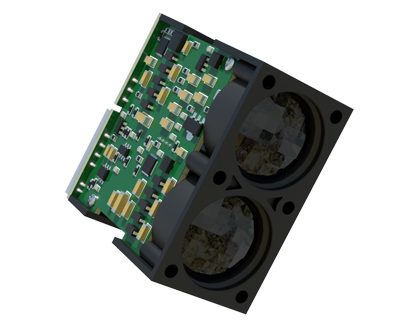
Selecting the right vision-based laser sensor requires careful consideration of several key parameters. Measurement Range and Standoff Distance: This defines the working envelope. Choosing a sensor with an appropriate range for the application prevents issues with insufficient field of view or unnecessary cost. Resolution and Accuracy: Resolution is the smallest detectable change, while accuracy is the deviation from the true value. High-precision tasks like semiconductor inspection demand sub-micron resolution, while warehouse dimensioning may only need millimeter-level accuracy. Scanning Rate or Measurement Frequency: For high-speed production lines or moving targets, a high sampling rate (often in kHz) is essential to capture data without motion blur. Laser Class and Wavelength: Class 2 (visible red, e.g., 650nm) lasers are common and eye-safe under normal operating conditions. Class 1 is inherently safe. Blue lasers (e.g., 405nm) offer better performance on shiny or organic surfaces. Environmental Robustness: Industrial settings demand sensors with high IP ratings (e.g., IP67) for dust and water resistance, robust housing to withstand vibration, and stable performance across a wide temperature range. Outputs and Integration: Common interfaces include analog voltage/current, Ethernet (EtherNet/IP, PROFINET), RS-232, and digital I/O. Seamless integration with PLCs, PCs, or robotic controllers is crucial.
When integrating these sensors, engineers must also account for practical factors. The target surface's color, texture, and material significantly affect performance; highly reflective or dark, absorptive surfaces may require special settings or sensor models with automatic exposure control. Ambient light interference should be minimized, though modern sensors feature strong optical filtering. Proper mechanical mounting to avoid vibration and thermal drift is vital for long-term stability. Regular calibration against known standards maintains measurement integrity.
Looking ahead, the convergence of vision-based laser ranging with artificial intelligence and machine learning is unlocking new frontiers. AI algorithms can now interpret complex point cloud data for defect classification beyond simple dimensional checks, enabling predictive maintenance and adaptive process control. Furthermore, the miniaturization and cost reduction of components are making high-performance 3D laser profiling accessible to a broader range of applications, from agile mobile robots to consumer electronics assembly.
In conclusion, vision-based laser ranging sensors represent a critical fusion of optics, electronics, and software. For the industrial engineer, a deep understanding of their operating principles, a clear analysis of application requirements, and a meticulous selection process are the keys to leveraging their full potential. By implementing the correct sensor, manufacturers can achieve unprecedented levels of quality, efficiency, and automation, driving innovation and competitiveness in an increasingly demanding global market.