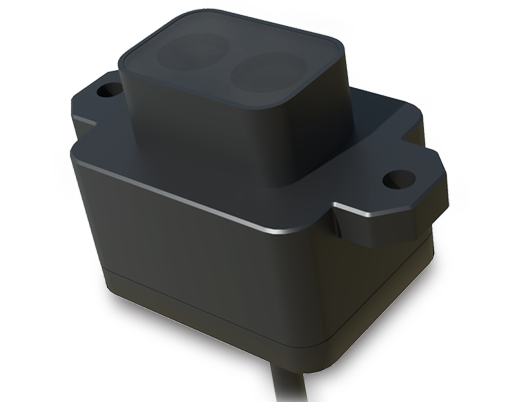
Linear laser sensors represent a critical advancement in precision measurement technology, widely adopted across manufacturing, automation, and quality control sectors. These devices utilize laser triangulation principles to deliver high-accuracy, non-contact measurements of displacement, thickness, and profile dimensions. By emitting a focused laser beam onto a target surface and analyzing the reflected light via a CMOS or CCD detector, linear laser sensors achieve micron-level resolution, making them indispensable for applications requiring stringent tolerances.
The operational mechanism of linear laser sensors hinges on optical triangulation. A laser diode projects a visible or infrared beam onto the measurement object. The scattered light from the surface is captured by a receiver lens and focused onto a photodetector array. As the target distance changes, the position of the light spot shifts on the detector. This displacement is processed through embedded algorithms to calculate precise dimensional data. Advanced models incorporate environmental compensation features to mitigate interference from ambient light, temperature fluctuations, or surface reflectivity variations, ensuring reliable performance in harsh industrial settings.
Key advantages of linear laser sensors include their non-invasive nature, which prevents damage to delicate materials, and rapid response times—often in the microsecond range—enabling real-time monitoring in high-speed production lines. Industries such as automotive, electronics, and aerospace leverage these sensors for tasks like weld seam inspection, component alignment, and thickness verification of coatings or films. For instance, in automotive assembly, linear laser sensors verify gap dimensions between body panels, while in semiconductor manufacturing, they monitor wafer flatness during lithography processes.
When selecting a linear laser sensor, engineers must consider parameters like measurement range, resolution, linearity error, and output interfaces (e.g., analog voltage, digital protocols such as IO-Link or Ethernet/IP). Modern sensors often integrate smart functionalities, including self-diagnostics, data logging, and connectivity to Industrial Internet of Things (IIoT) platforms for predictive maintenance. Installation best practices involve calibrating the sensor perpendicular to the target surface, minimizing vibrational interference, and using protective housings in dusty or humid environments to extend service life.

Despite their robustness, linear laser sensors face limitations with highly reflective or transparent surfaces, which can scatter or transmit excessive light, leading to measurement inaccuracies. Solutions include applying matte coatings to targets or using sensors with adjustable exposure settings. Ongoing innovations focus on multi-axis scanning, enhanced signal processing for noisy environments, and miniaturization for compact robotic systems. As Industry 4.0 evolves, linear laser sensors are increasingly integrated with machine vision and AI-driven analytics to enable adaptive manufacturing, reducing waste and optimizing productivity.
In summary, linear laser sensors offer unparalleled precision for dimensional metrology, driving efficiency and quality in modern industrial operations. Their versatility and continuous technological refinement position them as foundational tools in the transition toward fully automated, data-centric production ecosystems. By understanding their principles and applications, engineers can deploy these sensors effectively to solve complex measurement challenges and support sustainable industrial growth.