In the realm of industrial automation and precision measurement, laser position sensors have emerged as a cornerstone technology. These sophisticated devices offer unparalleled accuracy, speed, and reliability for non-contact measurement and positioning tasks. This article delves into the fundamental principles, diverse applications, and key considerations for selecting the right laser position sensor for your specific needs.
At its core, a laser position sensor operates by projecting a focused beam of coherent light onto a target surface. The sensor then detects the reflected or scattered light using a high-resolution optical receiver, typically a Position Sensitive Detector (PSD) or a Charge-Coupled Device (CCD) array. By analyzing the position of the light spot on the receiver, the sensor calculates the precise distance or displacement of the target with micron-level resolution. The most common measurement principles include triangulation, time-of-flight (ToF), and confocal chromatic sensing, each suited for different ranges, surface types, and environmental conditions.
The applications for laser position sensors are vast and span numerous industries. In automotive manufacturing, they are indispensable for tasks such as body-in-white gap and flush measurement, robotic guidance for welding and assembly, and inspection of critical component dimensions. The electronics industry relies on them for PCB warpage detection, solder paste inspection, and precise placement of micro-components. In semiconductor fabrication, these sensors ensure wafer flatness and alignment with nanometer precision. Furthermore, they play vital roles in logistics for parcel dimensioning, in aerospace for composite material inspection, and in general machinery for vibration analysis and thickness measurement of materials like glass, metal, and plastic.
When selecting a laser position sensor, several critical parameters must be evaluated to ensure optimal performance. Measurement range and standoff distance define the operational window. Resolution and linearity determine the smallest detectable change and the accuracy across the entire range, respectively. The spot size influences the sensor's ability to measure small features or rough surfaces. Sampling speed, or response time, is crucial for high-speed production lines. Environmental factors such as ambient light, temperature fluctuations, and the presence of dust or coolant must be considered; many industrial-grade sensors feature robust housings (IP67 ratings are common) and specialized filters to mitigate interference. The target surface's properties—its color, material, reflectivity, and texture—significantly impact the signal strength and measurement stability. For dark or highly reflective surfaces, sensors with automatic gain control or specialized models with blue lasers (which are less absorbed by dark materials) may be necessary.

Integration is another key aspect. Modern laser sensors offer various output options, including analog (4-20 mA, 0-10 V), digital (RS-422, Ethernet/IP, PROFINET), and discrete I/O for easy connection to PLCs and control systems. User-friendly software often accompanies these devices, enabling easy configuration, data logging, and advanced diagnostics.
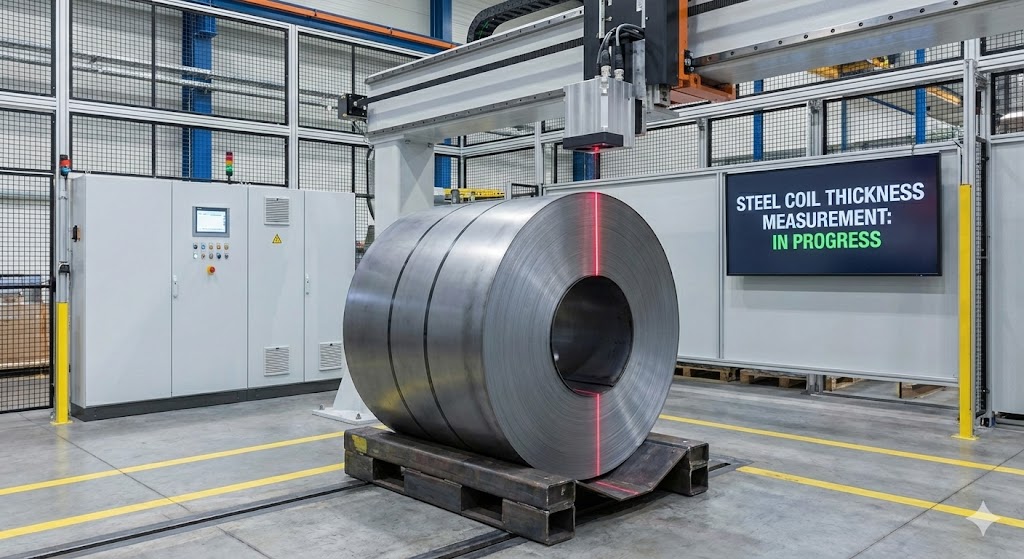
Looking ahead, advancements in laser diode technology, embedded processing power, and intelligent algorithms are pushing the boundaries. Features like multi-point measurement, profile scanning, and integrated edge detection are becoming more common, transforming simple distance sensors into versatile multi-purpose measurement tools. The integration with Industrial Internet of Things (IIoT) platforms allows for predictive maintenance and real-time process optimization, further enhancing their value in smart factory environments.
In conclusion, laser position sensors are powerful instruments that deliver the precision demanded by today's advanced manufacturing and quality control processes. A thorough understanding of their operating principles, coupled with a careful analysis of the application requirements—target characteristics, environmental conditions, and performance specs—is essential for a successful implementation. By choosing the appropriate sensor technology and ensuring proper setup, engineers can achieve significant improvements in productivity, quality, and operational efficiency.