In the realm of industrial automation and control systems, the 110V proximity sensor stands as a critical component for non-contact object detection. Operating on a 110V AC power supply, commonly found in North American industrial facilities, these sensors offer robust performance in demanding environments. Unlike mechanical limit switches, proximity sensors detect the presence or absence of metallic or non-metallic objects without physical contact, thereby eliminating mechanical wear and tear and significantly enhancing system reliability and longevity.
The fundamental principle behind an inductive proximity sensor, the most common type for metal detection, is electromagnetic induction. The sensor's oscillator generates a high-frequency electromagnetic field from its active face. When a metallic target enters this field, eddy currents are induced on the target's surface. This causes a change in the oscillation amplitude, which is detected by the sensor's threshold circuit, subsequently triggering a solid-state output switch. For detecting non-metallic materials like plastics, wood, or liquids, capacitive proximity sensors are employed, which measure changes in capacitance.
Choosing a 110V AC proximity sensor brings several advantages. The primary benefit is direct compatibility with standard 110V AC line voltage, simplifying installation by often eliminating the need for a separate power supply or voltage converter. These sensors are designed for high durability, typically featuring robust housings made of nickel-plated brass, stainless steel, or PBT plastic, offering excellent resistance to shock, vibration, and harsh industrial contaminants like coolants and metal chips. Their solid-state switching ensures a high number of operating cycles with fast response times, crucial for high-speed production lines.
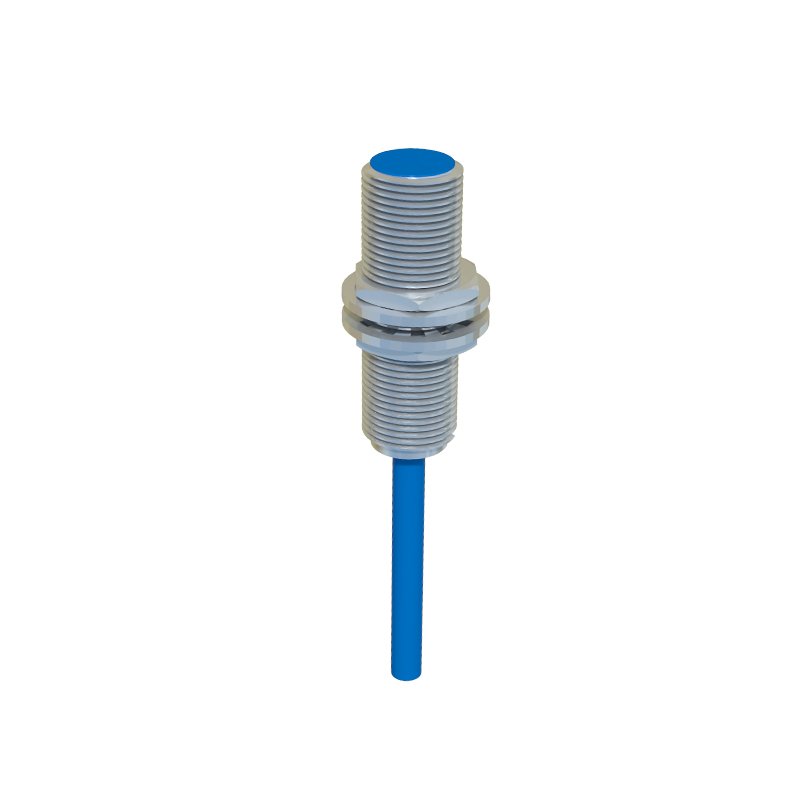
Key specifications to consider when selecting a 110V proximity sensor include sensing distance, output type, and housing style. The nominal sensing distance, or "Sn," is specified for a standard target. It is vital to derate this distance for different metals or in real-world conditions. Output types are generally categorized as Normally Open (NO) or Normally Closed (NC). The load, often a programmable logic controller (PLC) input, relay, or contactor coil, is connected in series with the output. Common housing styles include cylindrical barrels (e.g., M12, M18, M30 threads) and rectangular or block-style designs for specialized mounting.
Installation and wiring require careful attention. Proper mounting is essential to prevent false triggering. Maintaining a minimum distance between sensors and ensuring a sufficient clearance from surrounding metal (the "mounting flush" condition) are standard practices. For 2-wire AC sensors, wiring is straightforward: one wire connects to the line voltage (110V AC), and the other wire connects to the load, which then returns to the neutral line. A 3-wire AC sensor provides separate wires for power (L1/L+), neutral (L2/L-), and the switched output, offering more design flexibility. Always consult the manufacturer's datasheet for precise wiring diagrams and ensure compliance with local electrical codes.
Typical applications for 110V AC proximity sensors are vast across manufacturing. They are used for part presence verification on conveyor lines, end-of-travel detection on actuators and cylinders, rotary speed monitoring by detecting gear teeth or keyways, and liquid level control in tanks. In metal machining centers, they serve as tool breakage detectors or workpiece position confirmers.
Maintenance is generally minimal due to the non-contact nature. However, periodic checks are recommended. The sensing face should be kept clean from oil, dust, or debris buildup that could attenuate the sensing field. Regularly verify the mechanical mounting for tightness, as vibration can loosen fixtures. Troubleshooting often involves checking the power supply with a multimeter, verifying the output state with a pilot light or meter, and ensuring the target is within the effective sensing range and meets the material specifications.
In conclusion, the 110V proximity sensor is a workhorse of industrial sensing. Its direct AC operation, combined with non-contact reliability, makes it an indispensable tool for engineers and technicians designing and maintaining automated systems. A thorough understanding of its operating principles, specifications, and application guidelines is key to leveraging its full potential for creating efficient, safe, and reliable control solutions.