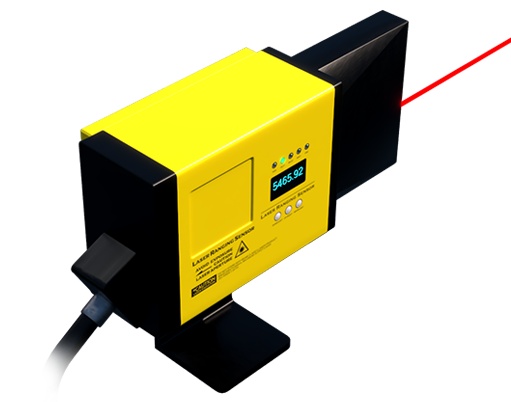
In modern industrial automation and robotics, precision material handling is paramount. Laser following plate sensors represent a critical innovation in this domain, enabling machines to accurately detect, track, and process sheet materials such as metal, glass, wood, and composites. Unlike traditional contact or proximity sensors, these advanced systems utilize non-contact laser measurement principles to provide real-time, high-accuracy data on the position, edges, and contours of moving plates.
The core technology hinges on a laser emitter and a high-speed receiver. The emitter projects a focused laser line or dot onto the target plate's surface. As the plate moves—often on a conveyor or under a robotic arm—the reflected light pattern is captured by the receiver. Sophisticated onboard processors analyze this optical data. By calculating the triangulation between the emitter, the reflection point, and the receiver, the sensor determines the exact distance to the plate's surface and detects its leading or trailing edge with micron-level precision. This continuous stream of positional feedback is communicated to a central control system, typically a PLC or robotic controller, which dynamically adjusts the machinery's actions.
Key advantages of laser following sensors are numerous. Their non-contact nature eliminates wear and tear, ensuring long-term reliability and avoiding damage to sensitive material surfaces. They operate effectively regardless of environmental factors like dust, oil mist, or varying ambient light, thanks to the coherent nature of laser light. The high response speed and resolution allow for seamless integration into high-throughput production lines, such as those in automotive stamping, shipbuilding, or appliance manufacturing. For instance, in a CNC cutting line, the sensor can precisely track the plate's movement, ensuring the cutting head follows the correct path even if the plate shifts slightly on the conveyor. This eliminates material waste and boosts overall equipment effectiveness (OEE).

Integration into automated systems is streamlined through standard industrial communication protocols like IO-Link, PROFINET, or EtherNet/IP. This allows for easy parameter setting, diagnostic monitoring, and data exchange. Modern sensors often feature teach-in functions, where an operator simply presents the plate to the sensor once to calibrate it for that specific material's reflectivity and thickness. Adaptive algorithms can even compensate for challenges like highly reflective stainless steel or dark, absorbent surfaces.
Looking forward, the convergence of laser sensing with AI and machine vision is paving the way for even smarter systems. Future iterations may not only follow a plate's edge but also identify surface defects, measure thickness variations, or classify material types on the fly. This evolution will further enhance quality control and enable more flexible, adaptive manufacturing cells. In conclusion, laser following plate sensors are indispensable components in the push towards Industry 4.0, providing the precise, reliable sensory input needed for efficient, automated, and intelligent material processing.