In modern industrial automation and precision engineering, the demand for accurate, reliable, and non-contact measurement has never been higher. Among the suite of technologies addressing this need, the proximity spacer sensor stands out as a critical component. This sophisticated device is engineered to detect the presence, absence, or precise distance of a target object without any physical contact, operating on principles that ensure longevity and minimal maintenance in demanding environments.
At its core, a proximity spacer sensor functions by emitting an electromagnetic field or a beam of electromagnetic radiation, typically infrared light. The sensor then monitors for changes in the field or the return signal. When a target object enters this predefined sensing range or "spacer" zone, it causes a detectable alteration—such as a change in capacitance, inductance, or the reflection pattern of light. This change is converted by the sensor's internal circuitry into a clear electrical signal, usually a switch closure or an analog voltage/current output proportional to the distance. This fundamental operation allows for precise gap or "spacer" control between components, which is where the technology derives a significant part of its utility and name.
The advantages of using proximity spacer sensors are manifold. Their non-contact nature eliminates mechanical wear and tear, leading to exceptional reliability and a long operational life. They are capable of high-speed response, detecting objects or measuring distances in milliseconds, which is essential for fast-paced production lines. Furthermore, they are largely unaffected by surface conditions of the target, such as color or texture (depending on the type), and can operate effectively in environments contaminated with oil, dust, or moisture, provided they have appropriate ingress protection ratings. This robustness makes them indispensable in harsh industrial settings.
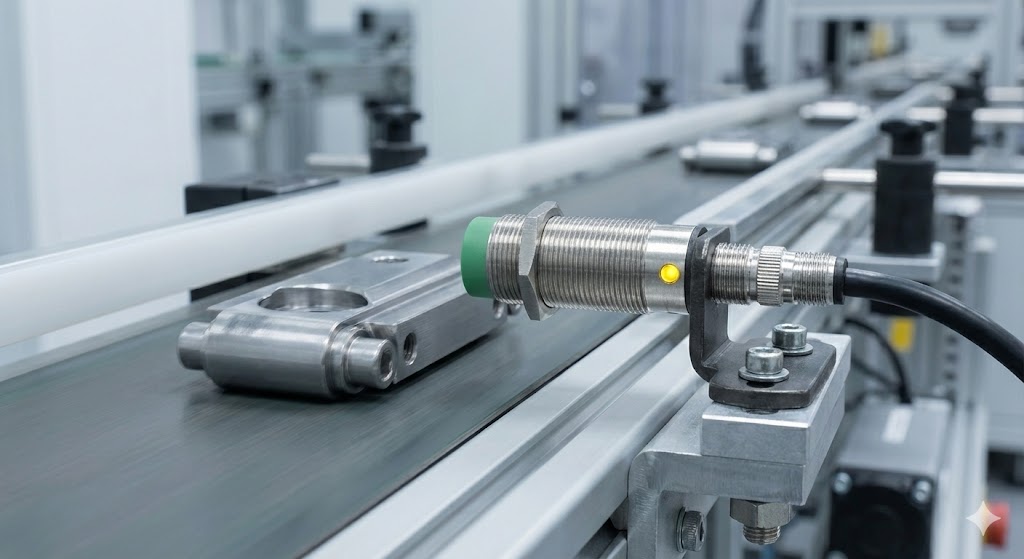
Several primary types of proximity spacer sensors dominate the market, each suited to specific applications. Inductive proximity sensors are the workhorses for detecting metallic objects. They generate an oscillating electromagnetic field, and the presence of a metal target induces eddy currents, damping the oscillation and triggering the output. These are ideal for position sensing of machine parts, limit switching, and counting metal objects on conveyors. Capacitive proximity sensors, on the other hand, can detect both metallic and non-metallic materials like plastics, wood, liquids, and granules. They sense changes in the capacitance formed between the sensor and the target. This makes them perfect for level detection in tanks, material handling, and presence detection of packaged goods. Finally, photoelectric sensors use light beams. A through-beam type has separate emitter and receiver units, detecting an object when it breaks the beam. A retro-reflective type uses a reflector, and a diffuse (proximity) type detects light reflected directly from the target itself. These excel in long-range detection, small object sensing, and clean environments.
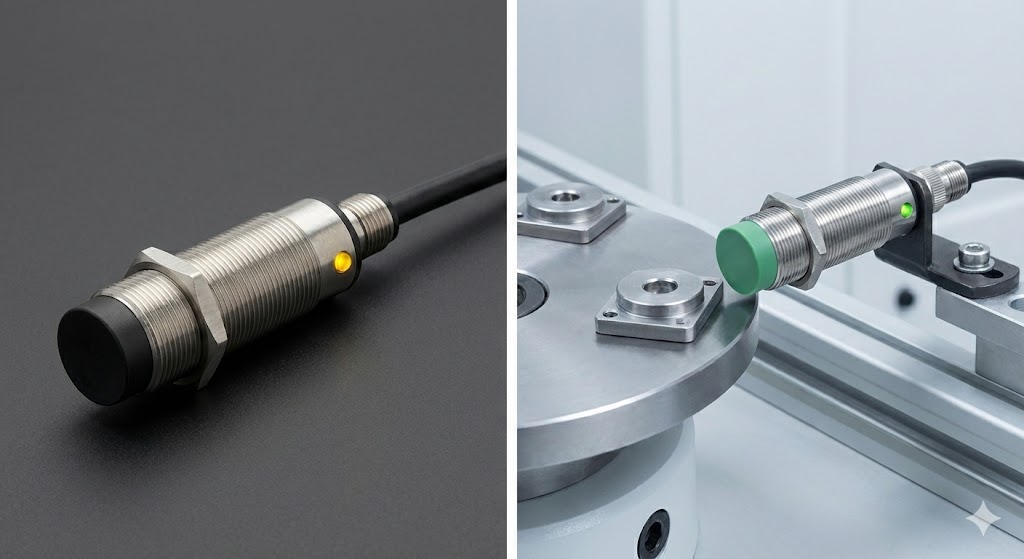
The applications of proximity spacer sensors span virtually every industry. In automotive manufacturing, they ensure robotic arms maintain precise distances for welding and assembly, and they verify the presence of components like pistons or gears. In the packaging industry, they count bottles, detect labels, and control fill levels. On semiconductor production lines, they provide the micron-level precision required for wafer handling and lithography. In material handling and logistics, they prevent collisions in automated guided vehicles (AGVs) and manage warehouse inventory systems. Even in consumer electronics, miniaturized versions are found in devices for features like automatic screen dimming.
Selecting the right proximity spacer sensor requires careful consideration of several parameters. The sensing range, or the maximum distance at which the sensor can reliably detect a standard target, is paramount. The target material dictates the choice between inductive, capacitive, or photoelectric types. Environmental factors like temperature extremes, potential chemical exposure, and electrical noise must be accounted for. The output type—discrete (PNP/NPN) or analog (4-20mA, 0-10V)—must be compatible with the programmable logic controller (PLC) or other control system. Physical size and mounting style are also crucial for integration into existing machinery.
Looking ahead, the evolution of proximity spacer sensor technology is geared towards greater intelligence and integration. Modern sensors increasingly feature IO-Link communication, a point-to-point serial connection that allows for detailed parameter setting, real-time diagnostics, and process data reporting, enabling predictive maintenance and Industry 4.0 connectivity. Miniaturization continues, allowing sensors to fit into tighter spaces without sacrificing performance. Furthermore, enhanced sensing capabilities, such as increased immunity to environmental interference and the ability to handle more challenging target materials, are constant areas of development.
In conclusion, the proximity spacer sensor is a foundational pillar of industrial automation. Its ability to provide accurate, non-contact detection and measurement solves countless challenges in manufacturing, packaging, and beyond. By understanding its operating principles, types, and application criteria, engineers and technicians can effectively harness this technology to improve efficiency, ensure quality, and drive innovation in an increasingly automated world.