In the realm of industrial automation and precision measurement, displacement sensors play a critical role in ensuring accuracy and reliability across various applications. These sensors, which measure the distance between the sensor and a target object, are integral to systems requiring high-precision positioning, vibration analysis, and dimensional inspection. To guarantee traceability, durability, and clear identification, marking these sensitive components with permanent, high-resolution codes or logos is essential. This is where the displacement sensor laser marking machine comes into play, offering a non-contact, high-precision solution tailored for the electrical and instrumentation industry.
A displacement sensor laser marking machine utilizes a focused laser beam to alter the surface of the sensor housing or a designated marking area. The process, known as laser engraving or annealing, creates permanent marks without inducing mechanical stress or thermal damage to the internal delicate components. Common laser sources for this application include fiber lasers and UV lasers. Fiber lasers, typically operating at wavelengths around 1064 nm, are highly effective for marking metals like stainless steel or aluminum commonly used in sensor casings. They produce high-contrast, wear-resistant marks. For sensors with plastic components or those requiring ultra-fine marking with minimal heat impact, UV lasers (with wavelengths around 355 nm) are preferred due to their "cold" processing capabilities.

The advantages of using a laser marking system for displacement sensors are manifold. First and foremost is permanence. Laser marks are resistant to abrasion, corrosion, and fading, ensuring that serial numbers, QR codes, barcodes, or calibration data remain legible throughout the sensor's operational life, even in harsh industrial environments. This is crucial for maintenance, quality control, and compliance with industry standards. Secondly, precision is unparalleled. Laser systems can achieve marking resolutions down to micrometers, allowing for the creation of extremely small, detailed graphics and alphanumeric characters on limited space. This is vital for miniaturized sensors. Thirdly, the non-contact process eliminates tool wear and prevents any physical force from being applied to the sensor, safeguarding its internal mechanics and electronics. Finally, flexibility and speed are key benefits. Modern laser markers are integrated with computer-controlled galvanometer systems, enabling rapid marking of variable data directly from a database (like unique serial numbers) and easy design changes through software, making them ideal for high-mix, low-volume or mass production lines.
Typical applications within the electrical and sensor industry include marking serial numbers and model information on LVDT (Linear Variable Differential Transformer) sensors, capacitive and inductive proximity sensors, and laser triangulation sensors. 2D Data Matrix codes are increasingly marked to store comprehensive manufacturing data, facilitating full traceability throughout the supply chain. Brand logos and safety symbols are also commonly applied to enhance product identification.
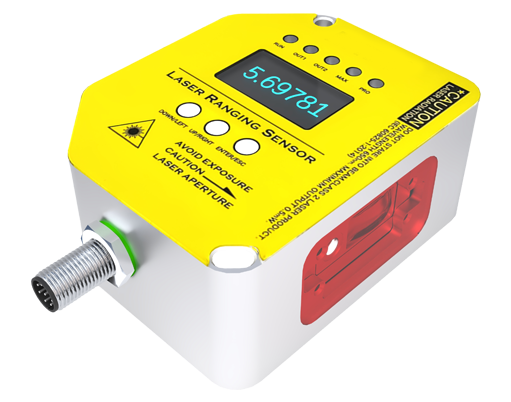
Selecting the right displacement sensor laser marking machine requires careful consideration of several factors. The material composition of the sensor housing is primary; the laser wavelength must be compatible to ensure high-contrast, clean marks. The required mark quality (depth, contrast, fineness) dictates the laser power and type. Integration needs are also critical: will the marker be a standalone unit or integrated into an automated production line? For in-line integration, considerations for conveyor systems, part positioning fixtures, and communication protocols (like Ethernet/IP) are necessary. Software capabilities should not be overlooked; user-friendly software that supports various file formats (DXF, PLT, etc.) and connectivity to factory databases is essential for efficient operation. Lastly, compliance with safety standards (e.g., IEC 60825-1 for laser safety) and the availability of appropriate enclosures or fume extraction systems are mandatory for a safe working environment.
In conclusion, the displacement sensor laser marking machine represents a sophisticated fusion of laser technology and industrial marking requirements. It provides a reliable, precise, and flexible method for permanently identifying critical measurement components. By ensuring lasting traceability and upholding brand quality through clear marking, this technology supports the integrity and efficiency of modern automated systems. For engineers and procurement specialists, understanding the technical specifications and application fit of these laser systems is key to implementing a solution that enhances product value and manufacturing workflow.
