In the realm of industrial automation, proximity sensors play a pivotal role in enabling non-contact detection, enhancing efficiency, and ensuring operational safety. Among the diverse range of sensors available, the WS-F210G-2 stands out as a robust and reliable inductive proximity sensor designed for demanding environments. This article delves into the technical specifications, operational principles, and typical applications of the WS-F210G-2, providing a comprehensive guide for engineers and technicians.
The WS-F210G-2 is an inductive-type proximity sensor, which operates on the principle of electromagnetic induction. It generates an oscillating electromagnetic field from its sensing face. When a metallic object enters this field, eddy currents are induced in the object, causing a change in the oscillation amplitude. The sensor's internal circuit detects this change and triggers a switching output. This non-contact method of detection eliminates mechanical wear, offering a significantly longer operational lifespan compared to mechanical limit switches. A key feature of the WS-F210G-2 is its 2-wire DC configuration, which simplifies installation by reducing wiring complexity. It is designed to be directly connected in series with the load, typically interfacing with PLC (Programmable Logic Controller) input modules or relay coils.
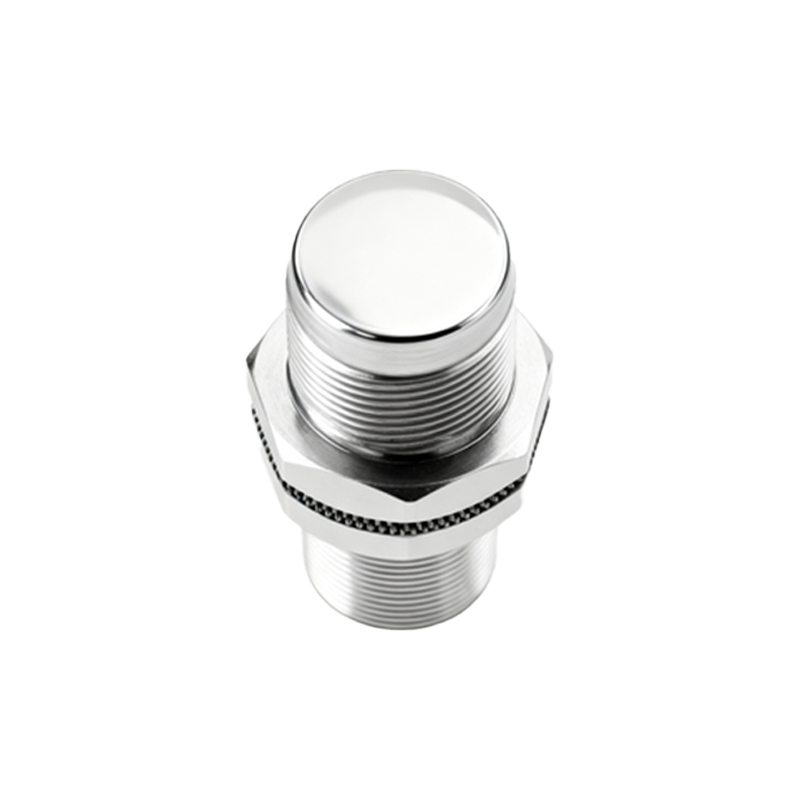
Key technical parameters define the performance envelope of the WS-F210G-2. It typically operates on a DC supply voltage ranging from 10 to 30 VDC. The sensing distance, a critical specification, is standardized at 10mm for a standard mild steel target. It is crucial to note that this sensing distance can vary with different metals; for instance, the effective sensing range for non-ferrous metals like aluminum or copper is reduced, often requiring a correction factor. The sensor features a normally open (NO) output configuration. Its housing is constructed from nickel-plated brass, providing excellent resistance to corrosion, oils, and coolants commonly found in industrial settings. The sensing face is made of a durable plastic material (often PBT), protecting the internal coil. With a high switching frequency, it can detect rapidly moving objects, making it suitable for high-speed counting or positioning tasks. Furthermore, it boasts a high degree of ingress protection, typically rated at IP67, ensuring reliable operation in dusty or wet conditions.
The application spectrum of the WS-F210G-2 is vast within factory automation. A primary use is in position detection. It is extensively used to confirm the presence or absence of metal parts on conveyor lines, verify the end position of cylinders in pneumatic systems, or detect the open/closed status of metal doors or guards. In machine tools, these sensors are indispensable for tool positioning, workpiece detection, and monitoring turret index positions. Their robustness makes them ideal for harsh environments like welding lines, where they can detect metal fixtures or parts without physical contact, immune to spatter when properly shielded. Another common application is in rotary speed monitoring or counting, where they detect passing teeth on a gear or metal flags on a rotating shaft.
For optimal performance and longevity, correct installation and maintenance are paramount. The sensor should be mounted securely to minimize vibration. It is essential to maintain the specified sensing distance and consider the reduction factor for non-standard targets. A common pitfall is the failure to account for the sensor's residual current or leakage current in the "off" state, which can sometimes be sufficient to keep a PLC input slightly active. Using a bypass resistor, as recommended in the datasheet, often mitigates this issue. When wiring the 2-wire DC sensor, polarity must be observed; incorrect connection can damage the device. Regular cleaning of the sensing face from accumulated metallic dust or debris is necessary to prevent false triggering or a reduction in sensing range.
In comparison to other sensor types, such as capacitive or ultrasonic sensors, the inductive WS-F210G-2 is exclusively for metal detection, offering high precision and immunity to most non-metallic environmental influences. Its 2-wire design offers a cost-effective and simple solution, though 3-wire versions provide separate power and signal paths for more complex control scenarios. When selecting a sensor for a specific task, engineers must weigh factors like target material, required sensing distance, environmental conditions, electrical interface, and response speed. The WS-F210G-2, with its balanced performance, durability, and ease of use, consistently proves to be a versatile and dependable choice for a multitude of industrial metal detection challenges, contributing to smarter, safer, and more productive automated systems.