Proximity sensors are indispensable components in modern industrial automation, robotics, and safety systems. These non-contact sensors detect the presence or absence of objects within their sensing range, providing critical data for control and monitoring. Understanding the various detection methods is essential for selecting the right sensor for a specific application. This guide delves into the core detection technologies, their operational principles, advantages, and typical use cases.
The most prevalent detection method is based on electromagnetic induction, commonly used in inductive proximity sensors. These sensors generate an oscillating electromagnetic field from a coil. When a metallic object enters this field, eddy currents are induced on the object's surface, causing a change in the oscillation amplitude or frequency. This change is detected by the sensor's circuitry, triggering an output signal. Inductive sensors are highly reliable for detecting ferrous and non-ferrous metals, offering excellent repeatability and resistance to environmental factors like dust, oil, and moisture. They are widely used in metal detection tasks on assembly lines, machine tools, and automotive manufacturing.
Another fundamental technology is capacitive sensing. Capacitive proximity sensors generate an electrostatic field. Any object, metallic or non-metallic, that enters this field alters the capacitance between the sensor's electrodes. This capacitance change is measured and converted into a switching output. The key advantage of capacitive sensors is their ability to detect a vast range of materials, including liquids, plastics, glass, and wood. This makes them ideal for level detection in tanks, material handling of non-metals, and presence detection of packaged goods. However, they can be more susceptible to environmental changes like humidity.
For longer-range detection and applications requiring precise positioning, photoelectric sensors are the preferred choice. They operate by emitting a beam of light (visible red, infrared, or laser) and detecting its reflection. There are three main configurations: through-beam, retro-reflective, and diffuse reflective. Through-beam models have a separate emitter and receiver; an object is detected when it interrupts the beam. They offer the longest sensing ranges and highest reliability. Retro-reflective types use a reflector to bounce the light back to a combined emitter/receiver unit. Diffuse reflective sensors detect light reflected directly off the target object itself, making them simpler to install but with a shorter range. Photoelectric sensors are versatile for detecting objects of various colors, shapes, and materials over distances from a few centimeters to several meters.
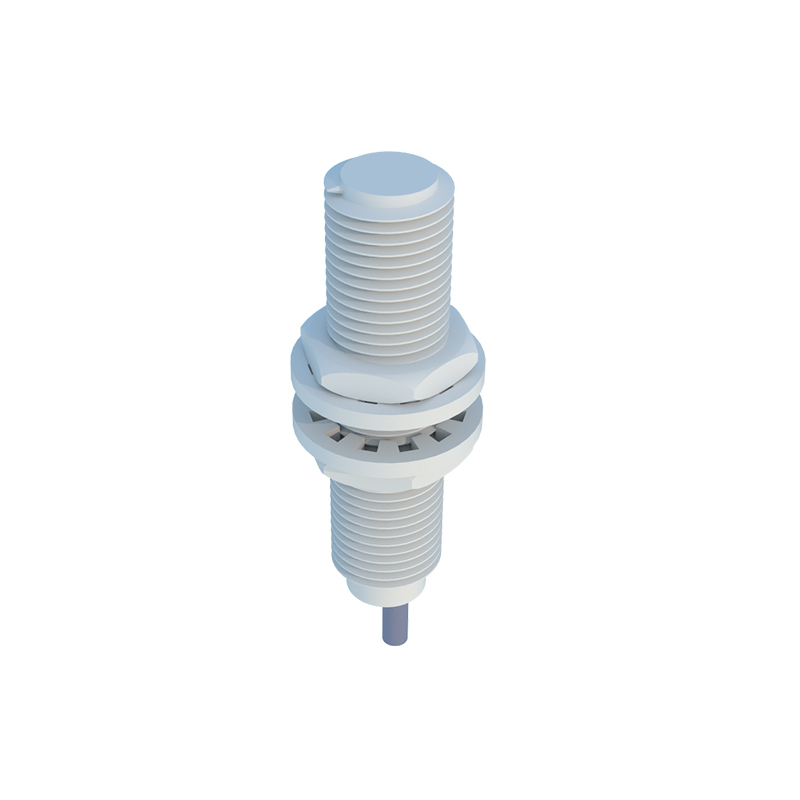
Ultrasonic proximity sensors utilize sound waves beyond the human hearing range. They emit high-frequency ultrasonic pulses and measure the time it takes for the echo to return from a target object. The time-of-flight principle allows them to measure both presence and distance. Ultrasonic sensors are excellent for detecting objects regardless of color, transparency, or material, and they perform well in challenging environments with dust, smoke, or vapors. Common applications include liquid level control, loop control, and collision avoidance in automated guided vehicles (AGVs).
A specialized category is magnetic proximity sensors, often referred to as reed switches or Hall-effect sensors. They detect the presence of a permanent magnet. Reed switches use ferromagnetic reeds that contact each other when influenced by a magnetic field. Hall-effect sensors produce a voltage change when exposed to a magnetic field. These sensors are used in applications where only a magnetic field should trigger the detection, such as in cylinder position sensing, door/window security systems, and speed sensing.
Selecting the appropriate detection method requires careful analysis of the application parameters. Key factors include the target material (metal, plastic, liquid), required sensing distance, environmental conditions (temperature, contaminants), required output type (digital, analog), response speed, and installation constraints. For instance, an inductive sensor is unsuitable for detecting plastic bottles, just as a capacitive sensor might false-trigger in a highly humid environment without proper shielding.
In conclusion, mastering the detection methods of proximity sensors—inductive, capacitive, photoelectric, ultrasonic, and magnetic—empowers engineers to design more efficient, reliable, and intelligent automated systems. Each technology has its unique domain of excellence. A thorough evaluation of the operational requirements against the sensor's specifications is the cornerstone of a successful implementation, ensuring optimal performance and longevity in the field.