In the high-precision world of modern manufacturing, machining centers represent the pinnacle of automated efficiency. At the heart of their flawless operation lies a network of critical sensing components, among which proximity switch sensors play an indispensable role. As an electrical engineer specializing in industrial automation, a deep understanding of these sensors is paramount for ensuring optimal machine performance, minimizing downtime, and enhancing safety protocols.
Proximity switches, fundamentally, are non-contact sensors designed to detect the presence or absence of a metallic target object without any physical contact. Within a machining center, they are strategically deployed for a multitude of positioning and detection tasks. Common applications include tool changer arm positioning, pallet shuttle verification, spindle orientation, axis limit and home position detection, door interlock safety, and coolant level monitoring. Their ability to function reliably in harsh environments filled with coolant mist, metal chips, and vibration is a key advantage over mechanical limit switches.
The operational principle is based on electromagnetic induction for inductive-type sensors, which are the most prevalent in machining environments. The sensor generates an oscillating electromagnetic field from its active face. When a ferrous or non-ferrous metallic target enters this field, it induces eddy currents, causing a change in the oscillation amplitude. This change is detected by the sensor's circuitry, which then triggers a solid-state switching output—typically a PNP (sourcing) or NPN (sinking) DC signal. This signal is fed directly into the machine's Programmable Logic Controller (PLC) or Numerical Control (NC) system, informing it of the target's status.
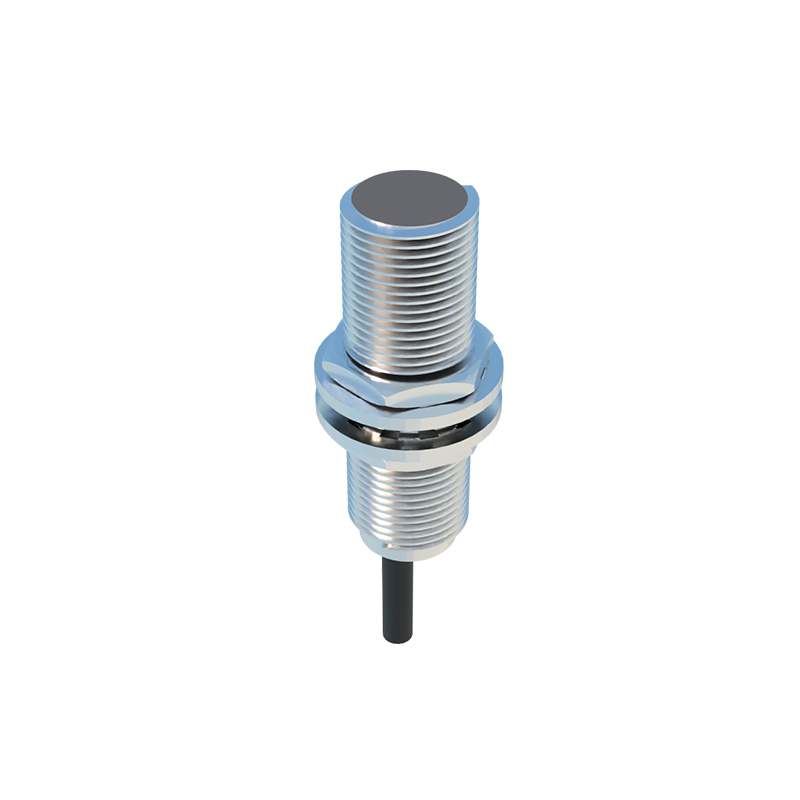
Key specifications electrical engineers must evaluate when selecting or troubleshooting these sensors include:
Sensing Distance: The nominal operating distance (Sn) specified by the manufacturer. It is crucial to account for factors like target material, size, and temperature, which can affect the effective sensing range.
Output Configuration: PNP vs. NNP and Normally Open (NO) vs. Normally Closed (NC) configurations must match the input card requirements of the control system.
Housing Material: Typically nickel-plated brass or stainless steel for robustness against physical impact and chemical corrosion from coolants.
Electrical Protection: Features like short-circuit protection, reverse polarity protection, and surge suppression are essential for longevity in electrically noisy industrial settings.
Switching Frequency: The maximum number of on/off cycles per second, critical for high-speed applications like spindle indexing.
Installation and maintenance are critical for reliability. Proper mounting, with adequate clearance from surrounding metal (as per manufacturer guidelines), prevents false triggering. Regular cleaning of the sensor face to remove accumulated metallic debris or oil film is a simple yet vital preventive maintenance task. Common failure modes include physical damage from tool crashes, degraded performance due to contamination, and electrical failures from voltage spikes or incorrect wiring.
The evolution of proximity sensors continues, with trends leaning towards miniaturization, increased sensing ranges, and the integration of IO-Link communication. IO-Link enabled sensors provide not just a simple switch signal but also diagnostic data like operating temperature, signal strength, and device identification, enabling predictive maintenance strategies. This aligns with the broader Industry 4.0 initiative, transforming the proximity switch from a simple binary device into a smart node in a connected factory ecosystem.
For the electrical engineer, proficiency with proximity switches extends beyond simple replacement. It involves systematic troubleshooting using a multimeter to check supply voltage and output status, interpreting ladder logic in the PLC to understand the sensor's role in the machine sequence, and strategically upgrading older sensors to newer, more reliable models with enhanced features. A methodical approach—verifying mechanical alignment, checking electrical connections, and then suspecting the sensor itself—saves valuable time during machine diagnostics.
In conclusion, proximity switch sensors are the silent sentinels of the machining center. Their reliable operation is foundational to the precision, speed, and safety of automated machining processes. A comprehensive grasp of their principles, selection criteria, application nuances, and integration with machine controls is a non-negotiable competency for any electrical engineer committed to excellence in the field of industrial automation and CNC machinery maintenance.