In the demanding world of industrial automation, process control, and machinery health monitoring, precise rotational speed measurement is a fundamental requirement. Traditional contact methods, such as mechanical or magnetic encoders, often fall short in applications involving high speeds, delicate surfaces, or hazardous environments. This is where High-Frequency Laser Tachometer Sensors emerge as a superior, non-contact solution, offering unparalleled accuracy, reliability, and versatility.
At its core, a laser tachometer operates on the principle of laser Doppler velocimetry or, more commonly for rotational speed, optical reflection sensing. The sensor emits a focused, coherent beam of laser light towards a rotating target. A key component is the application of reflective tape or a naturally contrasting mark on the target surface. Each time this reflective mark passes through the laser beam, it reflects a significantly higher intensity of light back to the sensor's photodetector compared to the non-reflective background. The sensor's internal electronics convert this periodic pulse of reflected light into a digital signal. By precisely measuring the frequency of these pulses—the number of reflections per unit of time—the sensor calculates the rotational speed, typically displayed in revolutions per minute (RPM) or Hertz (Hz). The "high-frequency" designation refers to the sensor's ability to detect extremely rapid pulse trains, enabling accurate measurement of very high rotational speeds, often exceeding 100,000 RPM, with exceptional resolution.
The advantages of employing high-frequency laser tachometers are substantial. Firstly, the non-contact nature eliminates issues like mechanical wear, slippage, and added load on the measured shaft, ensuring long-term stability and no interference with the system's operation. Secondly, they provide exceptional stand-off distances, allowing measurements from several meters away, which is crucial for safety in monitoring hot, electrically live, or otherwise inaccessible machinery. Thirdly, their measurement is independent of the material, capable of working on metals, plastics, ceramics, and even liquids, provided a suitable reflective mark can be applied. Finally, modern laser tachometers offer fast response times, making them ideal for monitoring transient conditions, startup sequences, and rapid speed fluctuations.
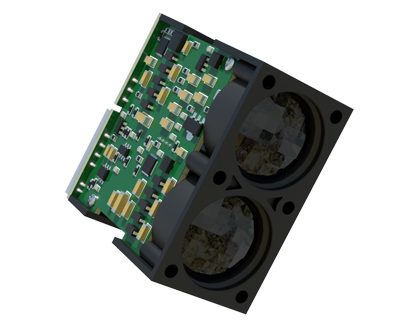
Industrial applications for these sensors are vast and critical. In manufacturing, they are indispensable for calibrating and monitoring CNC spindles, turbine engines, centrifuges, and high-speed conveyor systems. In the power generation sector, they monitor the speed of gas and steam turbines, ensuring operational safety and efficiency. Automotive and aerospace testing facilities rely on them for dynamometer testing, propeller speed measurement, and fan/blade vibration analysis. Furthermore, they are a vital tool for predictive maintenance programs, where trending rotational speed data can help identify imbalances, misalignments, or bearing wear before catastrophic failure occurs.
Selecting the appropriate high-frequency laser tachometer requires careful consideration of several parameters. Key specifications include Measurement Range, defining the minimum and maximum RPM the device can accurately detect. Resolution indicates the smallest speed change the sensor can discern. Stand-off Distance and Spot Size determine the optimal working range and the required target mark size; a smaller spot allows for smaller marks and higher spatial precision. Laser Class (typically Class II) is a critical safety specification, indicating the power output and necessary precautionary measures. Output Signals are also vital; common options include digital (TTL, HTL), analog (4-20 mA, 0-10 V), or serial interfaces (RS-485) for integration into PLCs, data loggers, or control systems. Environmental factors like ambient light immunity, operating temperature range, and housing protection rating (IP67 for dust and water resistance) must align with the installation conditions.

Installation and operational best practices significantly impact performance. Ensuring a clean, stable reflective mark with high contrast against the background is paramount. The mark size should be appropriate for the laser spot size and rotational speed. Avoiding vibrational movement of the sensor itself is crucial for maintaining a steady beam on target. Operators must also be mindful of laser safety, never pointing the beam at people's eyes and adhering to all local safety regulations.
In conclusion, high-frequency laser tachometer sensors represent a pinnacle of non-contact metrology for rotational speed. Their principle of optical reflection, combined with advanced signal processing, delivers precise, reliable, and safe measurements across a spectrum of challenging industrial environments. By understanding their operating principles, advantages, and key selection criteria, engineers and technicians can effectively leverage this technology to enhance process control, ensure machinery health, and drive operational excellence in an increasingly automated world. As industries push for higher speeds and greater precision, the role of these sophisticated sensors will only continue to expand.
