In the realm of industrial automation and control systems, proximity sensors are indispensable components. They detect the presence or absence of an object within a specific range without any physical contact, enabling precise, reliable, and wear-free operation. Understanding the different types of proximity sensors is crucial for selecting the right technology for a given application. This guide delves into the primary categories, their operating principles, typical uses, and key considerations.
The most common classification of proximity sensors is based on their underlying detection technology. The four fundamental types are Inductive, Capacitive, Ultrasonic, and Photoelectric sensors.
Inductive Proximity Sensors
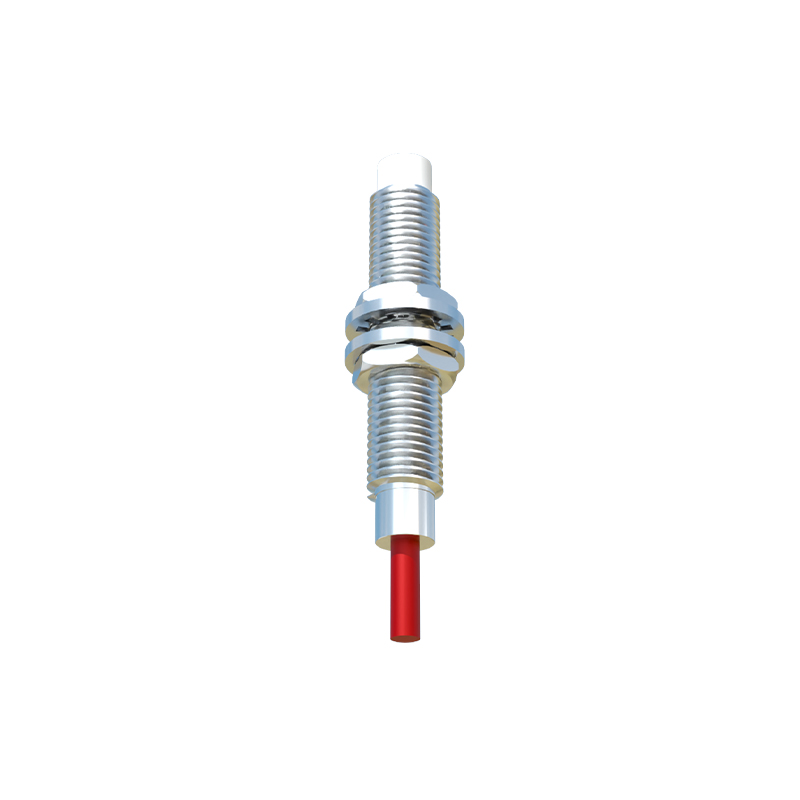
Inductive proximity sensors are designed to detect metallic objects, primarily ferrous metals like iron and steel, though some models can also sense non-ferrous metals. Their operation relies on electromagnetic induction. The sensor generates an oscillating electromagnetic field from its face. When a conductive metal object enters this field, eddy currents are induced on the object's surface. This causes a change in the oscillation amplitude within the sensor's coil, which is detected by the internal circuitry, triggering a solid-state output switch. These sensors are renowned for their robustness, high switching frequency, and immunity to environmental factors like dust, oil, or moisture. They are extensively used in machine automation for tasks such as part detection on conveyor belts, position sensing of metal components, and end-of-travel limit switching.
Capacitive Proximity Sensors
Capacitive sensors can detect both metallic and non-metallic objects, including liquids, powders, plastics, and wood. They function by measuring changes in capacitance. The sensor's active surface acts as one plate of a capacitor, with the target object acting as the other plate. As an object approaches, it alters the dielectric constant of the space between them, changing the capacitance of the circuit. Once this change reaches a preset threshold, the sensor triggers. A key feature is their sensitivity adjustment, allowing them to "see through" certain non-metallic containers to detect material levels inside. Common applications include liquid level detection in tanks, bulk material level monitoring, and detection of non-metallic products on production lines.
Ultrasonic Proximity Sensors
These sensors use sound waves beyond the human hearing range (typically above 20 kHz). They operate on the principle of echolocation. The sensor emits ultrasonic pulses and then listens for the echo reflected from a target object. By measuring the time interval between the emitted pulse and the received echo, the sensor can calculate the distance to the object. They are excellent for detecting objects of virtually any material, shape, or color, and are largely unaffected by ambient light or dust. Their ability to provide precise distance measurement makes them ideal for applications like parking assistance systems, object profiling, bin level measurement, and detecting transparent objects (like glass) that challenge optical sensors.
Photoelectric Sensors
Photoelectric sensors detect objects using a light beam, typically infrared, visible red, or laser. They come in three main operational modes: Through-beam, Retro-reflective, and Diffuse (proximity) mode. Through-beam models have separate emitter and receiver units; an object is detected when it interrupts the beam. They offer the longest sensing ranges and highest reliability. Retro-reflective types use a single unit and a reflector; detection occurs when the beam is broken. Diffuse sensors, often used as true proximity sensors, have the emitter and receiver in one housing and detect light reflected directly off the target object. Photoelectric sensors are versatile for detecting a wide array of materials but can be influenced by environmental conditions like heavy fog, dust, or highly reflective backgrounds. They are ubiquitous in packaging, material handling, and assembly automation.
Selection Criteria and Conclusion
Choosing the correct proximity sensor involves analyzing several factors: Target material (metal, plastic, liquid), required sensing distance, environmental conditions (temperature, contaminants), output type (PNP/NPN, analog, IO-Link), and installation requirements. For instance, an inductive sensor is perfect for counting metal gears in an oily environment, while a capacitive sensor is necessary for monitoring plastic pellet levels in a hopper.
In summary, each type of proximity sensor—inductive, capacitive, ultrasonic, and photoelectric—occupies a specific niche in industrial sensing. Inductive sensors excel with metals in harsh environments. Capacitive sensors handle diverse materials, including liquids. Ultrasonic sensors provide reliable distance-based detection for complex targets. Photoelectric sensors offer high precision and flexibility for clear optical paths. A deep understanding of these technologies empowers engineers and technicians to design more efficient, reliable, and intelligent automated systems, forming the backbone of modern industrial processes.