In the realm of industrial automation and electronic control systems, magnetic proximity sensors are indispensable components for non-contact detection. Among the various specifications, sensors operating at 5V and 3.8V are particularly prevalent, each serving distinct roles based on their voltage characteristics. This article delves into the technical nuances, selection criteria, and practical applications of these sensors, providing a comprehensive guide for engineers and designers.
A magnetic proximity sensor fundamentally operates by detecting changes in a magnetic field. It typically consists of a magneto-sensitive element, such as a Hall-effect IC or a magnetoresistive element, and associated signal conditioning circuitry. When a ferromagnetic target or a permanent magnet enters the sensor's detection range, it alters the local magnetic flux density. This change is converted by the sensor into a clean, digital output signal—either a voltage switch (high/low) or, in some advanced models, a proportional analog signal.
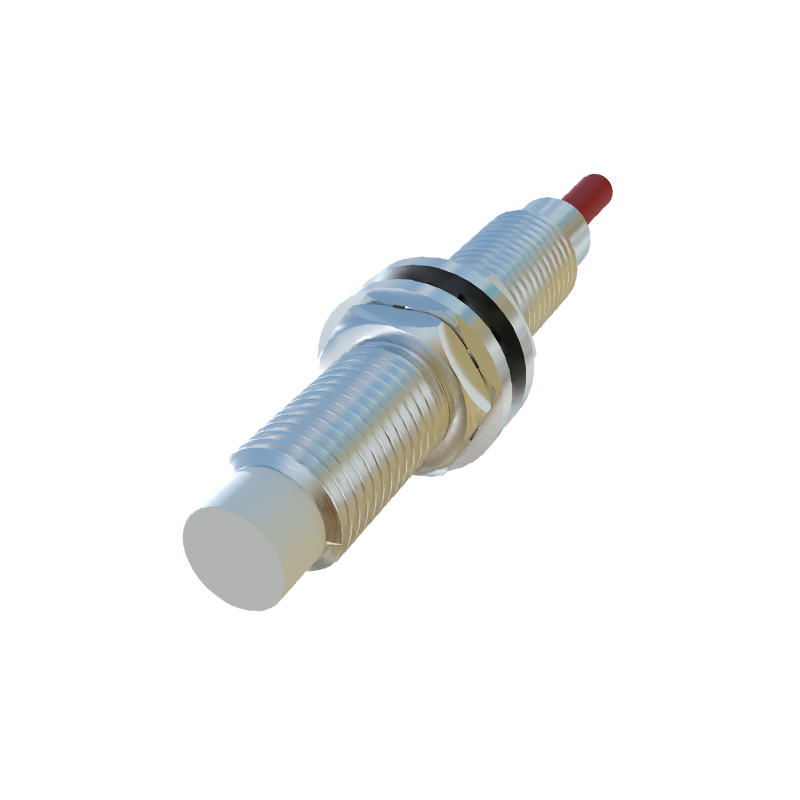
The operating voltage is a critical parameter that defines the sensor's compatibility and performance envelope. The 5V DC sensor is arguably the most common standard in the digital electronics world. Its prevalence is largely due to its perfect alignment with the logic levels of TTL (Transistor-Transistor Logic) and many modern microcontrollers, microprocessors, and PLC (Programmable Logic Controller) digital input modules. A sensor rated for 5V operation is designed to provide a reliable "high" output signal very close to 5V when activated, ensuring unambiguous logic state recognition. This makes it the go-to choice for direct interfacing with Arduino boards, Raspberry Pi GPIO pins, and a vast array of industrial control electronics. The design and manufacturing processes for 5V sensors are highly mature, resulting in robust components with excellent noise immunity and stable performance across a specified temperature range.
In contrast, the 3.8V magnetic sensor occupies a more specialized niche. This voltage rating is frequently associated with sensors designed for ultra-low-power applications or specific battery-powered environments. A prime example is integration with devices powered by a single lithium-ion (Li-ion) or lithium-polymer (Li-Po) cell. A fully charged Li-ion cell has a nominal voltage around 3.6V to 3.7V, with a peak charging voltage of approximately 4.2V. A sensor specified for 3.8V operation is engineered to function optimally within this voltage window, often featuring enhanced power management circuitry to minimize quiescent current. This is crucial for extending battery life in wireless sensor nodes, portable instruments, IoT (Internet of Things) devices, and automotive low-power modules where energy efficiency is paramount. Furthermore, some 3.8V sensors are derived from automotive-grade components, where specific voltage rails within vehicle electronic control units (ECUs) operate below the 5V standard.
Selecting between a 5V and a 3.8V magnetic sensor hinges on several key factors beyond mere voltage availability. First and foremost is Power Supply Compatibility. The sensor's operating voltage must match the system's voltage rail. Supplying 5V to a 3.8V-rated sensor risks permanent damage, while powering a 5V sensor with 3.8V may lead to unreliable operation or failure to trigger. Secondly, consider Power Consumption. For battery-dependent applications, the 3.8V sensor often has an inherent advantage as it is designed from the ground up for efficiency, though low-power 5V variants also exist. Thirdly, Interface Logic Levels are critical. A 5V sensor's output can reliably trigger a 5V logic input. However, connecting a 5V output directly to a 3.3V microcontroller pin (common in modern low-power chips) requires a level-shifting circuit to prevent damage. A 3.8V sensor's output is typically safe for 3.3V logic inputs, simplifying design. Other vital parameters include sensing distance (which is generally independent of voltage but specified at the rated voltage), output type (NPN/PNP, NO/NC), housing material (e.g., brass, stainless steel for harsh environments), and temperature rating.
In practical applications, 5V magnetic sensors are ubiquitous on factory floors. They are used for position detection of cylinders in pneumatic systems, end-of-travel limits on linear actuators, rotary speed sensing on conveyor shafts, and part presence verification in assembly machines. Their robust output ensures clear communication with the main control system. Meanwhile, 3.8V sensors find their strength in mobile and energy-conscious settings. Examples include detecting the open/closed state of a laptop lid or a tablet's smart cover, monitoring wheel speed in a personal electric vehicle, serving as a reed switch replacement in smart home door/window sensors, and providing position feedback in handheld medical devices.
When integrating these sensors