In the realm of industrial automation, reliable and precise object detection is paramount. Among the diverse array of sensing technologies, hammer ultrasonic proximity sensors have carved out a significant niche, offering robust performance in challenging environments. Unlike their photoelectric or inductive counterparts, these sensors utilize high-frequency sound waves to detect the presence, absence, or distance of an object, making them exceptionally versatile. The term "hammer" in this context often denotes a specific series or model line known for its rugged, durable housing designed to withstand physical impacts, vibrations, and harsh conditions typical in manufacturing, material handling, and heavy machinery applications.
The fundamental operating principle is elegantly straightforward. The sensor's transducer emits ultrasonic pulses, typically in the range of 200 kHz to 400 kHz. These sound waves travel through the air until they encounter a target object. Upon striking the object, the waves are reflected back towards the sensor. An internal electronic circuit then calculates the time interval between the emission and the reception of the echo. Using the known speed of sound in air, the sensor accurately determines the distance to the target. This time-of-flight (ToF) measurement allows for both simple presence detection and precise distance monitoring, with many models offering analog output (e.g., 4-20 mA, 0-10 V) proportional to the measured range.
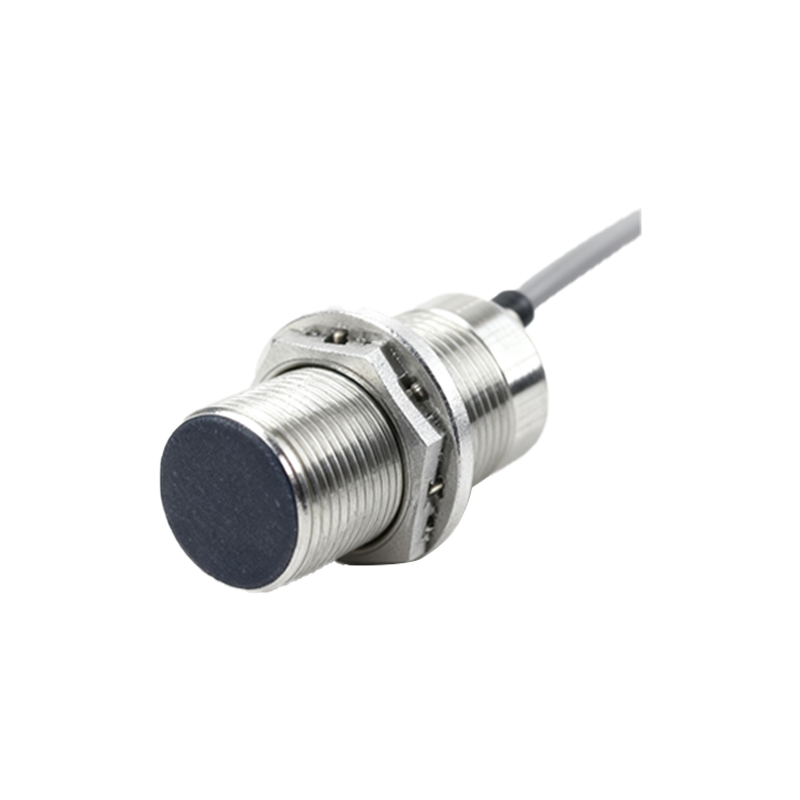
Key advantages of hammer-style ultrasonic sensors are their material independence and environmental resilience. They can reliably detect objects regardless of color, transparency, or material composition—be it metal, plastic, liquid, glass, or even granular substances. This makes them ideal for applications where optical sensors might fail due to target color or dust, fog, or steam obscuring the detection path. The robust, often metallic or high-grade polymer housing protects the sensitive piezoelectric element from mechanical shock, moisture (many boast IP67 or IP69K ratings), and chemical exposure. Furthermore, they are largely immune to electromagnetic interference, ensuring stable operation near motors, welders, or variable-frequency drives.
Typical applications are widespread across industries. In packaging and bottling lines, they monitor fill levels in opaque containers or control the stacking height of boxes on pallets. On conveyor systems, they count objects, detect jams, or precisely position items for robotic pick-and-place operations. In the automotive sector, they are employed for brake disc detection, chassis positioning, or monitoring coolant levels. Their ability to sense liquids and solids also makes them perfect for bulk material level control in silos or tanks, even when aggressive media or dusty atmospheres are present.
When selecting a hammer ultrasonic proximity sensor, several critical parameters must be considered. The sensing range is primary, with models available from a few centimeters up to several meters. The beam angle influences the detection field; a narrower beam is suitable for precise small-target detection, while a wider angle can cover larger areas. Response time and output type (discrete switch, analog, or digital bus protocols like IO-Link) should match the speed and control architecture of the application. Temperature compensation is a vital feature, as the speed of sound varies with air temperature and humidity; advanced sensors integrate compensation circuits to maintain accuracy across operational extremes.
Installation and alignment are crucial for optimal performance. Mounting the sensor securely to minimize vibration is essential. The target should be positioned as perpendicular as possible to the ultrasonic beam to ensure a strong echo return. Users must also be mindful of potential acoustic interference from multiple ultrasonic sensors operating in close proximity or from other sources of high-frequency noise. Proper spacing, shielding, or using sensors with synchronized operation cycles can mitigate such issues.
Maintenance requirements are generally minimal due to the non-contact nature of detection. However, keeping the transducer face clean from accumulated dust, ice, or condensation is necessary to prevent signal attenuation. Periodic verification of calibration against a known reference distance ensures continued measurement fidelity.
In conclusion, hammer ultrasonic proximity sensors represent a fusion of durability and sophisticated sensing capability. Their insensitivity to target properties and environmental factors, combined with precise ranging ability, provides system designers with a powerful tool for solving complex detection challenges. As Industry 4.0 drives demand for smarter, more connected devices, the integration of these sensors with digital interfaces and diagnostic capabilities will further solidify their role as a cornerstone of resilient and efficient industrial automation systems.