In the rapidly evolving landscape of imaging technology, the rear laser autofocus sensor has emerged as a pivotal component, driving significant improvements in focus accuracy and speed across various applications, from smartphone cameras to industrial inspection systems. Unlike traditional phase-detection or contrast-based autofocus mechanisms, rear laser autofocus sensors utilize infrared laser beams projected from the rear of the device to measure distance to the subject with exceptional precision. This technology operates by emitting a low-power laser pulse that reflects off the target and returns to a dedicated sensor. By calculating the time-of-flight (ToF) of the laser pulse, the system can determine the exact distance to the subject, enabling instantaneous focus adjustments even in challenging lighting conditions, such as low-light or high-contrast environments.
The core advantage of rear laser autofocus lies in its ability to function independently of ambient light. Conventional autofocus systems often struggle in dim settings, relying on sufficient light to detect contrast or phase differences. In contrast, the active illumination provided by the laser ensures reliable performance regardless of external lighting, making it ideal for applications like night photography, automotive safety systems, and robotics. Moreover, the rear placement of the sensor minimizes interference with the main imaging lens, allowing for sleeker device designs without compromising optical quality. This configuration also reduces the risk of accidental obstruction, as the laser emitter and receiver are typically integrated into the device's rear housing, away from user contact points.
Recent innovations in rear laser autofocus technology have focused on enhancing resolution and reducing power consumption. Advanced sensors now incorporate multi-point laser arrays, which project multiple beams to map complex surfaces in three dimensions. This capability is particularly valuable in fields such as augmented reality (AR) and 3D scanning, where precise depth perception is critical. Additionally, improvements in semiconductor materials and signal processing algorithms have led to faster response times, with some systems achieving focus locks in under 0.1 seconds. Energy efficiency has also seen notable gains, thanks to pulsed laser operation and low-power standby modes, extending battery life in portable devices.
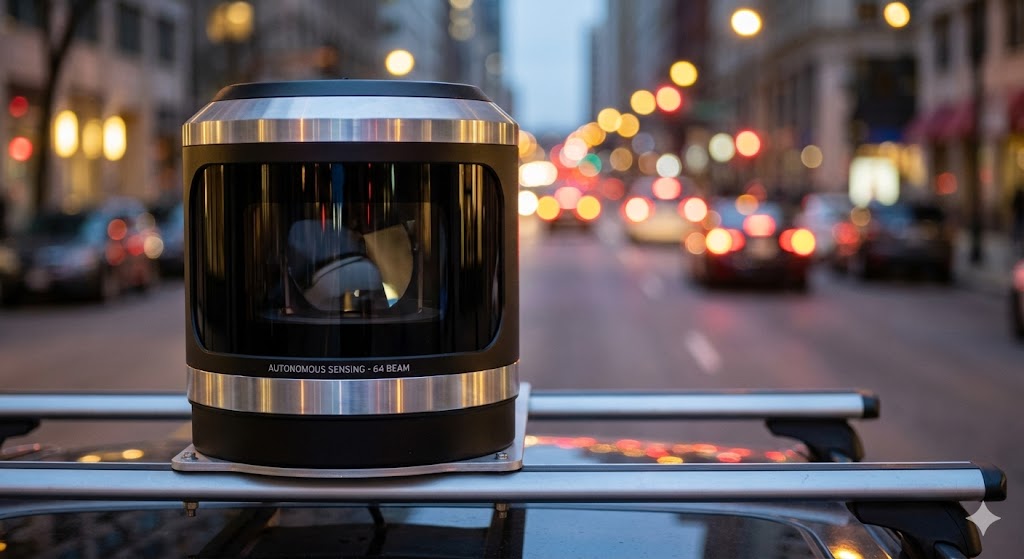
In industrial and scientific contexts, rear laser autofocus sensors are revolutionizing tasks that demand micron-level accuracy. For instance, in microscopy and semiconductor manufacturing, these sensors enable automated focus tracking on uneven or moving samples, reducing human error and increasing throughput. The integration of artificial intelligence (AI) further optimizes performance by predicting subject movement and adjusting focus preemptively. As the Internet of Things (IoT) expands, such sensors are being embedded in smart surveillance cameras and autonomous drones, where rapid, reliable focusing is essential for real-time decision-making.
Despite its benefits, the adoption of rear laser autofocus technology faces challenges, including cost constraints and environmental limitations. Laser systems generally involve higher production expenses compared to passive autofocus methods, which can impact their feasibility in budget-sensitive markets. Furthermore, extreme conditions like heavy rain, fog, or highly reflective surfaces may scatter or absorb laser beams, potentially degrading accuracy. Ongoing research aims to address these issues through hybrid systems that combine laser data with other sensing modalities, such as ultrasonic or structured light, to ensure robustness across diverse scenarios.

Looking ahead, the future of rear laser autofocus sensors appears promising, with trends pointing toward miniaturization and enhanced integration. Emerging applications in biometric authentication, such as facial recognition and gesture control, are leveraging this technology for secure, contactless interactions. As computational photography advances, we can expect deeper synergy between laser sensors and image processing software, enabling features like real-time depth mapping and bokeh effects in consumer electronics. Ultimately, the continued refinement of rear laser autofocus will play a crucial role in shaping next-generation imaging solutions, offering users unprecedented clarity and convenience in capturing the world around them.