M12 proximity sensors are widely used in industrial automation for non-contact detection of metallic and non-metallic objects. These compact sensors, named for their 12mm threaded housing, operate based on electromagnetic or capacitive principles to provide reliable object detection in challenging environments. Understanding their working mechanism is essential for proper selection and application in various industrial settings.
The most common type is the inductive M12 proximity sensor, designed specifically for detecting metallic objects. This sensor contains four fundamental components: an oscillator circuit generating a high-frequency electromagnetic field, a detection coil, a signal conditioner, and an output circuit. When powered, the oscillator creates an alternating magnetic field that radiates from the sensor's face. As a metallic target enters this field, eddy currents are induced on the target's surface according to Faraday's Law of electromagnetic induction. These eddy currents draw energy from the oscillator circuit, causing a measurable reduction in oscillation amplitude. The sensor's detection circuit monitors this amplitude change and triggers the output switch when the decrease reaches a predetermined threshold. The sensing distance depends on the target material's electrical conductivity and magnetic permeability, with ferrous metals typically offering the longest detection ranges.
Capacitive M12 proximity sensors utilize a different principle to detect both metallic and non-metallic materials including liquids, plastics, and wood. These sensors function similarly to an open capacitor, with the sensor's active surface acting as one plate and the target object acting as the other plate. The internal oscillator circuit generates an electrostatic field rather than an electromagnetic field. When any material enters this field, it alters the dielectric constant between the plates, changing the circuit's capacitance. This capacitance change modifies the oscillator's amplitude or frequency, which is detected by the subsequent circuitry. The threshold circuit then activates the output transistor when the change exceeds the set sensitivity level. Capacitive sensors require careful adjustment as they can detect through non-metallic container walls, making them ideal for liquid level detection and material presence verification in packaging applications.
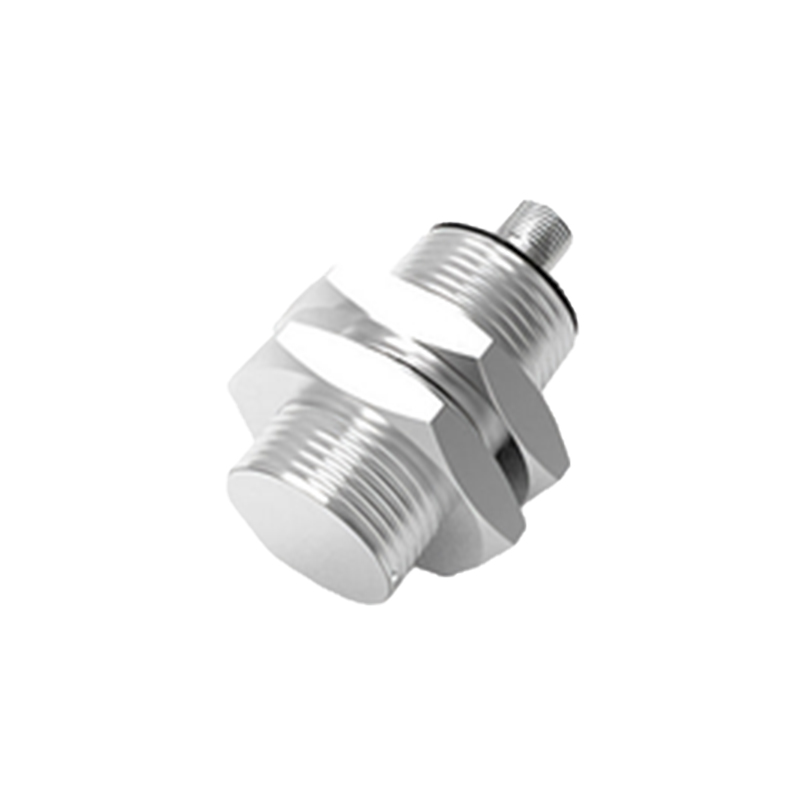
Both sensor types incorporate essential electronic components for reliable operation. The oscillator typically operates at frequencies between 100 kHz and 1 MHz, optimized for rapid response while minimizing external interference. Advanced models include temperature compensation circuits to maintain consistent sensing distances across industrial temperature ranges from -25°C to 70°C. The output stage commonly features short-circuit and reverse polarity protection, with options including NPN, PNP, analog, and IO-Link configurations. The switching frequency can reach 5 kHz in high-performance models, suitable for high-speed counting applications.
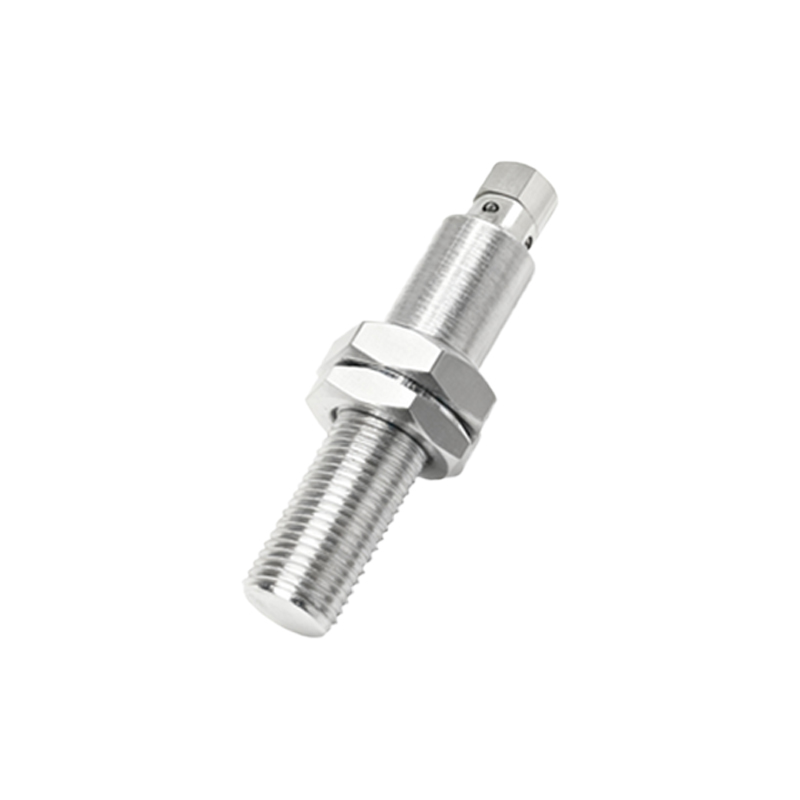
Environmental considerations significantly impact M12 proximity sensor performance. Metallic mounting surfaces can reduce the effective sensing range due to magnetic field distortion, requiring increased mounting distances or shielded housing designs. Simultaneous operation of multiple sensors demands careful spacing to prevent mutual interference, typically requiring distances of two to three times the sensor diameter. Industrial electrical noise from variable frequency drives or welding equipment can affect sensor reliability, necessitating proper shielding and filtering in the sensor design. Modern M12 sensors incorporate noise immunity circuits that meet stringent industrial standards like IEC 60947-5-2.
Installation practices directly influence sensor performance and longevity. Proper alignment between the sensor face and target movement direction ensures optimal detection reliability. For cylindrical targets, the sensing distance may require reduction factors applied, typically 50-70% of the rated sensing distance. Regular maintenance involves cleaning the sensor face from accumulated debris or metal chips that could cause false triggering. Environmental sealing to IP67 or IP69K standards protects internal electronics from moisture, oils, and coolants commonly found in industrial environments.
The evolution of M12 proximity sensors continues with smart sensor technology integration. IO-Link enabled models provide diagnostic data including operating hours, temperature extremes, and switching cycle counts, enabling predictive maintenance strategies. Some advanced sensors incorporate teach-in functionality for simplified calibration and application-specific parameter storage. As Industry 4.0 implementations expand, M12 proximity sensors with digital communication capabilities are becoming essential components in connected manufacturing systems, providing not just detection functions but valuable process data for optimization.
Understanding the working principles of M12 proximity sensors enables engineers to select appropriate technologies for specific applications, ensuring reliable operation in diverse industrial automation scenarios from simple presence detection to complex positioning systems. The continued development of sensing technologies maintains the M12 form factor's relevance in increasingly sophisticated industrial environments where space constraints and reliability requirements demand compact, high-performance sensing solutions.