In the realm of industrial automation and electrical control systems, proximity sensors are indispensable components for non-contact object detection. Among their critical specifications, the output switching configuration—Normally Open (NO) or Normally Closed (NC)—is fundamental to system design, safety, and functionality. This article delves into the operational principles, application considerations, and selection criteria for NO and NC proximity sensors, providing a detailed guide for electrical engineers and system integrators.
Fundamental Operating Principles
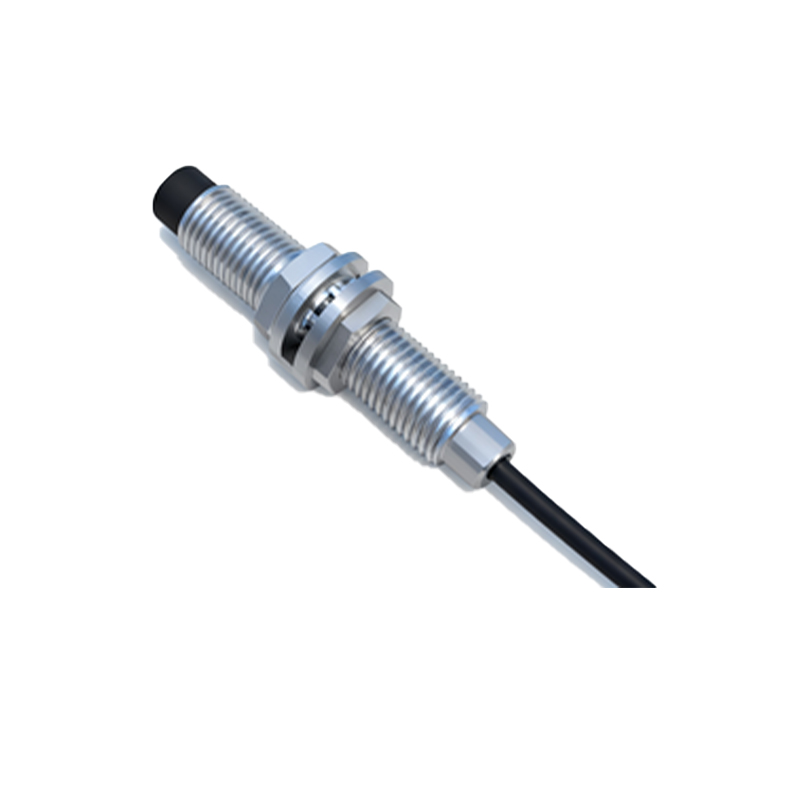
A proximity sensor detects the presence or absence of a target object within its sensing range without physical contact, typically using electromagnetic fields, light, or sound. The terms "Normally Open" (NO) and "Normally Closed" (NC) describe the electrical state of the sensor's output circuit when no target is present in its active sensing zone.
Normally Open (NO) Sensor: In its idle state (no target detected), the output switching element (like a transistor or relay contact) is open, meaning the circuit is broken, and no current flows to the load. When a target enters the sensing field, the switch closes, completing the circuit and allowing current to flow. This is analogous to a momentary push-button switch that is off until pressed.
Normally Closed (NC) Sensor: Conversely, an NC sensor's output is closed in the idle state, maintaining a continuous circuit to the load. When a target is detected, the switch opens, breaking the circuit and stopping the current flow. This mimics a push-button switch that is normally on until pressed to turn off.
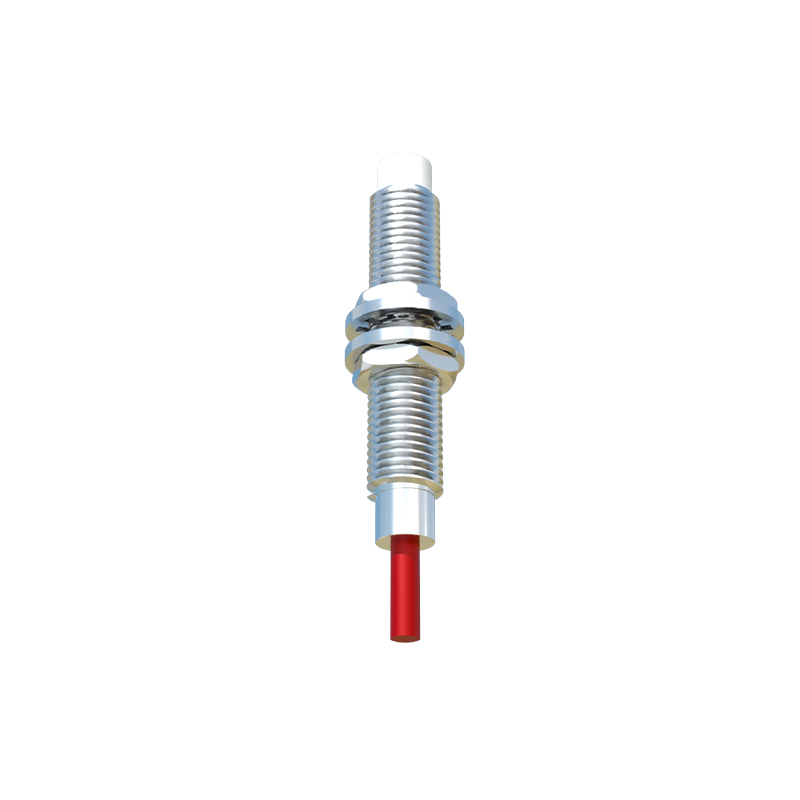
The "normal" state is always defined as the condition when the sensor is powered and no target is within its nominal sensing range. It is crucial to understand that this is an electrical designation of the output, not a description of the physical mechanism.
Electrical Characteristics and Wiring
Most modern proximity sensors are solid-state devices with transistor outputs (PNP or NNP sourcing/sinking). For a 3-wire DC sensor:
Brown Wire: Connected to DC positive (+V).
Blue Wire: Connected to DC negative (0V or common).
Black Wire: The output signal line.
The NO or NC function is determined by the internal connection of this black wire. In a PNP-NO configuration, the black wire switches +V to the load when activated. In a PNP-NC configuration, the black wire normally supplies +V to the load and switches off when a target is detected. The inverse is true for NNP sensors. Many sensors offer a selectable NO/NC output via a wiring switch or programmable parameter, enhancing flexibility.
Key Application Considerations and Selection
Choosing between NO and NC is not arbitrary; it is dictated by the control logic and, most importantly, safety requirements.
1. Fail-Safe Design and Safety Logic: This is the paramount factor. NC contacts are inherently used in safety-critical circuits, such as emergency stop loops, guard door monitoring, or machine guarding. A broken wire, loss of power, or sensor failure in an NC configuration typically causes the circuit to open, signaling a fault and driving the system to a safe state (e.g., stopping a motor). An NO sensor in the same scenario might fail silently, as an open circuit is its normal state, posing a significant hazard. Therefore, safety circuits are predominantly designed using NC contacts to ensure a "fail-safe" condition.
2. Control Logic and PLC Programming: The choice simplifies or complicates ladder logic programming. An NO sensor's behavior is intuitive: detect object = output ON. An NC sensor's logic is inverted: detect object = output OFF. Engineers must account for this in programming. Sometimes, using an NC sensor can simplify logic by eliminating the need for a software "not" instruction, especially for alarm or fault conditions where the normal state should be "ON" (circuit closed).
3. Power Consumption and Diagnostics: In a state where the target is usually absent, an NO sensor consumes less power at the load side because its circuit is open. An NC sensor in the same application would continuously power the load. Furthermore, some advanced sensors with NC outputs can provide enhanced diagnostic capabilities, as a loss of signal can be immediately identified as a fault, not just a "no target" state.
4. Application Examples:
Use NO For: Standard counting applications (each object triggers a pulse), initiating a process (object present starts a conveyor), or filling operations.
Use NC For: Safety interlock switches, monitoring for object jams (a jam keeps the sensor activated, breaking the circuit to signal a fault), or detecting the break in a material web (loss of material opens the circuit).
Troubleshooting and Common Misconceptions