In the realm of industrial automation, precision measurement is a cornerstone of efficiency, quality control, and safety. Among the various technologies enabling this precision, PLC laser distance sensors have emerged as a critical component in modern manufacturing and process control systems. These sensors interface seamlessly with Programmable Logic Controllers (PLCs), forming a robust and intelligent network for real-time data acquisition and decision-making.
A PLC laser distance sensor operates on the principle of time-of-flight or phase-shift measurement. It emits a focused laser beam towards a target object. The sensor then detects the reflected light and calculates the distance based on the time delay or phase difference between the emitted and received signals. This non-contact measurement method offers significant advantages over traditional mechanical probes or ultrasonic sensors, including higher accuracy, faster response times, and the ability to measure small or delicate objects without physical interaction.
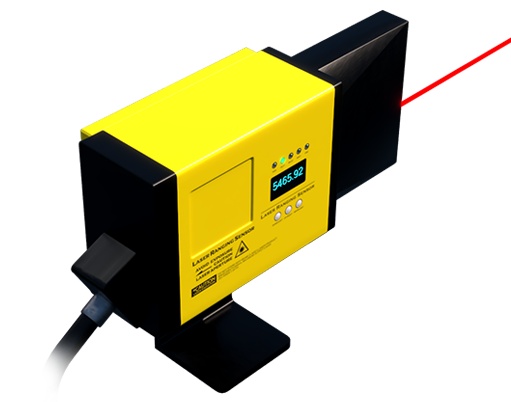
The integration of these sensors with PLC systems is what unlocks their full potential. The sensor acts as a high-precision input device, transmitting precise distance data to the PLC's input module. The PLC, programmed with specific logic, processes this data to make instantaneous control decisions. For instance, it can trigger an actuator to position a robotic arm, sort objects on a conveyor belt based on size, monitor fill levels in tanks or silos, or ensure proper alignment in assembly processes. This closed-loop control is fundamental to achieving Industry 4.0 objectives of flexibility, traceability, and predictive maintenance.
Key technical specifications define the performance and suitability of a PLC laser distance sensor for a given application. Measurement range, typically from a few centimeters to several hundred meters, must be matched to the operational environment. Accuracy and resolution, often in the sub-millimeter range, are paramount for tasks like part inspection. The response time, or how quickly the sensor can take and output a measurement, directly impacts line speed and throughput. Furthermore, environmental robustness is critical; industrial-grade sensors feature high Ingress Protection (IP) ratings to withstand dust, moisture, and vibrations, and offer resistance to ambient light interference.

Common industrial applications are diverse. In automotive manufacturing, these sensors ensure precise weld seam tracking and robot guidance. In packaging, they verify box dimensions and control filling heads. In logistics, they measure parcel sizes for automated sorting. In material handling, they provide forklift positioning and palletizing guidance. The ability to output standardized analog signals (4-20 mA, 0-10 V) or digital signals via protocols like IO-Link, PROFINET, or EtherNet/IP ensures straightforward integration into existing PLC architectures.
When selecting a PLC laser distance sensor, engineers must conduct a thorough application analysis. Factors such as target surface properties (color, reflectivity, texture), environmental conditions (temperature, presence of steam or dust), required measurement rate, and the necessary communication interface must all be evaluated. Proper mounting, alignment, and parameter configuration through dedicated software are essential for optimal performance. Regular calibration and maintenance, as part of the overall automation system upkeep, ensure long-term reliability and measurement consistency.
In conclusion, PLC laser distance sensors represent a sophisticated fusion of optical measurement and digital control. They provide the "eyes" for automated systems, delivering the precise, reliable data that PLCs require to execute complex control strategies. As industries continue to advance towards smarter, more connected factories, the role of these sensors in enabling precise, adaptive, and efficient automation will only become more pronounced, driving improvements in productivity and product quality across countless sectors.
