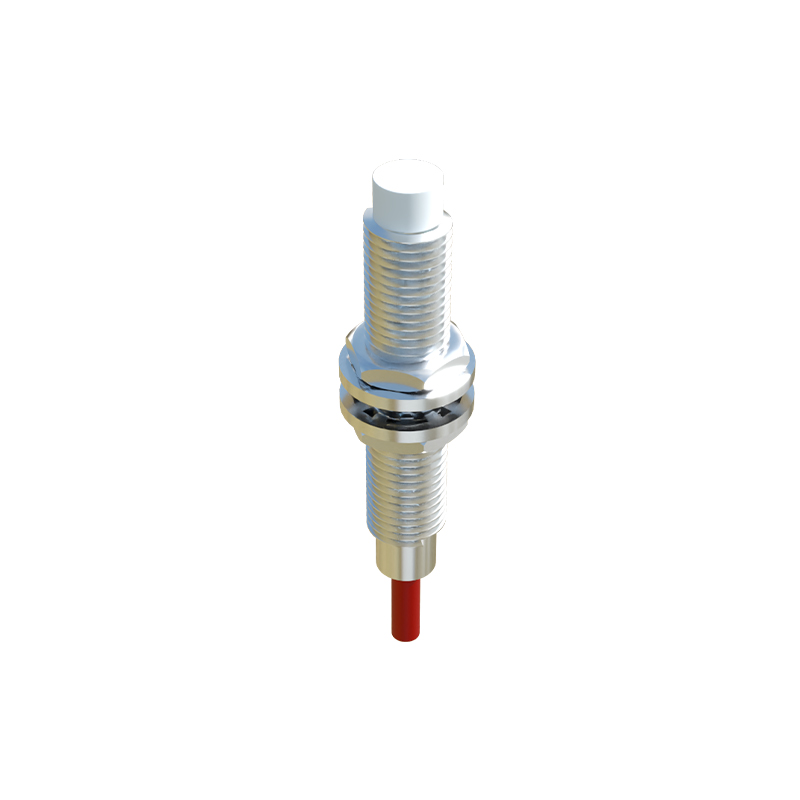
Capacitive proximity sensors are versatile and reliable devices widely used in industrial automation for non-contact detection of various objects. Unlike their inductive counterparts that primarily detect metals, capacitive sensors can detect a vast range of materials, including liquids, powders, plastics, glass, and wood. This makes them indispensable in numerous applications, from level detection in silos to part presence verification on assembly lines. The core of their operation lies in the fundamental principles of capacitance and the ability to measure changes in an electrostatic field.
At its heart, a capacitive sensor functions like an open capacitor. A typical sensor consists of an active electrode (the sensing face) and a ground electrode, often formed by the sensor's housing or a separate ground connection. When voltage is applied to the active electrode, an electrostatic field is generated in front of the sensor. This field is the sensor's detection zone. In its idle state, with no target object present, the system maintains a specific baseline capacitance.
The principle of detection is based on the change in this capacitance. Capacitance (C) is determined by three main factors: the surface area (A) of the electrodes, the distance (d) between them, and the dielectric constant (εr) of the material between the electrodes. The formula C = ε₀ εr (A/d) illustrates this relationship. In a capacitive sensor, the active electrode and the ground form one capacitor. When a target object enters the electrostatic field, it effectively becomes part of this capacitive system. The target acts as a dielectric material, altering the overall dielectric constant (εr) in the sensing zone. Even if the target is conductive, it can act as an additional electrode, effectively changing the surface area (A) and distance (d) parameters of the system.
This intrusion causes a measurable increase in the circuit's overall capacitance. The sensor's internal oscillator circuit is designed to trigger at a specific capacitance threshold. As the capacitance rises due to the presence of the target, the oscillator begins to oscillate. The amplitude of these oscillations is directly proportional to the change in capacitance. This signal is then processed by an evaluation circuit, which converts the analog oscillation amplitude into a clean, digital output signal—typically a switching signal that turns a solid-state output (PNP/NPN) or a relay ON or OFF.
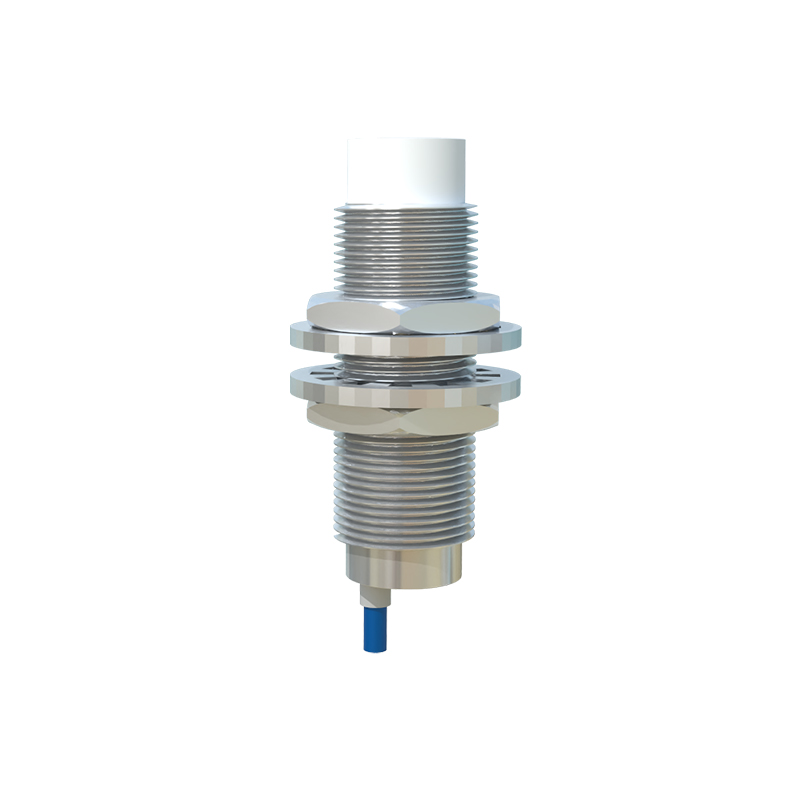
Several key factors influence the sensing performance and the nominal sensing distance (Sn). The most critical is the dielectric constant of the target material. Materials with a high dielectric constant (e.g., water, metals) cause a more significant change in capacitance and are easier to detect, often at greater distances. Materials with a low dielectric constant (e.g., plastics, wood) require the sensor to be closer for reliable detection. For non-conductive materials, the sensing distance can be roughly estimated by multiplying the sensor's rated sensing distance (for metal) by the square root of the material's dielectric constant. The size of the target also matters; a larger surface area facing the sensor generally provides a stronger signal. Furthermore, environmental conditions like humidity, dust, or the presence of other materials near the sensing field can affect performance, which is why many sensors feature sensitivity adjustment potentiometers to fine-tune the switching threshold for specific applications.
A major advantage of capacitive sensors is their ability to detect through non-metallic barriers. This enables applications like detecting the level of a liquid inside a plastic or glass tank without direct contact. The sensor is mounted on the outside of the tank wall. The wall material becomes a constant, known dielectric in the system. When the liquid (with a different, usually higher, dielectric constant) rises to the sensing area, it causes the necessary capacitance change to trigger the switch. This same principle applies to detecting wood chips in a hopper or powder in a conduit.
In summary, capacitive proximity sensors operate by generating an electrostatic field and monitoring changes in capacitance caused by the intrusion of a target material into that field. Their ability to detect both conductive and non-conductive substances through non-metallic containers grants them exceptional flexibility. From packaging and food processing to chemical handling and automotive manufacturing, these sensors provide a robust, non-contact solution for object detection, level control, and material discrimination, forming a critical link in modern automated systems.