In the realm of industrial automation and machinery, the reliable detection of objects is paramount. Among the diverse array of sensing technologies, square proximity switch sensors have carved out a significant niche. These robust, non-contact devices are engineered to detect the presence or absence of metallic objects without any physical touch, offering a blend of durability, precision, and versatility that suits demanding environments.
Unlike their cylindrical counterparts, square proximity sensors feature a distinct housing that often provides advantages in mounting and space utilization. Their flat surfaces allow for easier installation on machine frames, conveyor systems, and within control panels where flush mounting is preferred. The fundamental operating principle typically involves an oscillator circuit that generates a high-frequency electromagnetic field emanating from the active face of the sensor. When a metallic target enters this detection field, it induces eddy currents, causing a change in the oscillator's amplitude. This change is then processed by the sensor's circuitry, triggering a solid-state output signal—commonly PNP (sourcing) or NPN (sinking)—to indicate detection.
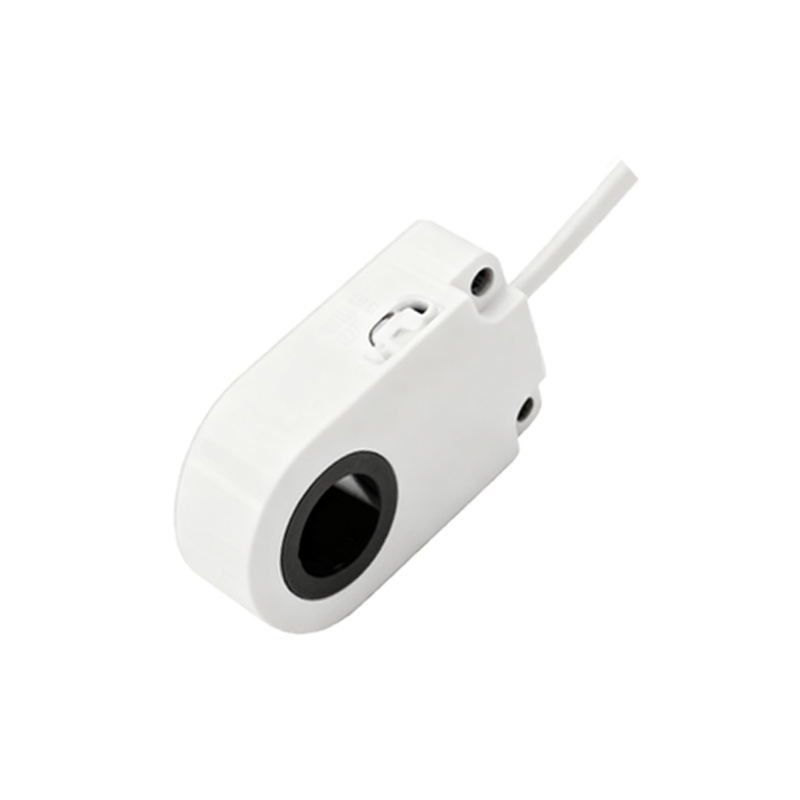
The construction of these sensors is geared for resilience. Housings are usually made from materials like nickel-plated brass, stainless steel, or high-grade plastics such as PBT, offering excellent resistance to oils, coolants, and industrial chemicals. Many models boast high IP (Ingress Protection) ratings, such as IP67 or IP69K, ensuring reliable operation despite exposure to dust, moisture, and high-pressure washdowns. This makes them indispensable in sectors like automotive manufacturing, food and beverage processing, and packaging, where harsh conditions are the norm.
One of the critical specifications for any proximity sensor is its sensing distance, or "sn." For square inductive sensors, this range varies, with common standardized sensing distances like 5mm, 8mm, 10mm, or 15mm. It is crucial to note that the rated operating distance is defined for a standard target of mild steel. Factors such as the target material's properties (e.g., using aluminum or copper), its size, and ambient temperature can influence the effective sensing range. Engineers must account for these variables during system design to ensure consistent performance.
The applications for square proximity switches are extensive. They are frequently deployed as limit switches to determine the end positions of moving parts, as presence detectors to verify parts on pallets or fixtures, and in counting or sequencing operations on assembly lines. Their non-contact nature eliminates mechanical wear, leading to a significantly longer service life compared to mechanical limit switches. Furthermore, their fast switching speed enables detection of objects moving at high velocities, a requirement in modern high-speed automation.
When selecting a square proximity sensor, several parameters require careful consideration. Beyond the sensing distance and housing material, key factors include the output type (e.g., 3-wire DC, 2-wire, or analog), voltage range (commonly 10-30V DC), and whether a normally open (NO) or normally closed (NC) configuration is needed. The presence of built-in diagnostic LEDs is a valuable feature for quick status indication and troubleshooting during installation and maintenance.
Installation best practices are straightforward but essential. Maintaining the proper clearance around the sensor's active face—known as the lateral and flush mount clearance—is vital to prevent false triggering from the surrounding metal. Proper shielding and cable routing help mitigate electrical noise interference in environments with variable frequency drives or welding equipment. Regular maintenance primarily involves keeping the sensing face clean from debris, metal chips, or buildup that could attenuate the electromagnetic field.
In summary, square proximity switch sensors represent a mature yet continually evolving technology. Their standardized form factor, combined with rugged construction and reliable solid-state operation, provides a fundamental building block for automated systems. From controlling simple machine sequences to ensuring safety interlocking, these sensors deliver the silent, unseen detection that keeps industrial processes running smoothly, efficiently, and safely. Their continued development focuses on achieving longer sensing ranges in smaller housings, enhanced resistance to extreme conditions, and integration with industrial networking protocols for smarter factory applications.