Red laser distance sensors represent a critical advancement in precision measurement technology. Utilizing a visible red laser beam, these devices calculate distances by measuring the time-of-flight of the laser pulse or by analyzing phase shifts in modulated laser light. The core principle involves emitting a focused red laser dot toward a target. The sensor then detects the reflected light. In time-of-flight models, an internal clock calculates the round-trip time of the light pulse, converting it into a precise distance measurement using the constant speed of light. Alternative phase-shift methods measure the delay in a modulated laser wave, offering high accuracy for shorter ranges.
The visibility of the red laser beam, typically at wavelengths around 650nm, is a defining operational advantage. It allows for intuitive targeting and alignment, as the user can clearly see the exact measurement point. This contrasts with invisible infrared sensors, where alignment can be guesswork. This feature is invaluable in applications like construction layout, where a builder needs to mark specific points, or in forestry, for targeting a particular tree trunk amidst foliage.

Industrial automation heavily relies on these sensors for non-contact positioning and inspection. On assembly lines, they verify component heights, monitor fill levels in containers, or ensure robotic arms maintain correct standoff distances. Their speed and accuracy enable real-time process control, improving quality and throughput. In logistics, red laser sensors integrated into automated guided vehicles (AGVs) and warehouse systems help navigate environments and measure parcel dimensions for efficient storage and shipping.
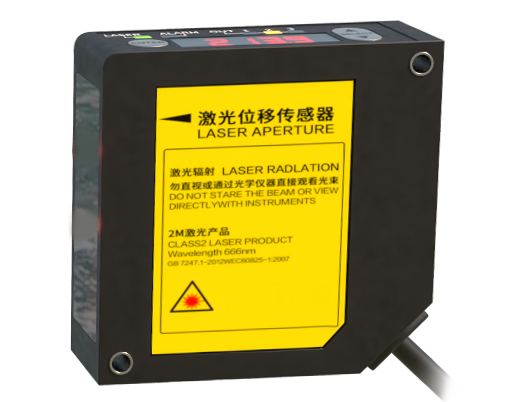
Surveying and construction professionals employ red laser distance meters (often called laser rangefinders) for their portability and ease of use. Measuring room dimensions, land plots, or building elevations becomes a task of pointing and clicking, drastically reducing time and error compared to manual tape measures. Advanced models can calculate area and volume, integrate with Bluetooth for data transfer, and even include tilt sensors for indirect height measurements.
The consumer market is familiar with this technology through handheld laser tape measures used in home improvement projects. Their simplicity—point at a wall, press a button, and read the distance—has made them a popular tool. Furthermore, red laser sensors are integral to modern photography and videography, where they provide fast autofocus capabilities, allowing cameras to instantly lock onto subjects even in low-light conditions.
When selecting a red laser distance sensor, key specifications must be considered. Measurement range is primary, with devices available from a few centimeters up to several hundred meters. Accuracy, often within ±1.5mm, is crucial for precision tasks. The laser safety class (typically Class 2) is important, indicating the device is safe for accidental eye exposure within the human blink reflex time. Environmental durability factors like IP rating for dust and water resistance, operating temperature range, and robustness against vibration are vital for industrial or outdoor use.
Compared to other technologies, red laser sensors offer a balanced profile. Ultrasonic sensors are lower cost but less precise and susceptible to environmental factors like temperature and wind. Infrared sensors offer similar performance but lack the visible alignment beam. Blue lasers provide finer spot sizes for extreme precision but at a higher cost. The red laser remains the optimal choice for a wide array of applications requiring a blend of good accuracy, visible indication, and cost-effectiveness.
Looking ahead, integration is a major trend. Red laser sensors are increasingly becoming smart components within the Internet of Things (IoT) ecosystem, communicating measurement data directly to cloud platforms for analysis and system adjustment. Miniaturization continues, enabling their incorporation into smaller devices and wearables. Enhancements in power efficiency and beam quality will further expand their utility in mobile robotics and autonomous systems, solidifying their role as a fundamental tool for precise spatial awareness across countless industries.