In the realm of industrial automation, machine safety, and smart devices, proximity sensors are indispensable components. A fundamental and frequently asked question by engineers and designers is: "How far can proximity sensors detect?" The answer is not a single, universal figure but a spectrum influenced by sensor technology, target material, size, and environmental conditions. This article delves into the sensing distances of various proximity sensor types, providing a detailed technical overview.
The term "sensing distance" or "operating distance" is formally defined as the maximum distance at which a sensor can reliably detect a standard target under specified conditions. It's crucial to understand that this is a nominal value. The actual, effective sensing range in an application can vary.
1. Inductive Proximity Sensors
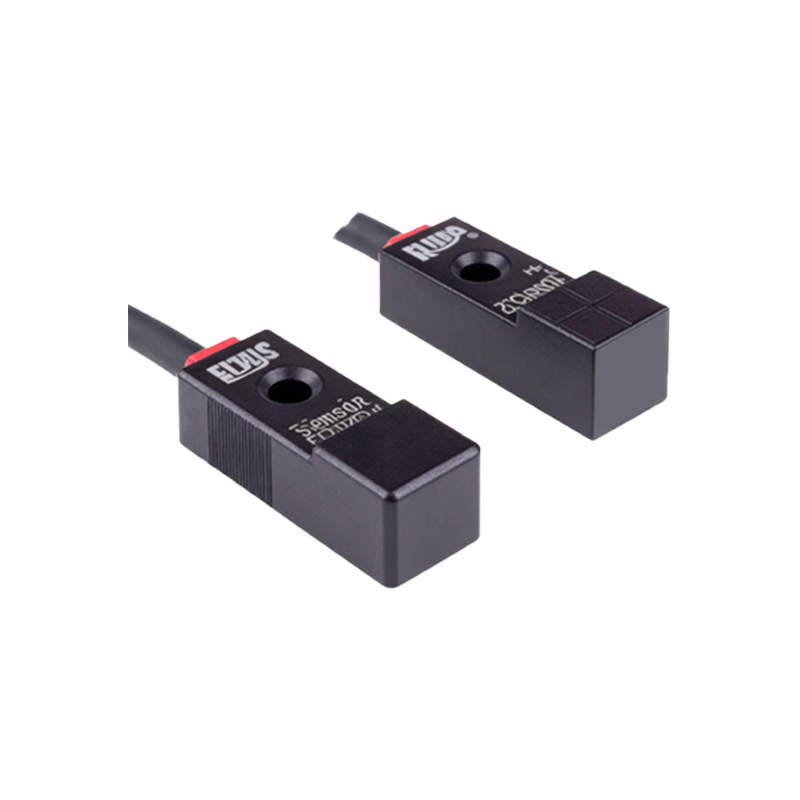
These sensors detect metallic objects, primarily ferrous metals like steel and iron, and non-ferrous metals like aluminum, copper, and brass. Their sensing principle is based on generating an electromagnetic field.
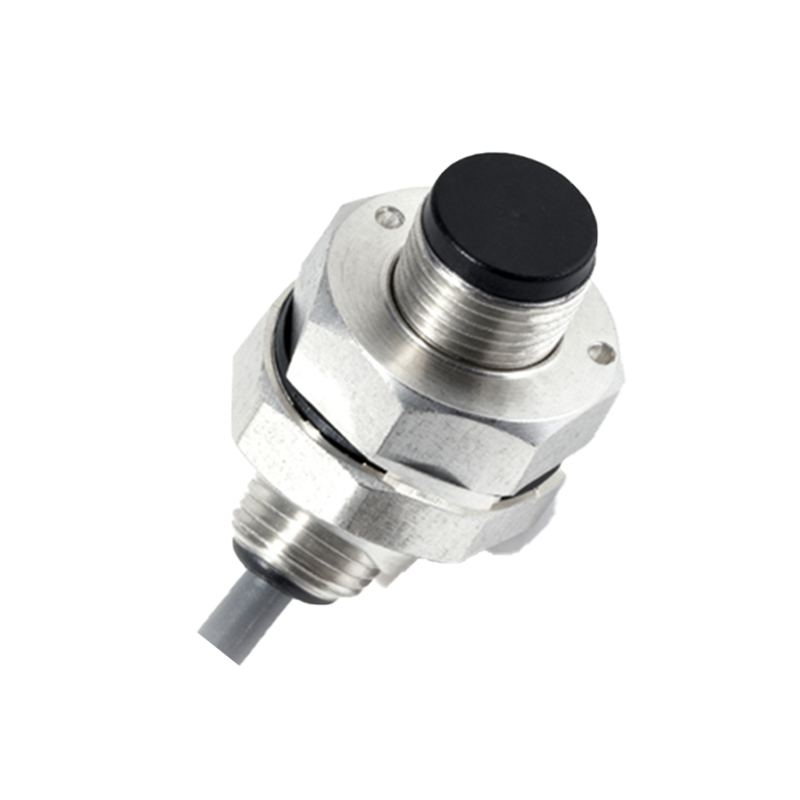
Typical Sensing Range: Ranges are generally shorter compared to other types. Common ranges are from 0.8 mm to 40 mm.
Key Factors: The sensing distance is heavily dependent on the target material.
Factor 1 (Target Material): For a standard mild steel (Fe360) target, the sensor achieves its rated nominal distance (Sn). For stainless steel, the effective distance reduces to approximately 0.8-0.9 x Sn. For aluminum (a non-ferrous metal), the reduction is more significant, typically to 0.4-0.5 x Sn. Copper and brass reduce it even further, to about 0.3-0.4 x Sn.
Factor 2 (Target Size): The target should ideally be equal to or larger than the sensor's active face diameter for the rated distance. Smaller targets reduce the effective range.
Factor 3 (Sensor Size): Generally, a larger sensor housing and sensing face allow for a longer sensing distance.
2. Capacitive Proximity Sensors
These sensors can detect nearly any material—metals, plastics, wood, liquids, powders, and glass—by measuring changes in capacitance.
Typical Sensing Range: Similar to inductive sensors, common ranges are from 3 mm to 40 mm for solid objects.
Key Factors: The dielectric constant (εr) of the target material is the primary determinant.
Factor 1 (Target Material): Materials with a high dielectric constant (e.g., water, metals) are detected at the sensor's full rated distance. Materials with a low dielectric constant (e.g., plastics, wood) require a much shorter sensing distance or a sensitivity adjustment potentiometer to tune the sensor for the specific material.
Factor 2 (Environmental Factors): Humidity, dust, and contaminants can affect the sensor's field, potentially causing false triggers or reduced range.
3. Ultrasonic Proximity Sensors
These sensors work on the principle of echolocation, emitting high-frequency sound waves and measuring the time for the echo to return.
Typical Sensing Range: These offer the longest ranges among standard proximity sensors. Common models range from 30 mm up to 8 meters or more.
Key Factors: The target's acoustic properties and environmental conditions are critical.
Factor 1 (Target Material & Angle): Hard, dense, and flat surfaces (like metal or concrete) reflect sound best, providing the maximum range. Soft, porous, or angled surfaces absorb or deflect sound, reducing the effective range.
Factor 2 (Environmental Conditions): Temperature affects the speed of sound. Most sensors have temperature compensation. Air turbulence, wind, and high ambient noise can interfere with performance. Dust, steam, and foam can attenuate the signal.
4. Photoelectric Sensors
While often categorized separately, photoelectric sensors (through-beam, retro-reflective, diffuse) are a major class of proximity detection.
Typical Sensing Range: Varies dramatically by type.
Through-Beam: Longest range, from a few meters up to 100+ meters.
Retro-Reflective: Medium range, typically up to 10-15 meters.
Diffuse (Proximity Mode): Short to medium range, from a few centimeters up to 2 meters, depending on target color and reflectivity.
Key Factors: Target surface properties and environmental light are paramount.
Factor 1 (Target Reflectivity & Color): A glossy white target reflects more light and can be detected at a greater distance than a matte black target.