In the rapidly evolving landscape of automotive technology, Light Detection and Ranging (LiDAR) sensors have emerged as a cornerstone for advanced driver-assistance systems (ADAS) and autonomous driving. As a senior electrical engineer specializing in automotive systems, I will provide a comprehensive technical overview of automotive LiDAR, its operational principles, key challenges, and its pivotal role in shaping the future of mobility.
At its core, a LiDAR sensor is a sophisticated optical remote sensing technology. It operates by emitting pulsed laser light—typically in the near-infrared spectrum for automotive applications—towards a target and measuring the time it takes for each pulse to reflect back to the sensor. This Time-of-Flight (ToF) measurement, calculated using the constant speed of light, provides an extremely precise distance measurement. By scanning the laser beam rapidly across a field of view, the sensor builds a high-resolution, three-dimensional point cloud map of the surrounding environment. This real-time 3D map is far richer in detail than data provided by traditional radar or camera systems, allowing vehicles to accurately identify and classify objects, pedestrians, lane markings, and road geometry even in low-light or adverse weather conditions to a certain degree.
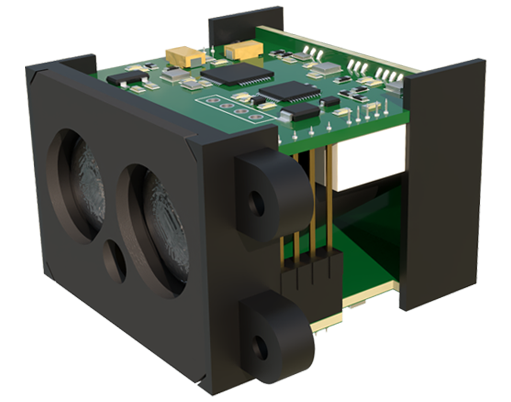
The architecture of a modern automotive LiDAR sensor is a marvel of electrical and optical engineering. Key components include the laser emitter (often a 905nm or 1550nm laser diode for eye safety and performance balance), the photodetector (such as an Avalanche Photodiode or Silicon Photomultiplier), a high-speed scanning mechanism (rotating, MEMS mirrors, or solid-state optical phased arrays), and a powerful signal processing unit. The choice between mechanical, hybrid solid-state, and pure solid-state scanning is a major industry battleground, directly impacting the sensor's reliability, size, cost, and field of view. Signal processing involves sophisticated algorithms to filter noise, correlate returning photons, and convert raw time-stamp data into actionable spatial coordinates.
Integration into the vehicle's electrical and data architecture presents significant engineering challenges. LiDAR units generate vast amounts of data, requiring high-bandwidth, low-latency interfaces like Automotive Ethernet to feed into the central computing platform. Power consumption and thermal management are critical design constraints, as is ensuring robust electromagnetic compatibility (EMC) within the crowded RF environment of a modern car. Furthermore, the sensor must meet stringent automotive-grade standards for vibration, shock, and operating temperature ranges (-40°C to +85°C).
The primary application is, unequivocally, perception for autonomy. LiDAR provides the precise depth information crucial for functions like automatic emergency braking (AEB), adaptive cruise control (ACC), and traffic jam assist. For higher levels of automation (L3 and above), it becomes indispensable for creating a fail-operational sensing suite, often fused with radar and camera data in a sensor fusion paradigm. Beyond mainstream passenger vehicles, LiDAR is critical for roboticaxi fleets, commercial trucking platoons, and last-mile delivery robots.
Looking ahead, the future of automotive LiDAR is focused on several key trends. The industry is driving relentlessly towards cost reduction through semiconductor integration and mass manufacturing techniques. Solid-state LiDAR with no moving parts promises higher durability and lower costs. Another frontier is increasing resolution and range while improving performance in challenging conditions like heavy rain or fog. The development of 4D LiDAR, which adds instantaneous velocity measurement to the 3D point cloud, is also gaining traction. Finally, the evolution of software-defined vehicles will see LiDAR sensors becoming more intelligent at the edge, preprocessing data to reduce the computational load on central processors.
In conclusion, the automotive LiDAR sensor is far more than just a component; it is a complex electro-optical system that is fundamental to unlocking safe and reliable autonomous driving. While challenges in cost, standardization, and environmental robustness remain, continuous innovation in semiconductor technology, optics, and data processing is paving the way for its ubiquitous adoption. For engineers in this field, the work involves a fascinating convergence of optics, high-speed electronics, embedded software, and systems engineering, all dedicated to creating the eyes of the self-driving car.