In the realm of industrial automation, precision measurement and reliable detection are paramount. Laser receiver sensors, as critical components in photoelectric sensing systems, have become indispensable across various sectors including manufacturing, logistics, robotics, and quality control. This guide delves into the comprehensive world of laser receiver sensors, exploring their fundamental principles, diverse types, key specifications, and practical application considerations.
At its core, a laser receiver sensor is designed to detect the presence, absence, or specific characteristics of a target by sensing a laser beam emitted from a corresponding transmitter. Unlike standard light sources, laser beams offer high directivity, minimal divergence, and intense brightness, enabling precise and long-range detection. The receiver component typically contains a photodiode or a phototransistor that converts the incoming laser light into an electrical signal. This signal is then processed by internal circuitry to provide a clear, stable output—often a digital switch signal (PNP/NPN) or an analog value proportional to the received light intensity.
The market offers a wide array of laser receiver sensors, each tailored for specific functions. Key categories include:
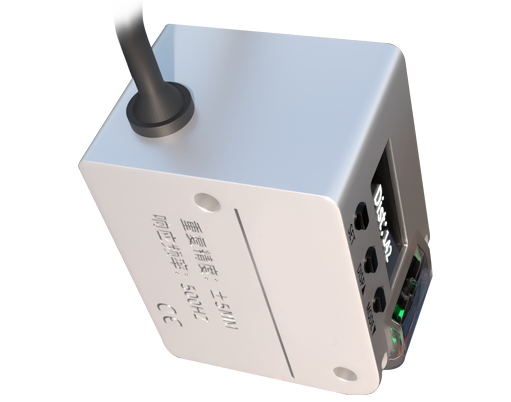
1. Through-Beam Sensors: These consist of separate transmitter and receiver units. The receiver detects the laser beam directly from the transmitter. An object is sensed when it interrupts the beam. This type offers the longest sensing range and highest accuracy, ideal for precise positioning or detecting small objects.
2. Retro-Reflective Sensors: Here, the transmitter and receiver are housed in a single unit. The emitted laser beam is reflected back by a dedicated reflector (corner-cube reflector). The receiver detects this reflected beam. An object is detected when it blocks the beam's path to the reflector. This simplifies alignment compared to through-beam systems.
3. Diffuse Reflective Sensors: Also a single-unit design, these sensors detect light reflected directly off the target's surface. The sensing distance depends heavily on the target's color, material, and surface texture. Advanced versions, like background suppression sensors, use triangulation to measure distance, making them less sensitive to the target's reflectivity.
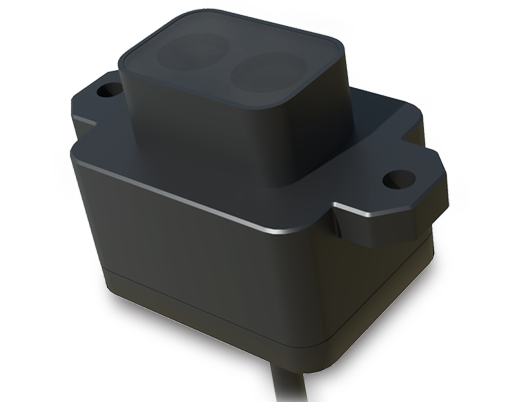
4. Analog Output Sensors: These provide a continuous output signal (e.g., 0-10V, 4-20mA) proportional to the distance or the intensity of the received light. They are essential for tasks requiring measurement, such as edge guiding, web tension control, or thickness monitoring.
5. Safety Laser Scanners: While often categorized separately, their receivers are integral. They create a protective field of infrared laser light and use sophisticated receiver arrays to detect any intrusion into the field, triggering an immediate safety stop for machinery.
Selecting the right laser receiver sensor requires careful analysis of several technical parameters:
* Sensing Range: The maximum reliable distance at which the receiver can detect the laser signal. Through-beam models offer the longest ranges, often exceeding 100 meters.
* Spot Size: The diameter of the laser beam at the receiver. A smaller spot allows for higher resolution and detection of minute objects.
* Response Time: The speed at which the receiver can react to a change in the beam, critical for high-speed production lines. It is typically in the microsecond range.
* Light Source & Wavelength: Common laser wavelengths are 655nm (red visible) and 850nm/905nm (infrared). Visible lasers aid in setup alignment. The receiver's filter must be matched to the transmitter's wavelength to reject ambient light interference.
* Output Type: Digital (switch), analog, or serial communication (IO-Link) outputs define how the sensor integrates with a PLC or controller.
* Environmental Robustness: Key ratings include Ingress Protection (IP67/IP69K for dust and water resistance) and operational temperature range. Housing materials (often stainless steel or rugged plastics) must withstand industrial environments involving vibration, shock, and contaminants like oil or coolant.
Applications are vast and growing. In material handling, laser sensors precisely detect package heights on conveyor belts. In automotive assembly, they ensure component presence and correct positioning with micron-level accuracy. In electronics manufacturing, they verify the placement of tiny surface-mount devices. Logistics companies use them for barcode reading and palletizing guidance. Furthermore, in automated warehousing, laser receiver sensors are fundamental for AGV (Automated Guided Vehicle) navigation and rack detection.
For optimal performance, proper installation and alignment are crucial. Ensure a stable mounting, clean optics, and secure cabling. Alignment tools provided by manufacturers are highly recommended, especially for long-range through-beam setups. Regular maintenance involves cleaning the lens with appropriate materials to prevent buildup that could attenuate the signal. Always refer to the manufacturer's datasheet for specific electrical connections, adjustment procedures, and safety warnings, particularly concerning laser class (typically Class 1 or Class 2, which are safe under normal operating conditions).
In conclusion, laser receiver sensors are sophisticated devices that translate a focused beam of light into actionable industrial data. Their selection is not a one-size-fits-all process but a strategic decision based on the specific detection challenge, environmental conditions, and required performance metrics. As Industry 4.0 advances, these sensors are increasingly becoming smarter with integrated diagnostics and connectivity, forming the eyes of modern automated systems and driving efficiency, safety, and quality to new heights.