Photoelectric proximity sensors are indispensable components in modern industrial automation, offering non-contact detection of objects across diverse environments. Their performance directly impacts system reliability, efficiency, and safety. Understanding the critical metrics that define sensor capability is essential for engineers and system integrators. This article outlines the primary performance indicators for photoelectric sensors, providing a technical foundation for selection and application.
The core operating principle involves emitting a light beam—typically infrared, visible red, or laser—and detecting changes in the received light caused by the presence of an object. Performance is quantified through several standardized parameters. Sensing range, perhaps the most fundamental specification, defines the maximum distance at which a standard target can be reliably detected. It is subdivided into nominal sensing distance and assured operating distance, the latter incorporating safety margins for voltage and temperature variations. Engineers must carefully consider both the required detection distance and the sensor's built-in hysteresis to prevent output chattering near the detection threshold.
Response time is another critical metric, determining the sensor's speed and its suitability for high-speed automation. It is defined as the time interval from the moment the target enters the sensing field to the moment the output signal switches state. For high-speed counting or sorting applications, sensors with sub-millisecond response times are often mandatory. This parameter is intrinsically linked to the sensor's switching frequency, which states the maximum number of on/off cycles per second.
Light source characteristics significantly influence performance. The wavelength of the emitted light affects beam visibility, environmental immunity, and material detectability. Infrared sensors (850-940 nm) are common for their invisibility and strong emission, while specialized blue or green laser sensors excel in detecting transparent objects. The beam pattern—whether a precise spot, focused line, or diffuse area—determines the sensing field's shape and must match the target's size and orientation.
Environmental robustness is quantified through ratings for temperature range, ingress protection (IP rating), and resistance to ambient light interference. Industrial sensors must operate reliably from sub-zero temperatures to over 70°C. An IP67 or IP69K rating ensures functionality despite dust, washdowns, or temporary immersion. Furthermore, immunity to ambient light from factory lighting or sunlight is crucial; this is often specified as a maximum allowable ambient lux level.
Electrical and output characteristics complete the performance profile. Operating voltage range (e.g., 10-30 VDC) defines compatibility with control systems. The output type—PNP/NPN, analog, or IO-Link—determines connectivity. Load current capacity must match the connected device, such as a PLC input or relay. For analog sensors, resolution and linearity error over the measurement range are key indicators of precision.
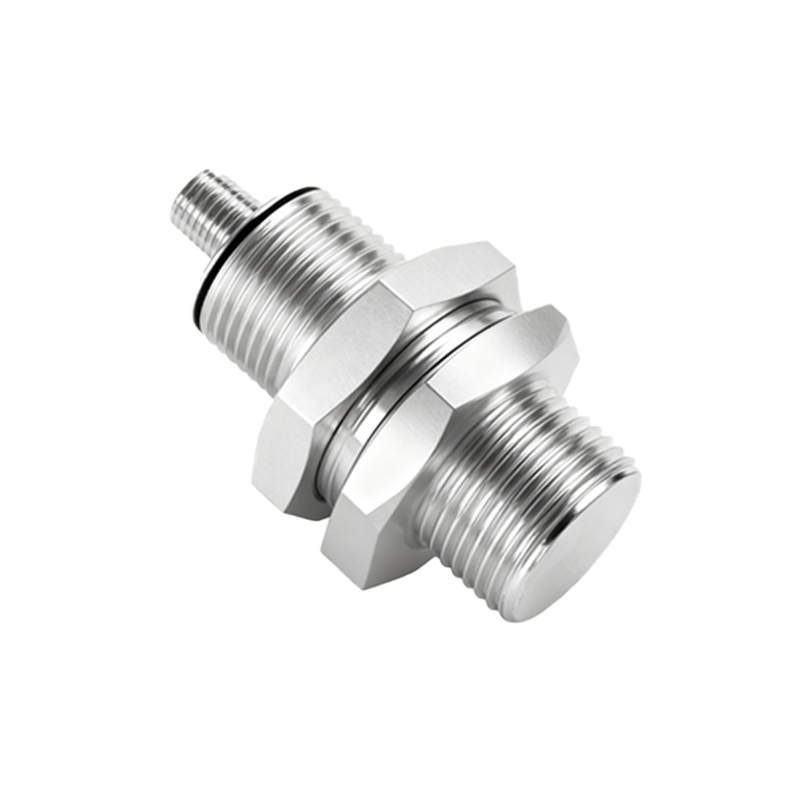
Finally, mechanical specifications like housing material (e.g., stainless steel or PBT plastic), connector type (M8/M12), and mounting style influence durability and ease of installation. A comprehensive evaluation of all these metrics—sensing range, response time, light source type, environmental ratings, and electrical specs—against the application's specific demands is the definitive process for selecting an optimal photoelectric proximity sensor, ensuring long-term operational stability and accuracy on the factory floor.