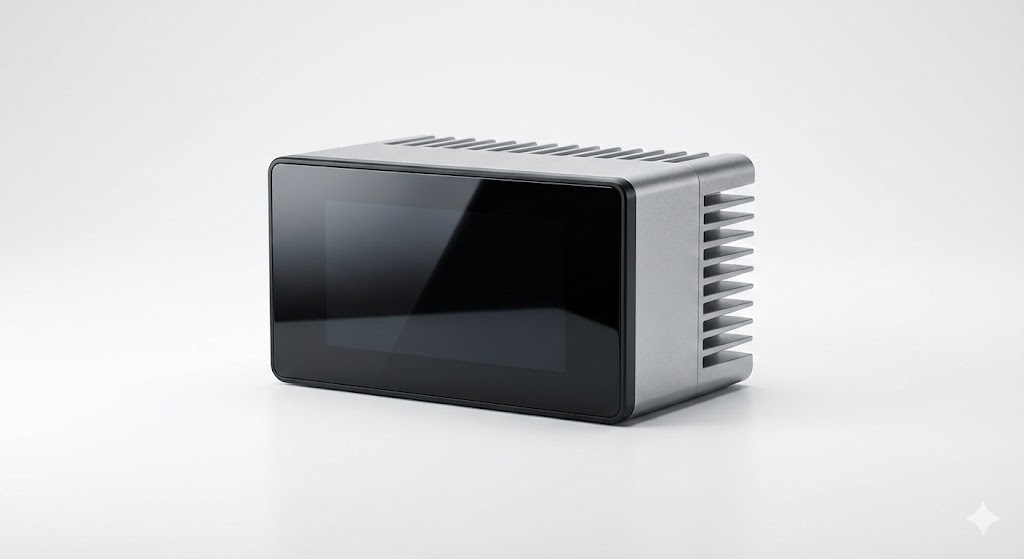
In the rapidly evolving landscape of industrial technology, portable laser sensors have emerged as a transformative force, redefining precision measurement and automation across diverse sectors. Unlike their fixed counterparts, these compact, high-precision devices offer unparalleled flexibility, enabling real-time data acquisition in environments where traditional sensors fall short. Their core principle relies on laser triangulation or time-of-flight measurement, projecting a focused beam onto a target surface and analyzing the reflected light to calculate distance, displacement, or profile with micron-level accuracy.
The primary advantage of portable laser sensors lies in their mobility. Engineers and technicians can now perform critical inspections directly on the factory floor, in field installations, or within confined spaces without halting production lines. This capability is invaluable for applications such as alignment verification of large machinery, thickness measurement of rolled metals, surface defect detection on composite materials, and vibration analysis of rotating equipment. The integration of wireless connectivity and onboard data logging further enhances their utility, allowing for seamless transfer of measurement results to cloud platforms or central control systems for immediate analysis and historical trending.
Modern portable laser sensors are engineered for robustness, often featuring IP67-rated enclosures that withstand harsh industrial conditions, including dust, moisture, and mechanical shock. Advanced models incorporate intelligent features like automatic calibration, ambient light compensation, and multi-point measurement protocols, reducing operator dependency and minimizing human error. In quality control processes, they facilitate rapid go/no-go decisions, ensuring components meet stringent tolerances before assembly. For predictive maintenance, these sensors monitor wear and dimensional changes in critical parts, enabling interventions before catastrophic failures occur, thus optimizing operational uptime and reducing maintenance costs.
The adoption of portable laser sensors is accelerating in industries such as automotive manufacturing, aerospace, electronics assembly, and energy. In automotive, they verify gap and flush dimensions on vehicle bodies. In aerospace, they inspect turbine blade profiles. Their role in facilitating Industry 4.0 initiatives is particularly significant, as they provide the essential granular data required for digital twins and smart factory ecosystems. As sensor technology advances, we anticipate further miniaturization, enhanced measurement ranges, and deeper integration with AI-driven analytics platforms, making portable laser sensors an even more indispensable tool for the future of industrial innovation and efficiency.