Laser sensors, particularly those with a 5-meter operational range, represent a critical advancement in non-contact measurement and detection technology. These devices operate on the principle of emitting a focused laser beam towards a target and analyzing the reflected light to determine distance, presence, or other characteristics. For a 5-meter range sensor, this involves precise time-of-flight (ToF) or phase-shift measurement techniques to ensure accuracy over the extended distance. The core component is a laser diode, typically in the visible red or infrared spectrum, chosen for its coherence and ability to produce a narrow, intense beam that minimizes dispersion over several meters.
The advantages of utilizing a 5-meter laser sensor are manifold in industrial settings. Firstly, they enable reliable object detection and positioning in applications where maintaining a safe distance from machinery or hazardous processes is paramount. This range is ideal for medium-scale automation, such as in material handling systems, robotic guidance, and large conveyor belt monitoring. Secondly, they offer high precision, often with sub-millimeter resolution, which is essential for quality control tasks like dimension verification in automotive or aerospace manufacturing. Unlike ultrasonic sensors, laser sensors are largely unaffected by ambient noise, air temperature, or pressure variations, providing stable performance. However, their performance can be influenced by target surface properties; highly reflective or absorbent surfaces may require sensor calibration or the use of specialized models with background suppression.
When selecting a 5-meter laser sensor for a specific application, several key parameters must be evaluated. The measuring range, naturally set around 5 meters, should have a clearly defined start and end point. Accuracy and repeatability are paramount; datasheets specify these as ±X mm. The response time dictates how quickly the sensor can process a measurement, crucial for high-speed production lines. The type of output (e.g., analog 4-20mA, 0-10V, or digital IO-Link, Ethernet) must integrate with the existing control system. Environmental ratings, such as IP67 for dust and water ingress protection, are vital for harsh industrial environments. Furthermore, consider the laser class (usually Class 2 or Class 1 with enclosure), which indicates safety levels for human exposure.
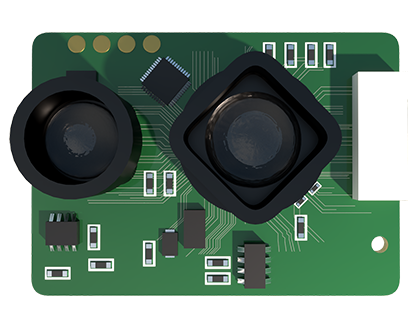
In practice, 5-meter laser sensors find diverse applications. In logistics, they are used for palletizing, warehouse vehicle navigation, and container profiling. In the automotive sector, they assist in robot weld seam tracking and part presence verification on large assemblies. In building automation, they facilitate level monitoring in tall silos or bulk material storage. A less obvious but growing application is in security systems for perimeter protection over moderate distances.
Installation and maintenance are straightforward but require attention. Ensure the sensor is mounted securely to avoid vibration, and the laser beam path is free of obstructions. Regular cleaning of the lens is necessary to prevent dust accumulation from attenuating the signal. Most modern sensors feature diagnostic LEDs or software tools for troubleshooting alignment or signal strength issues.
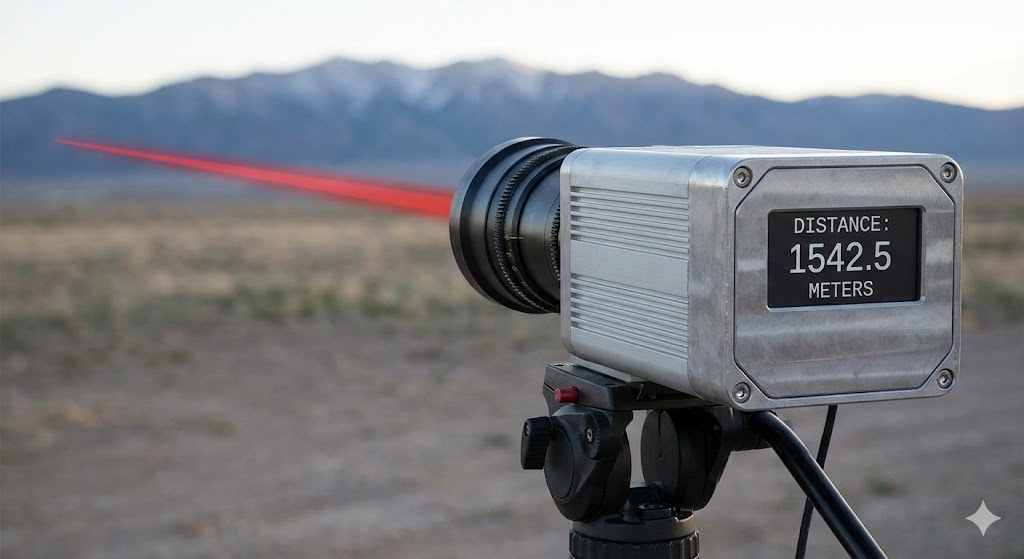
Looking ahead, the integration of 5-meter laser sensors with Industrial Internet of Things (IIoT) platforms is a significant trend. Sensors with advanced communication protocols can provide predictive maintenance data, reducing downtime. Furthermore, advancements in laser and detector technology continue to push the boundaries, offering longer ranges, higher accuracy, and more robust designs in compact housings.

In conclusion, the 5-meter laser sensor is a versatile and powerful tool in the electrical and automation engineer's arsenal. Its ability to provide precise, non-contact measurements over a practical distance makes it indispensable for modern industrial automation, enhancing efficiency, safety, and quality across numerous sectors. A thorough understanding of its operating principles and a careful selection process are essential to leverage its full potential in any given application.