For engineers, system integrators, and procurement specialists in automation, robotics, and industrial measurement, selecting the right laser distance sensor is a critical technical and financial decision. The price of a laser distance sensor is not a single figure but a spectrum influenced by a complex interplay of performance specifications, technology type, environmental robustness, and brand positioning. Understanding these factors is essential for making a cost-effective purchase that meets application requirements without over-specifying or underperforming.
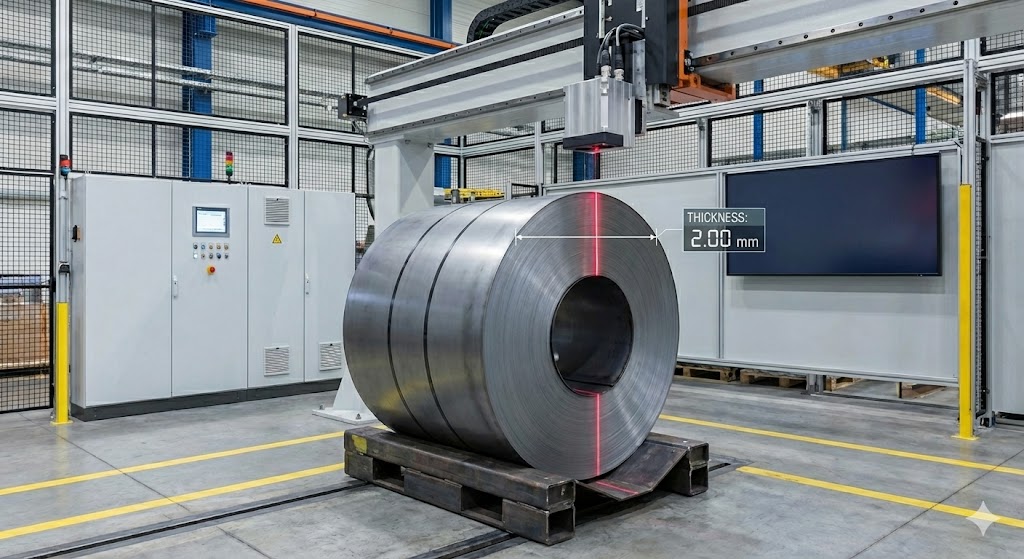
At the core of the pricing structure lies the underlying measurement technology. Time-of-Flight (ToF) sensors, which calculate distance by measuring the round-trip time of a laser pulse, dominate the market for medium to long ranges (from a few meters up to several hundred meters). These are generally considered the workhorse option for many industrial applications like bulk level monitoring or vehicle detection. Their prices are relatively moderate, typically ranging from $200 to $1,500 for standard industrial-grade units. For higher precision at shorter ranges (from millimeters to a few meters), triangulation-based laser sensors are preferred. These offer micron-level accuracy and are indispensable in precision assembly, electronics manufacturing, and thickness gauging. This high precision comes at a premium, with prices often starting around $500 and easily exceeding $3,000 for specialized models.
Beyond the basic principle, performance specifications are the primary price drivers. Measurement range is a straightforward factor; a sensor rated for 150 meters will cost more than an otherwise identical 30-meter model. Accuracy and resolution have a more pronounced impact. A sensor with ±1mm accuracy is significantly more affordable than one boasting ±0.1mm or even ±0.01mm. The latter involves superior optics, more stable lasers, and advanced signal processing electronics. Measurement speed or frequency is another key differentiator. A sensor capturing 10,000 measurements per second for high-speed dynamic profiling will command a much higher price than one operating at 10 Hz for static level checks.
The industrial environment dictates the need for protective features, which add cost. A standard IP67-rated housing for dust and water resistance is common. However, sensors designed for heavy-duty environments may require IP69K ratings for high-pressure washdown, specific certifications for use in hazardous areas (ATEX, IECEx), or robust metal housings with enhanced resistance to vibration and shock. These ruggedized versions can double or triple the base price of a sensor. Similarly, the choice of laser class influences cost. While most industrial sensors use Class 2 or Class 1 visible red lasers, models employing Class 1 invisible infrared lasers or eye-safe lasers for specific safety-critical applications are more expensive.
Interface and functionality also affect the bottom line. Basic sensors with analog (4-20 mA, 0-10 V) or simple digital (RS-232, RS-485) outputs are the most economical. Sensors featuring industrial Ethernet (EtherNet/IP, PROFINET, EtherCAT) or advanced onboard intelligence—such as programmable switching windows, data logging, or built-in measurement filtering—add layers of cost and value. Brand reputation and support play a significant, albeit less quantifiable, role. Established global leaders like KEYENCE, SICK, Banner Engineering, and Leuze command premium prices, justified by extensive application support, global service networks, and proven reliability. Competitive alternatives from Omron, Panasonic, or a growing number of specialized manufacturers offer compelling performance, often at a 20-40% lower price point, making the market dynamic.
As a practical guide, here is a generalized price bracket overview for new, industrial-grade laser distance sensors:
* Entry-Level / Basic Functionality: $150 - $500. Suitable for simple presence detection, basic positioning, and educational projects with moderate accuracy requirements.
* Mainstream Industrial Grade: $500 - $2,000. This is the most populated bracket, covering the majority of ToF and standard triangulation sensors for automation, material handling, and logistics. Good balance of performance, durability, and cost.
* High-Precision / Specialized: $2,000 - $10,000+. Reserved for ultra-precise triangulation sensors, long-range high-accuracy ToF sensors, and models with exceptional environmental ratings or specialized certifications.
In conclusion, navigating the laser distance sensor market requires a clear definition of your technical must-haves versus nice-to-haves. While initial purchase price is important, total cost of ownership—encompassing installation ease, calibration needs, software support, and long-term reliability—should be the ultimate metric. Engaging with supplier application engineers for a demo or sample testing against your specific use case is the most reliable strategy to ensure your investment delivers optimal value and performance on the factory floor.