In the realm of industrial automation and control systems, the reliable detection of objects is paramount. Among the myriad of sensing technologies available, the NPN 24V Normally Open (NO) proximity sensor stands as a fundamental and widely adopted component. This article delves into the technical specifications, operating principles, wiring configurations, and practical application considerations for this essential device.
At its core, a proximity sensor is a non-contact device designed to detect the presence or absence of a target object without physical contact. The "NPN" designation refers to the type of output transistor used within the sensor's electronic circuitry. An NPN transistor functions as a switching element that sinks current to the common negative (0V) line. In simpler terms, when the sensor is activated (detects a target), the NPN output switch closes, connecting the output signal line to the negative DC common. This is a current-sinking configuration.
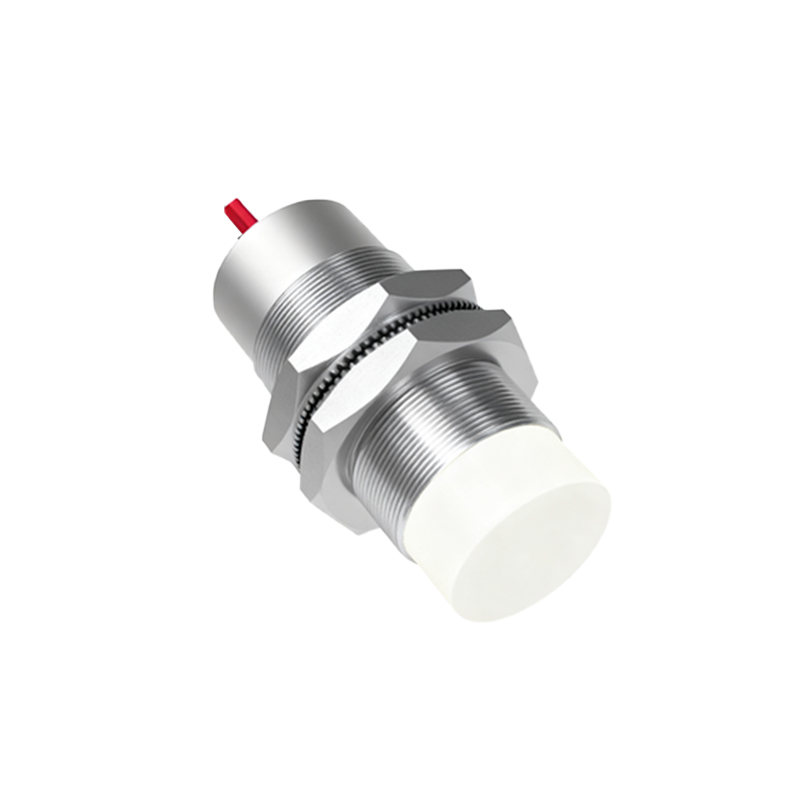
The "24V" specification indicates the standard operating voltage, typically DC 24 volts, which is the industrial control standard in many regions, including Europe and Asia. This voltage provides a robust signal level that is resistant to electrical noise commonly found in industrial environments. The "Normally Open" (NO) characteristic defines the state of the sensor's output in the absence of a target. A Normally Open output is in an "off" or high-impedance state when no target is present. Upon detecting a valid target within its sensing range, the output switches "on," allowing current to flow.
The operating principle of an inductive NPN 24V NO proximity sensor, one of the most common types, is based on electromagnetic induction. The sensor generates a high-frequency oscillating electromagnetic field from its sensing face. When a metallic target (e.g., steel, aluminum, brass) enters this field, eddy currents are induced in the target, causing a change in the oscillation amplitude. The sensor's internal circuit detects this change and triggers the state change of the NPN output transistor. It's crucial to note that the effective sensing distance, or "rated operating distance," is specified for a standard mild steel target. Other materials may require a correction factor.
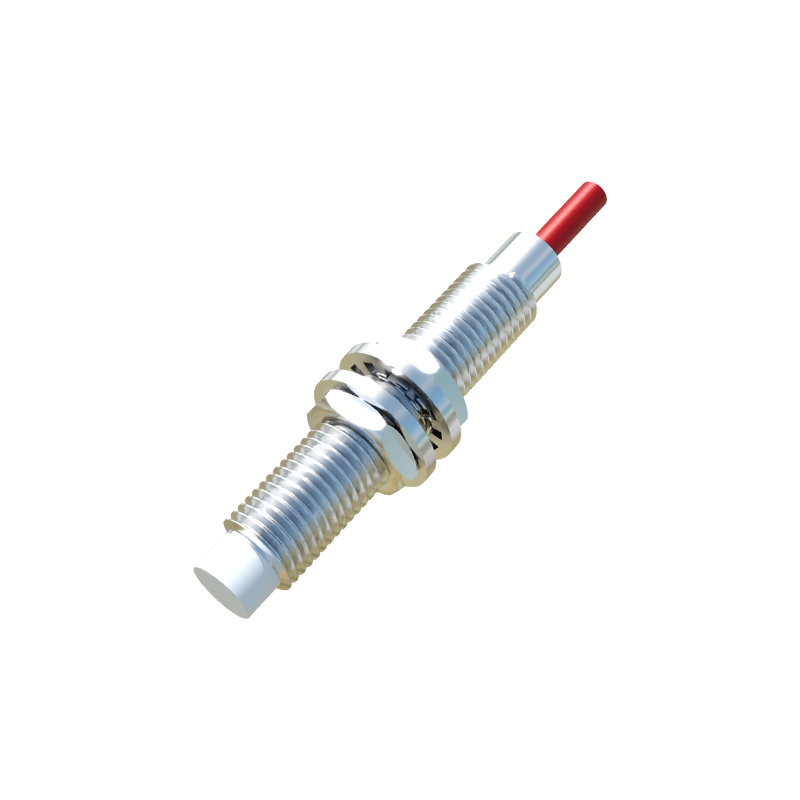
Wiring an NPN 24V NO sensor is straightforward but requires attention to polarity. A typical three-wire DC sensor has leads for Brown (24V+), Blue (0V Common), and Black (Output Signal). The Brown wire connects to the positive DC supply (+24V). The Blue wire connects to the negative DC common (0V). The Black output wire is connected to the load (e.g., a PLC input module, a relay coil). The other side of this load is then connected back to the positive supply (+24V). When the sensor activates, it completes the circuit for the load by sinking current from the load through the Black wire to the 0V (Blue wire). This configuration is sometimes called a "low-side switch."
Key advantages of using an NPN 24V NO proximity sensor include compatibility with many programmable logic controllers (PLCs) that are designed to accept sinking (NPN) inputs. They offer excellent resistance to electrical noise and provide a clear, solid-state switching signal. Their non-contact nature ensures long operational life with no mechanical wear from physical contact. The robust housing, often made of nickel-plated brass or stainless steel, provides resistance to vibration, moisture, and chemicals, meeting various IP (Ingress Protection) ratings.
When selecting and applying these sensors, engineers must consider several factors. The sensing range must be appropriate for the application, with a safety margin to account for mechanical tolerances and target variations. The target material and size can affect performance; small or non-ferrous targets may require a reduced sensing distance. The mounting style (flush, non-flush, threaded barrel) influences the sensing field and potential interference from surrounding metal. Environmental conditions such as temperature extremes, washdowns, or the presence of cutting fluids must be matched with the sensor's housing and sealing ratings. Finally, electrical considerations like load current, inrush current (for inductive loads), and the presence of short-circuit protection are critical for reliable integration.
In conclusion, the NPN 24V Normally Open proximity sensor is a versatile, reliable, and industry-standard solution for object detection. Its current-sinking output, compatibility with 24V DC control systems, and robust construction make it a cornerstone of modern industrial automation. A thorough understanding of its operation, wiring, and application nuances enables engineers and technicians to design and maintain efficient, fault-resistant control systems. Proper selection, installation, and maintenance ensure these sensors perform their critical role seamlessly within complex manufacturing and processing environments.