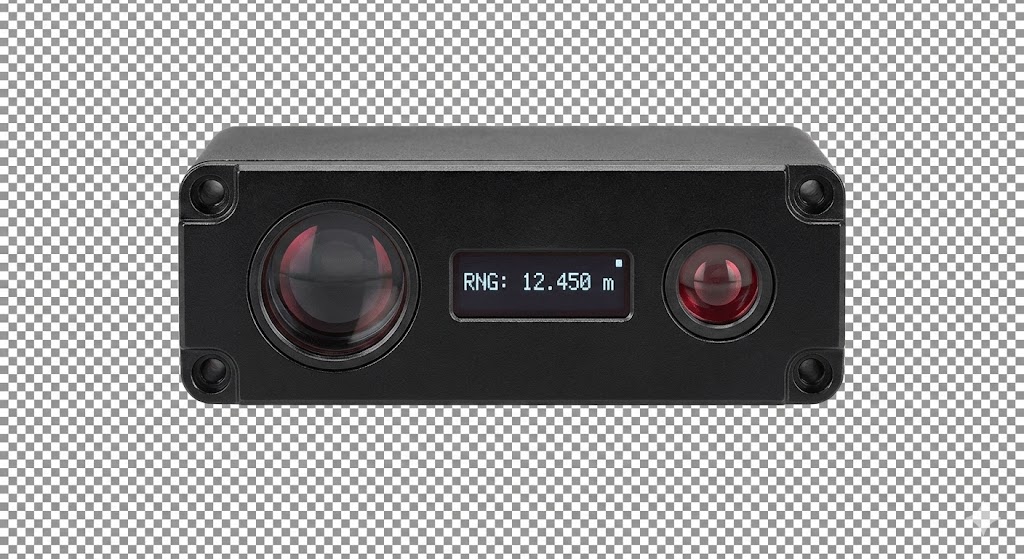
Distance sensors are integral components in modern laser marking machines, playing a crucial role in ensuring marking precision, consistency, and operational efficiency. These sensors measure the gap between the laser focusing lens and the workpiece surface, providing real-time feedback to the machine's control system. This allows for automatic focal length adjustment, compensating for surface irregularities or variations in material thickness. The primary technologies employed include confocal chromatic, triangulation, and time-of-flight sensors, each with distinct advantages. Confocal chromatic sensors offer high resolution and are ideal for reflective or transparent materials. Triangulation sensors, using a laser point and a receiver at an angle, provide cost-effective solutions for most standard applications. Time-of-flight sensors measure the round-trip time of a light pulse, suitable for longer ranges.
The implementation of a reliable distance sensor directly impacts marking quality. Without accurate distance maintenance, the laser spot size and power density on the material can vary, leading to inconsistent mark depth, width, or contrast. This is particularly critical for applications requiring fine details, such as serial numbers on medical devices or 2D matrix codes on electronic components. Furthermore, sensors enable faster setup times by automating the focus finding process, reducing manual calibration and increasing throughput. In automated production lines, they allow for seamless processing of parts with uneven surfaces or those presented on non-uniform pallets, minimizing downtime and scrap.
Integration considerations are paramount. Sensor selection depends on the specific laser marking process (e.g., annealing, engraving, foaming), material properties (metals, plastics, ceramics), required working distance, and environmental factors like ambient light or contaminants. The sensor's data must be synchronized with the laser's galvanometer scanner and software. Advanced systems use this data not only for Z-axis adjustment but also for dynamic power correction, ensuring uniform energy delivery across the entire marking field. Regular maintenance, such as lens cleaning and calibration checks, is essential to sustain sensor accuracy.
Future trends point towards smarter sensor integration with Industrial IoT (IIoT) platforms. Sensors will not only control distance but also provide predictive maintenance data, monitoring their own health and the process stability. The evolution towards more compact, faster, and multi-functional sensors will continue to push the boundaries of what laser marking can achieve in terms of speed, precision, and application versatility. Ultimately, a well-chosen and properly integrated distance sensor transforms a laser marking machine from a simple marking tool into a highly adaptive, precision manufacturing asset.