In the rapidly evolving landscape of industrial automation, the demand for miniaturization and precision has led to significant advancements in sensor technology. Among these, the development of "ultra-compact" and "ultra-short" proximity sensors represents a critical innovation. But what do these terms truly signify for engineers and system integrators? This article delves into their technical meaning, operational principles, and practical implications.
First, let's define the terminology. "Ultra-compact" refers to the exceptionally small physical dimensions of the sensor housing. These sensors are designed to fit into extremely tight spaces where traditional sensors cannot be mounted. Their miniature form factor does not compromise their robust construction, often meeting IP67 or higher ingress protection ratings to withstand harsh industrial environments. The reduction in size is achieved through advanced microelectronics, specialized packaging, and innovative design of the sensing face and coil systems.
Conversely, "ultra-short" specifically describes the sensing distance or range. An ultra-short sensing distance means the sensor is designed to detect an object only when it is very close to the sensing face—often within a few millimeters. This is not a limitation but a deliberate design feature for applications requiring high precision and repeatability. It minimizes the risk of false triggers from background objects and allows for precise positioning control. For instance, in detecting the presence of a tiny component on a high-speed assembly line or verifying the closed position of a miniature valve, an ultra-short sensing range is paramount.
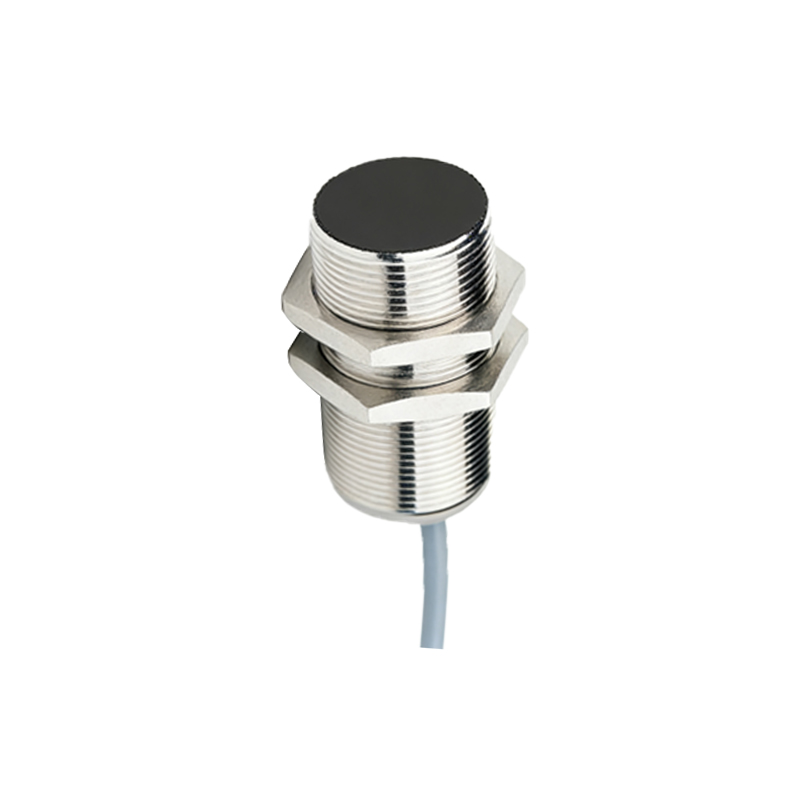
The synergy between being ultra-compact and ultra-short is where the true value lies. These sensors enable automation in densely packed machinery, such as semiconductor manufacturing equipment, miniature robotic arms, and compact packaging systems. They allow for more sensors to be installed in a given area, increasing the granularity of monitoring and control without increasing the machine's footprint. This is crucial for the trend toward modular and scalable automation solutions.
From a technical perspective, these sensors primarily operate on the inductive, capacitive, or magnetic principles, with inductive being the most common for metal detection. The challenge in miniaturization is maintaining a stable and reliable sensing performance. Engineers overcome this by optimizing oscillator circuits, using high-frequency magnetic fields, and implementing sophisticated algorithms for temperature compensation and noise immunity. The result is a sensor that, despite its tiny size, offers switching frequencies suitable for high-speed operations and excellent long-term stability.
Selecting an ultra-compact, ultra-short proximity sensor requires careful consideration. Key parameters include the exact sensing distance (Sn), the target material (for inductive sensors), the required mounting style (flush or non-flush), the electrical output type (PNP/NPN, NO/NC), and the supply voltage. It is also vital to consider environmental factors like temperature extremes, potential chemical exposure, and electromagnetic interference.
In conclusion, "ultra-compact" and "ultra-short" are not merely marketing terms but precise descriptors of a sensor's physical and functional characteristics. They address the core needs of modern automation: saving space, enabling precision, and enhancing system density. As machinery continues to shrink and processes demand greater accuracy, these sensors will become increasingly indispensable tools in the electrical engineer's arsenal, pushing the boundaries of what is possible in automated system design.