Magnetic induction proximity sensors, often referred to as inductive proximity sensors, are fundamental components in modern industrial automation and control systems. These non-contact sensing devices detect the presence or absence of metallic objects without physical contact, offering high reliability, long operational life, and robustness in harsh environments. The core operating principle is based on Faraday's Law of electromagnetic induction and the generation of eddy currents.
At the heart of a typical inductive proximity sensor lies an oscillator circuit, a coil wound around a ferrite core, a signal evaluator, and an output switching stage. The oscillator generates a high-frequency alternating magnetic field that radiates from the active face of the sensor, which is the sensing surface. This field is typically in the range of several hundred kilohertz. When a conductive, ferrous or non-ferrous metal target enters this oscillating magnetic field, electromagnetic induction occurs. According to Faraday's Law, a changing magnetic field induces circulating currents, known as eddy currents, within the conductive target material. These eddy currents flow in closed loops within the target and, in accordance with Lenz's Law, create their own opposing magnetic field.
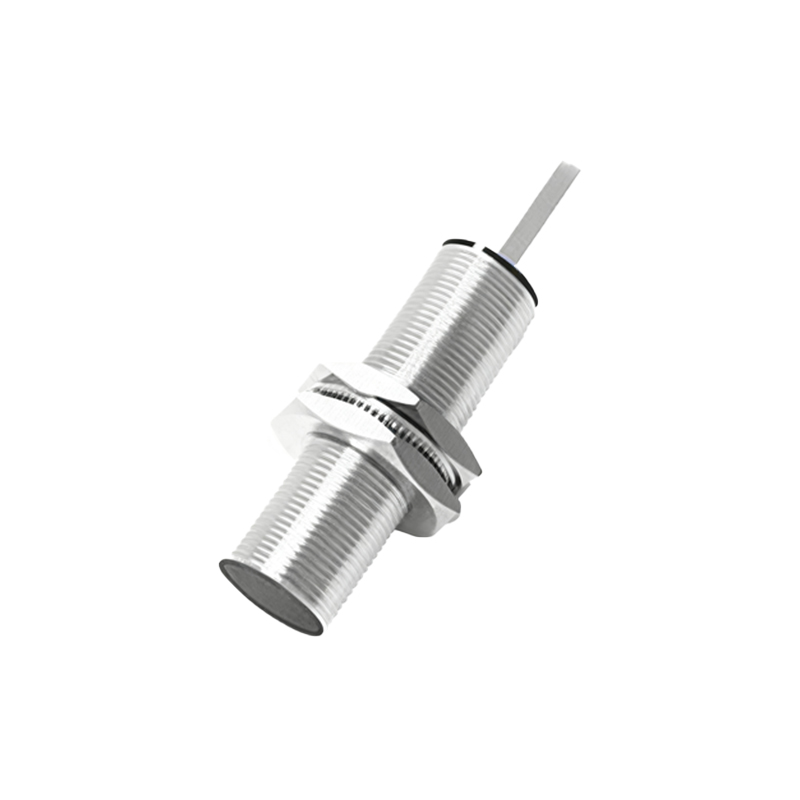
The generation of these eddy currents results in a measurable energy loss from the sensor's oscillator circuit. This loss manifests as a damping or attenuation of the oscillation amplitude. The sensor's internal detection circuit, often a Schmitt trigger or a similar comparator, continuously monitors the oscillator's energy level. When the energy loss due to the eddy current effect reaches a predetermined threshold—corresponding to the target being within the specified sensing range—the circuit triggers a change in the sensor's output state. For a normally-open (NO) sensor, this means the output switches from 'off' to 'on', typically by activating a solid-state switch (like an NPN or PNP transistor) or, in older models, an electromechanical relay.
The sensing distance, a critical parameter, depends on several factors: the properties of the target material, the size and shape of the target, the coil design, and the oscillator frequency. Ferrous metals (like iron and steel) generally allow for a longer sensing distance than non-ferrous metals (like aluminum or copper) because they have both conductive and permeable properties, which enhance the eddy current effect. The standard target for calibrating the nominal sensing distance (Sn) is usually a square of mild steel, 1mm thick, with sides equal to the diameter of the sensor's active face or three times the nominal sensing distance, whichever is greater.
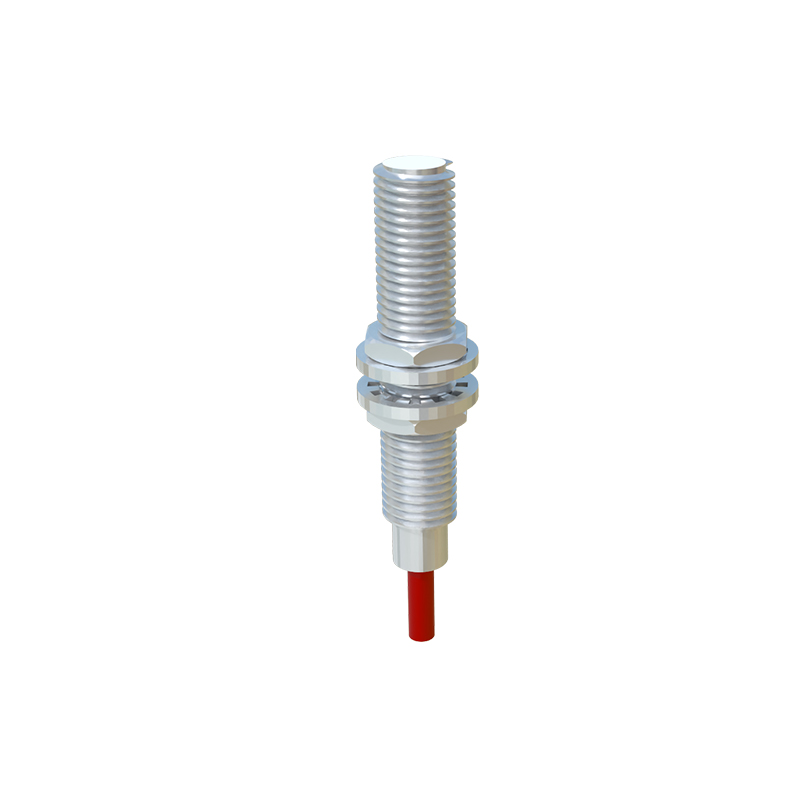
A key advantage of this operating principle is its immunity to environmental contaminants. Since the sensor detects only conductive materials, it remains unaffected by dust, oil, moisture, or other non-conductive substances that may accumulate on its face, making it ideal for dirty industrial settings like machining, material handling, and automotive assembly. Furthermore, the absence of moving parts in the sensing mechanism leads to virtually wear-free operation and high switching frequencies, often exceeding several thousand Hertz, enabling detection of very fast-moving objects on production lines.
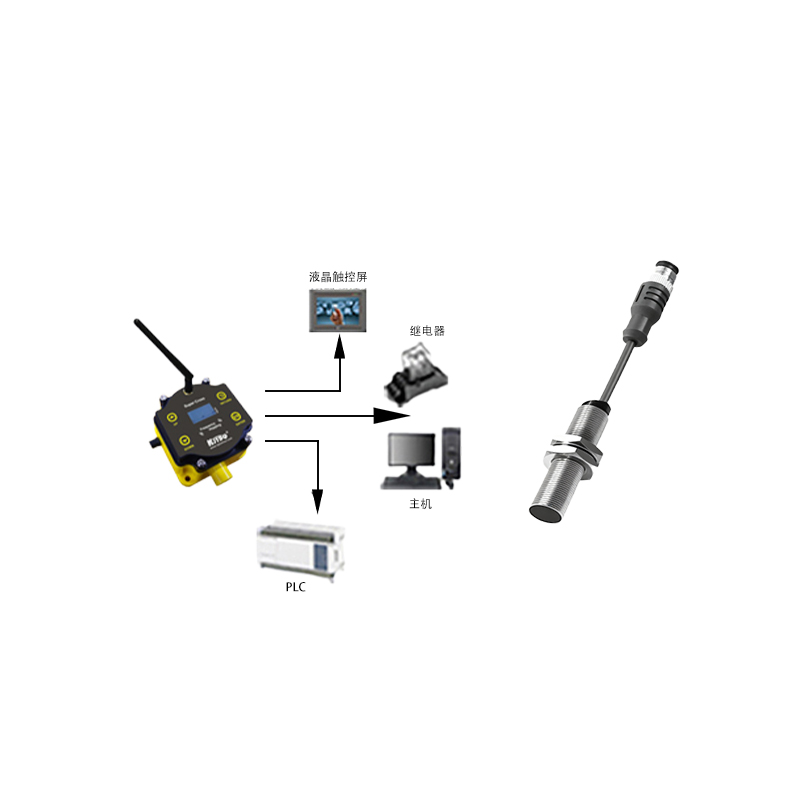
Modern inductive sensors incorporate advanced features for enhanced functionality. These include short-circuit and overload protection, reverse polarity protection, and embedded diagnostics like LED status indicators. Some specialized variants, such as factor-1 sensors, are designed to sense all metals at the same nominal range, while others offer analog current or voltage outputs proportional to the target distance, useful for positioning applications. The housing is typically constructed from robust materials like nickel-plated brass, stainless steel, or high-grade PBT plastic to withstand mechanical stress, chemical exposure, and extreme temperatures.
In summary, magnetic induction proximity sensors provide a highly effective and durable solution for position detection, end-of-travel monitoring, and object counting in automation. Their principle of operation—relying on the damping of an electromagnetic field by induced eddy currents—ensures precise and reliable detection of metallic objects, forming an indispensable link in the chain of industrial control and safety systems. Their continued evolution focuses on miniaturization, increased sensing ranges, and integration with industrial communication protocols like IO-Link for smarter, more connected factory environments.