In modern automotive engineering, accurately measuring steering wheel rotation is critical for advanced driver-assistance systems (ADAS), electric power steering (EPS), and autonomous driving functionalities. Proximity sensors, particularly inductive and capacitive types, have emerged as robust, non-contact solutions for this application, offering high reliability and longevity in harsh vehicle environments.
The fundamental principle involves mounting a proximity sensor, such as an inductive eddy-current sensor, in close proximity to a metallic target attached to the steering column or shaft. As the steering wheel rotates, the target's geometry—often a series of teeth, notches, or a coded ring—passes by the sensor face. The sensor detects the change in the electromagnetic field caused by the target's movement. Each passing feature generates a discrete pulse. By counting these pulses and, in sophisticated setups, interpreting specific patterns from a coded target, the vehicle's electronic control unit (ECU) can precisely determine the absolute or relative angular position, rotational speed, and number of full turns of the steering wheel.
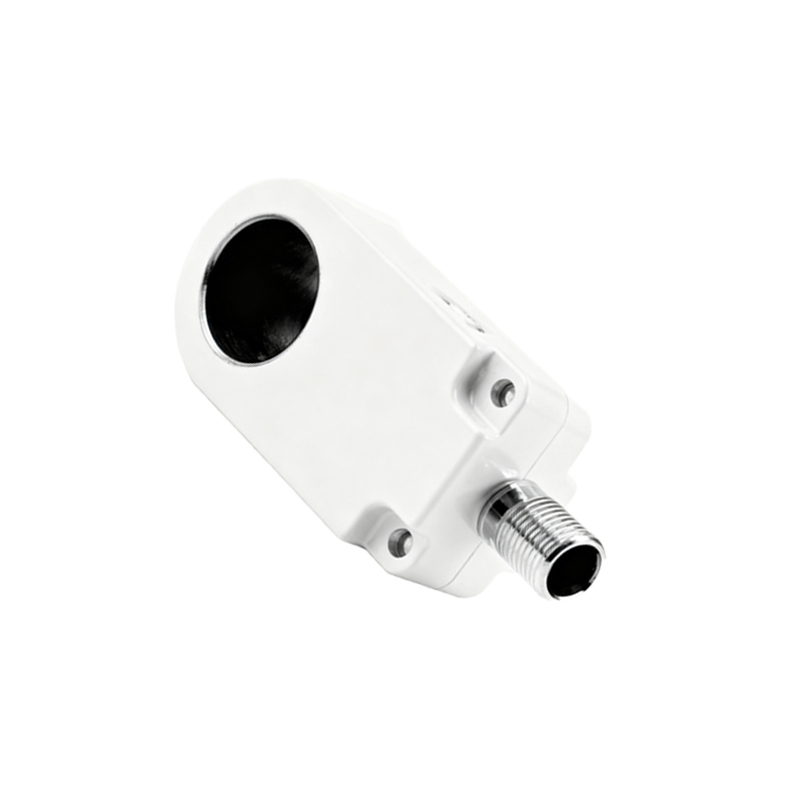
Inductive proximity sensors are predominantly used due to their immunity to environmental contaminants like dust, oil, and moisture. They are ideal for detecting ferrous metal targets. The sensor generates an oscillating electromagnetic field. When a metallic target enters this field, eddy currents are induced in the target, which loads the oscillator circuit. This loading effect is detected, triggering a solid-state output switch. For multi-turn measurement, a target wheel with multiple evenly spaced teeth is common. The ECU counts the pulses from a start position. To avoid error accumulation from missed counts, a multi-track absolute code ring (similar to a Gray code disk) can be used. Here, multiple sensors read different tracks simultaneously, providing a unique digital code for every distinct angular position within multiple turns, thus delivering absolute turn-count data without the need for continuous power or homing routines.
Key design considerations include sensor placement, air gap specification, target material and geometry, and signal conditioning. The air gap must be carefully maintained within the sensor's rated operating range to ensure signal integrity. Temperature stability is paramount, as automotive components operate from -40°C to 125°C or higher. Sensors must maintain consistent switching points across this range. Electromagnetic compatibility (EMC) is another critical factor; the sensor and its wiring must be shielded against electromagnetic interference from motors, inverters, and other high-power systems in the vehicle to prevent false triggering.
Compared to traditional potentiometers or optical encoders, proximity sensors offer distinct advantages. They have no mechanical contact, eliminating wear and tear. Their sealed housings provide high ingress protection (IP67/IP69K), making them resistant to washdowns and corrosive fluids. They are generally more cost-effective and mechanically robust than optical solutions, which can be compromised by dirt and condensation. The output is typically a clean digital signal or a quasi-analog signal (through duty cycle modulation), which is easily processed by the ECU.
In practice, the system integration involves calibrating the sensor's output to the steering wheel's mechanical stop positions. For safety-critical systems like steering, redundancy is often implemented. This may involve using two independent sensor channels or combining a proximity sensor for turn-counting with a torque sensor on the column for complete state awareness. The data is used for functions such as determining steering angle for Electronic Stability Control (ESC), controlling EPS motor assistance, and enabling features like lane-keeping assist and automated parking.
Future trends point towards the integration of sensing elements directly into the steering column module and the use of more advanced magneto-resistive sensors for even higher precision and packaging flexibility. However, the inherent durability, simplicity, and proven performance of inductive proximity sensors ensure their continued relevance in steering systems for years to come. Their role is foundational in translating physical driver input into precise digital data, a cornerstone of modern vehicle dynamics and automation.