In industrial settings where flammable gases, vapors, or combustible dusts are present, the risk of explosion is a constant concern. Explosion proof proximity sensors play a critical role in these hazardous environments, providing reliable object detection without becoming a source of ignition. The manufacturing of these specialized sensors involves a rigorous process that combines advanced sensing technology with robust mechanical engineering and stringent safety certifications.
The core principle behind explosion proof design is containment. Unlike intrinsically safe devices that limit electrical energy to prevent ignition, explosion proof enclosures are engineered to withstand an internal explosion and prevent it from propagating to the surrounding hazardous atmosphere. Manufacturing begins with the selection of materials, typically heavy-duty metals like stainless steel or brass alloys that offer high strength and corrosion resistance. The housing is meticulously machined to create flame paths—precisely engineered gaps between mating surfaces. These paths are critical; they cool any hot gases escaping from an internal explosion below the ignition temperature of the external atmosphere. The tolerances for these flame paths are exceptionally tight, often measured in microns, requiring precision CNC machining and thorough quality control checks.
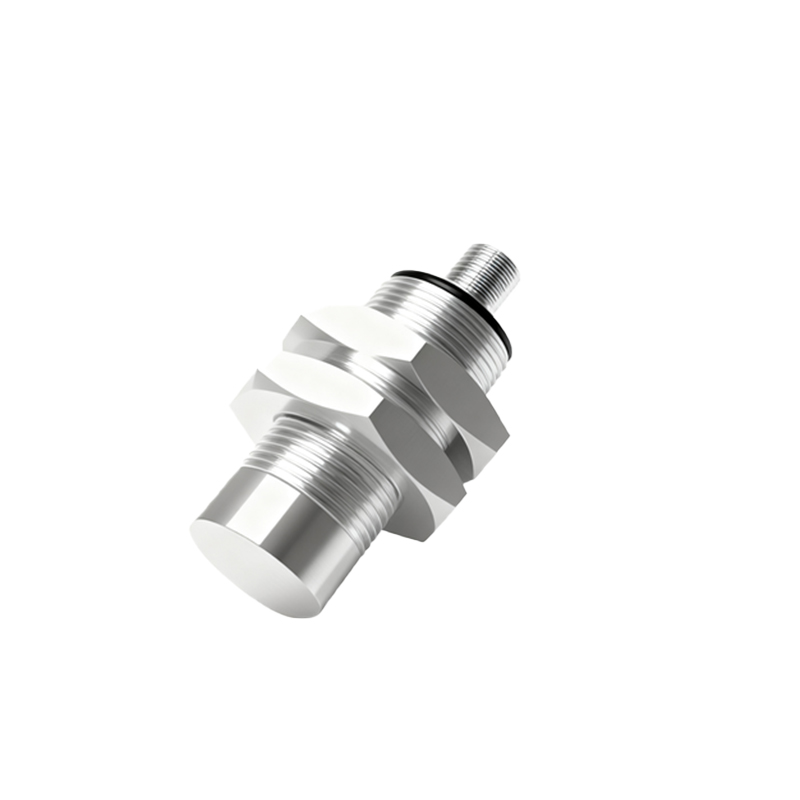
Within this fortified enclosure, the proximity sensing element is integrated. Common technologies include inductive, capacitive, and magnetic sensing principles. Inductive sensors, for detecting metallic objects, are widely used. Their manufacturing involves winding copper coils around a ferrite core, which is then potted with epoxy to secure it against vibration and thermal stress. The oscillator and evaluation electronics are designed with components rated for extended temperature ranges and are often mounted on conformally coated circuit boards to protect against humidity and contaminants. A key manufacturing step is the hermetic sealing of all entry points. Cable glands or conduit entries are specially designed compression seals that clamp down on the cable jacket, preventing gas ingress. Glass-to-metal seals are used for visual indicators or adjustment potentiometers, creating a permanent, pressure-tight bond.
Every explosion proof proximity sensor must comply with rigorous international standards, such as ATEX in Europe, IECEx internationally, or NEC/CEC in North America. The certification process profoundly influences manufacturing. Units are tested by approved bodies for their ability to contain explosions (pressure shock testing), resistance to ingress (IP ratings), and performance under extreme temperatures. Manufacturers must maintain a certified quality management system (like ISO 80079-34) that governs every step, from material sourcing to final testing. Production batches often include destructive testing samples, where sensors are deliberately subjected to over-pressure to verify design integrity.
The final assembly is a careful, clean process. After the internal components are installed, the housing halves are joined with specially hardened bolts, tightened to a specified torque sequence to ensure even pressure on the flame path gaskets. Post-assembly, each sensor typically undergoes functional testing—checking its sensing range, output signal, and switching frequency—and may be subjected to a pressure decay leak test to verify seal integrity. Labeling is also critical; each unit bears its certification markings, temperature codes, and gas group classifications, providing essential information for safe installation.
The evolution in manufacturing now also focuses on connectivity and diagnostics. Modern explosion proof sensors may incorporate IO-Link communication, allowing for parameter setting and condition monitoring without compromising the explosion proof integrity. This adds layers of complexity to the internal electronics but offers significant value in predictive maintenance. Furthermore, advancements in laser welding and improved sealing compounds continue to enhance reliability and allow for more compact designs.
Ultimately, manufacturing an explosion proof proximity sensor is an exercise in disciplined engineering and uncompromising quality assurance. It transforms a standard industrial component into a vital safety device, enabling automation and control in sectors like oil and gas, chemical processing, mining, and grain handling. The meticulous processes ensure that these silent guardians perform flawlessly, protecting both infrastructure and human lives by preventing catastrophic events in some of the world's most challenging workplaces.