When discussing laser sensors, a common question arises: do these devices operate at zero temperature? The answer is no—laser sensors, like all electronic and optical devices, have a measurable temperature during operation. Understanding the thermal characteristics of laser sensors is crucial for their proper application, calibration, and longevity.
Laser sensors are active devices that generate or detect light. The laser diode itself, which is the core component in many laser-based sensors, produces heat when electrically pumped. This is due to inherent inefficiencies in the process of converting electrical energy into coherent light. Not all injected electrical power becomes laser output; a significant portion is dissipated as heat. This phenomenon is known as thermal loading. Consequently, the laser diode's junction—the active region where light emission occurs—can reach temperatures significantly above the ambient environment. Manufacturers specify maximum operating junction temperatures, typically around 70°C to 85°C for common industrial sensors, beyond which performance degrades rapidly and permanent damage can occur.
The concept of "sensor temperature" itself requires clarification. We can refer to several key temperatures:
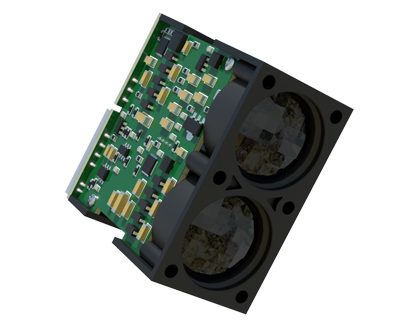
1. Ambient Temperature: The temperature of the air surrounding the sensor housing.

2. Case Temperature: The temperature measured on the external metal or plastic housing of the sensor.
3. Junction Temperature (Tj): The temperature at the semiconductor chip's active layer inside the laser diode. This is the most critical temperature for performance and reliability.
4. Heat Sink Temperature: If attached, the temperature of the thermal management component.
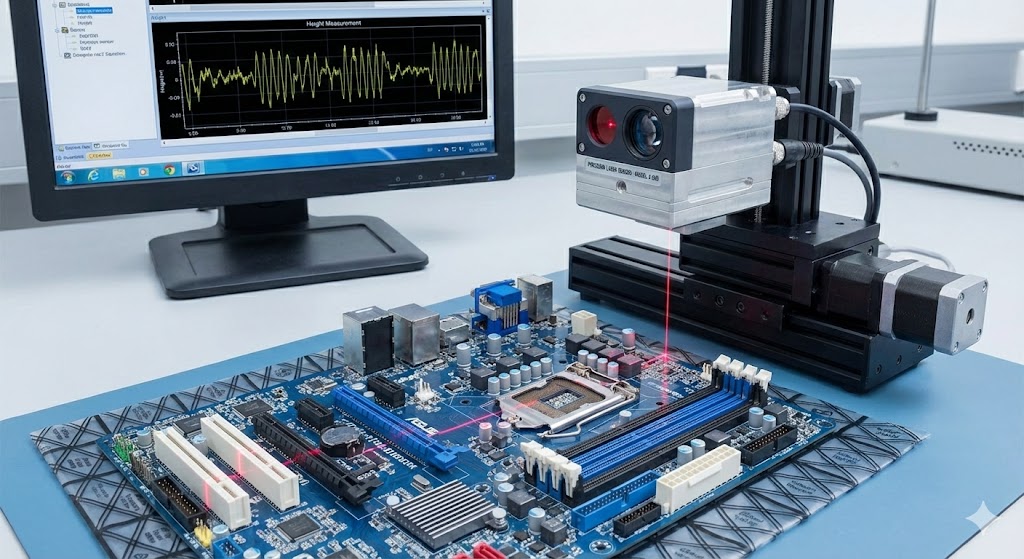
The junction temperature is always higher than the case temperature, which in turn is higher than the ambient temperature. This gradient is governed by basic thermodynamics and the sensor's thermal resistance—a measure of how effectively heat flows from the junction to the environment.
Why does temperature matter so much for laser sensors? Temperature directly influences several key performance parameters:
* Wavelength Shift: The output wavelength of a laser diode is temperature-dependent. A typical shift for common semiconductor lasers is around 0.3 nm per degree Celsius. For sensors relying on precise wavelength for interference measurements or spectroscopic analysis, this drift can introduce significant error.
* Output Power: The light output power of a laser diode decreases as junction temperature increases for a given drive current. This affects the sensor's signal strength and maximum range.
* Threshold Current: The minimum current required to initiate lasing increases with temperature, affecting efficiency.
* Detector Sensitivity: In sensors that detect laser light (like triangulation or time-of-flight sensors), the photodetector's responsivity and noise characteristics are also temperature-sensitive.
* Long-Term Reliability: Operating a laser diode at high junction temperatures accelerates aging mechanisms, drastically reducing its operational lifetime. The rule of thumb is that lifetime halves for every 10°C increase in junction temperature.
Therefore, far from being at "zero," managing the temperature of a laser sensor is a primary design and application concern. Engineers employ various strategies for thermal management:
* Passive Heat Sinks: Aluminum fins attached to the sensor housing to increase surface area for convective cooling.
* Active Cooling: In high-power or precision laboratory applications, thermoelectric coolers (Peltier elements) or even liquid cooling systems are used to maintain a constant temperature.
* Internal Temperature Compensation: Many high-quality industrial laser sensors incorporate a thermistor to monitor case or internal temperature. The sensor's microprocessor then uses this data to adjust drive current or apply algorithmic corrections to the output signal, counteracting the effects of thermal drift.
* Material Selection: Using materials with high thermal conductivity for housings and mounts to efficiently transfer heat away from the laser diode.
In practical applications, such as laser distance sensors on a factory floor or LiDAR units on an autonomous vehicle, the sensor's temperature will fluctuate with the environment. A sensor calibrated at 20°C may show drift if used in a 40°C environment without compensation. Datasheets always specify an operating temperature range (e.g., 0°C to 50°C) which defines the ambient conditions under which the sensor will meet its performance specifications.
In summary, laser sensors are not at zero temperature. They are thermodynamic systems whose performance is intrinsically linked to their thermal state. The junction temperature of the laser diode is a key factor defining optical output, accuracy, and reliability. Successful implementation of laser sensing technology hinges not on achieving a zero-temperature state, which is physically impossible for an operating device, but on understanding, monitoring, and actively managing the sensor's temperature through intelligent design and compensation techniques. Recognizing this principle is fundamental to selecting, installing, and maintaining laser sensors for optimal, long-term performance in any application.