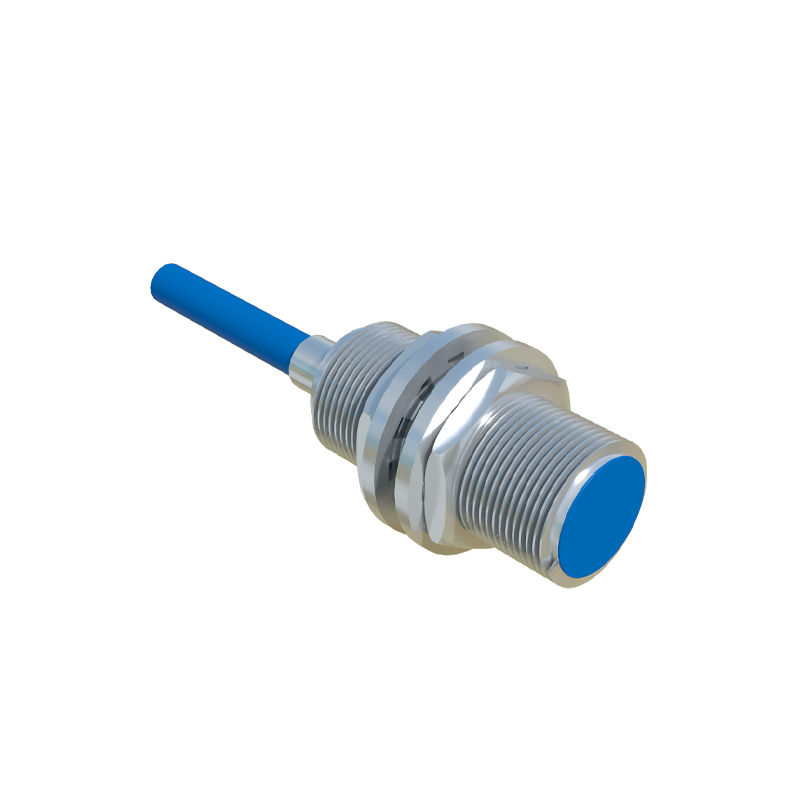
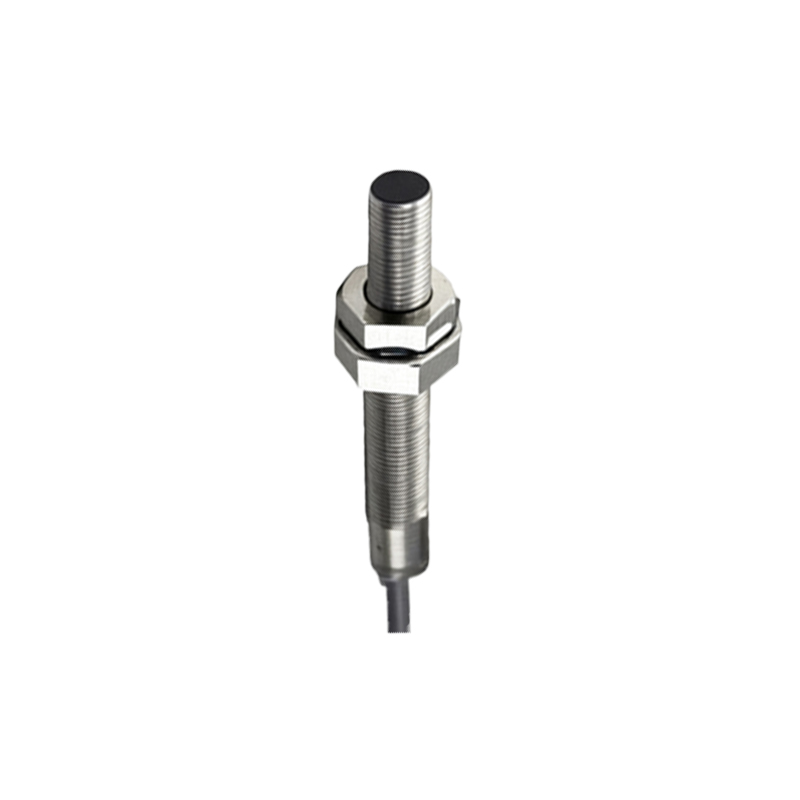
In industrial automation and control systems, proximity sensors are indispensable components for non-contact object detection. Among the various types, the NPN (Negative-Positive-Negative) three-wire proximity switch configured as Normally Closed (NC) is a specific and widely used variant. This article delves into its operational principles, wiring methodology, application scenarios, and key considerations for selection and troubleshooting, providing a comprehensive guide for engineers and technicians.
Fundamentally, an NPN proximity sensor is a solid-state electronic device. It operates by generating an electromagnetic field from its sensing face. When a metallic target (ferrous or non-ferrous, depending on the sensor type) enters this field, it causes a change in the oscillation amplitude within the sensor's internal circuit. This change is detected and processed, triggering a switching action in the output transistor. The "NPN" designation refers to the type of bipolar junction transistor (BJT) used for the output stage. In an NPN transistor, the load is connected between the output wire and the positive supply voltage (V+). The transistor acts as a low-side switch; it switches the connection to the negative supply (0V or common).
A standard three-wire sensor provides three distinct connections: Brown wire for positive DC supply voltage (typically +10 to +30 VDC), Blue wire for the common negative or 0V return, and Black wire for the output signal. The "Normally Closed" configuration defines the state of the output circuit when the sensor is in its idle condition—no target present. For an NPN NC sensor, when no target is within the sensing range, the internal NPN transistor is ON, allowing current to flow from the load, through the Black output wire, into the sensor, and out through the Blue wire to common. This creates a closed circuit to the common, meaning the output signal (measured between Black and Blue) is effectively at a low impedance state close to 0V. When a target enters the sensing range, the transistor switches OFF, opening the circuit between the Black and Blue wires. The output then becomes high impedance, and the voltage at the Black wire (if monitored with a pull-up resistor) can rise towards the supply voltage.
The wiring of an NPN NC three-wire sensor to a programmable logic controller (PLC) input module is a common task. The Brown wire connects to the positive DC supply. The Blue wire connects to the common negative of the same supply. The critical connection is the Black output wire. For an NPN output, this wire must be connected to the PLC's input terminal. The specific type of PLC input determines the rest of the circuit. Most modern DC input modules are "sinking" or "sourcing" specific. For an NPN (sinking) output, a sourcing-type PLC input module is required. In this setup, the PLC input card internally provides a connection to the positive supply through a resistor. When the NPN NC sensor is idle (transistor ON), current flows from the PLC internal source, through the input point, into the sensor's Black wire, and out its Blue wire to common, thus activating the PLC input. When a target is detected, the transistor turns OFF, current stops, and the PLC input de-energizes. This inverse logic—target present equals input OFF—is a hallmark of the NC configuration and must be accounted for in the control program.
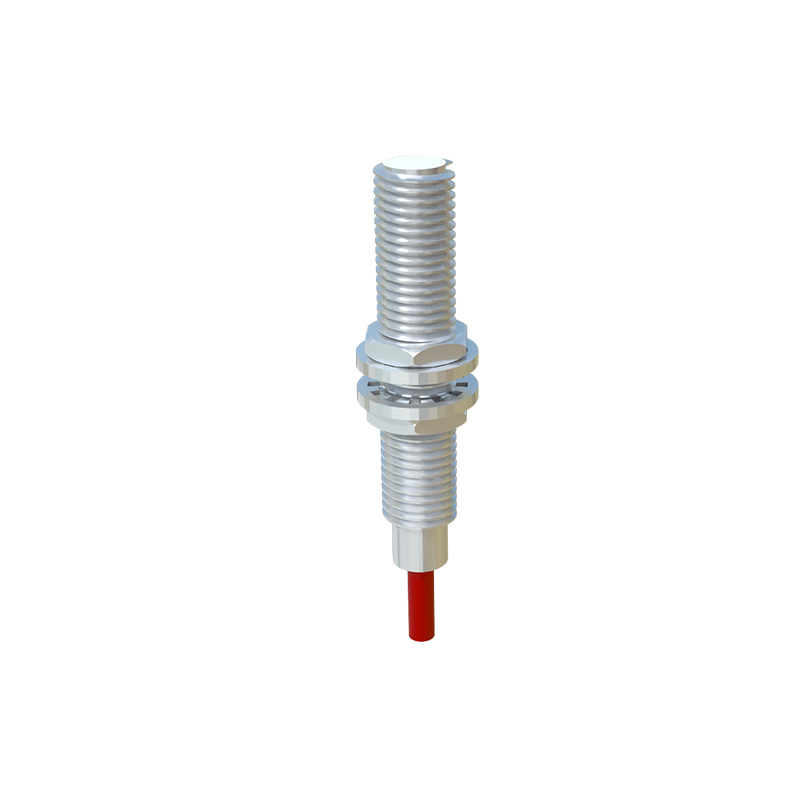
The choice of a Normally Closed configuration offers distinct advantages in safety-critical applications. The primary benefit is the "fail-safe" characteristic. In a Normally Closed circuit, a wire break, a loss of power to the sensor, or a sensor failure will typically cause the output to open (go to the "off" state), which can be programmed to trigger an alarm or place a machine into a safe state. This is often desirable for emergency stop monitoring, guard door interlocking, or presence detection where an absence of signal indicates a hazard. For instance, an NPN NC sensor monitoring a safety guard door would keep a PLC input energized while the door is closed. If the door opens, the target moves away, the sensor switches, and the PLC input de-energizes, initiating an immediate machine halt.
When selecting and applying an NPN NC proximity sensor, several parameters are crucial. Sensing distance, rated for a standard target, must be chosen with a safety margin (typically 70-80% of nominal) to account for mechanical tolerances and environmental factors. The housing material (e.g., brass, stainless steel) must suit the environment, resisting chemicals, washdowns, or physical impact. The output current rating of the sensor must not be exceeded by the load (PLC input, relay coil). Electrical noise immunity is vital in environments with variable frequency drives or welding equipment; shielded cables and proper grounding are