In the rapidly evolving landscape of industrial automation, where smart sensors and IIoT-enabled devices dominate conversations, the humble mechanical proximity sensor continues to hold a vital and often irreplaceable position. For engineers and maintenance professionals on the plant floor, the question isn't always about adopting the latest technology, but about selecting the most reliable, robust, and cost-effective solution for the task. Mechanical proximity sensors, with their straightforward electromechanical operation, excel in this regard, proving their worth day in and day out across countless applications.
At its core, a mechanical proximity sensor is a marvel of simple engineering. It typically consists of a physically actuated plunger or lever. When an object makes physical contact with this actuator, it triggers an internal switch mechanism—often a robust set of contacts—to change state. This action directly opens or closes an electrical circuit, providing a clear, unambiguous signal. There is no complex circuitry interpreting magnetic fields, capacitance changes, or light beams. The operation is binary, tangible, and directly linked to physical contact. This simplicity is the bedrock of its reliability. In environments saturated with electromagnetic interference, weld field noise, or conductive dust, technologies like inductive or capacitive sensors can suffer from false triggering or signal degradation. A mechanical sensor, however, is largely immune to such environmental noise. Its signal is generated by a definitive physical movement, making it exceptionally stable in electrically harsh conditions.
Durability is another cornerstone of their utility. High-quality mechanical limit switches, a common type of mechanical proximity sensor, are built to withstand extreme punishment. They are housed in rugged, often metal or high-impact polymer enclosures rated for IP67, IP69K, or higher, protecting against ingress of water, oil, and particulates. The actuators are designed to handle millions of operational cycles. This mechanical toughness makes them the default choice for harsh environments: machine tools splashed with cutting fluids, heavy-duty material handling systems with significant vibration, outdoor applications exposed to the elements, and foundries with high temperatures and particulate matter. While solid-state sensors have improved, few can match the sheer physical resilience of a well-built mechanical limit switch when it comes to absorbing accidental impacts or overloads.
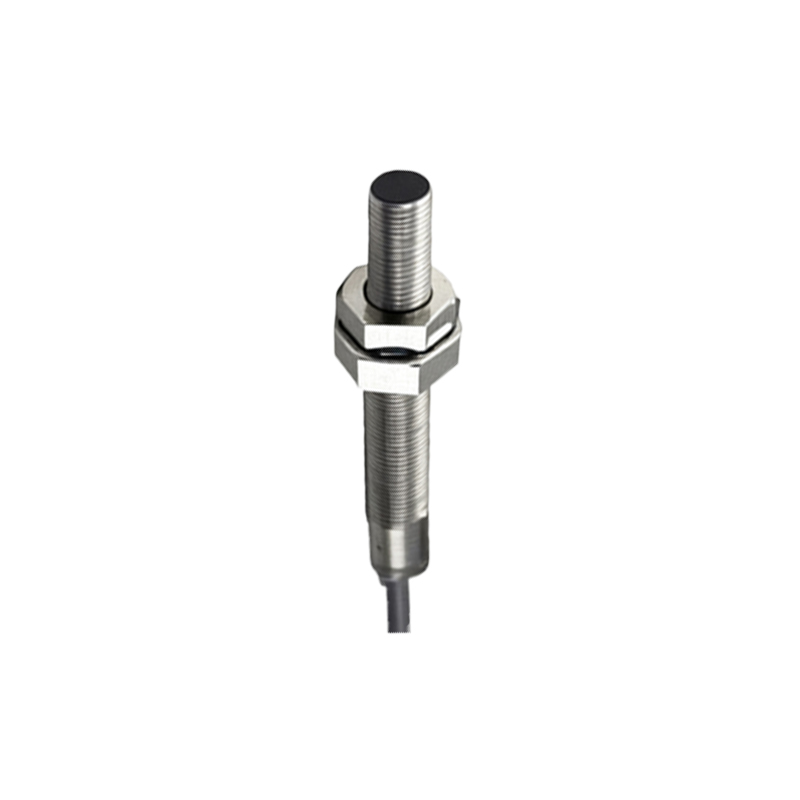
From a design and integration perspective, their advantages are significant. They operate on a simple, universal principle requiring no specialized configuration tools, software, or complex wiring. They typically work with standard AC or DC voltages and provide a direct, dry contact output that is compatible with virtually any PLC input module, relay, or controller. This reduces integration time, simplifies troubleshooting, and minimizes training requirements for maintenance staff. The tactile and often audible feedback of the switch actuation provides immediate confirmation of operation, a feature highly valued during machine setup, manual testing, and diagnostic procedures. Furthermore, the variety of actuator styles—roller levers, adjustable levers, push rods, and wobble sticks—allows for precise mechanical adaptation to the sensing need, such as detecting the presence of a part on a conveyor, confirming the end-of-travel of a linear actuator, or acting as a safety interlock on a guard door.
Cost-effectiveness, both in initial investment and total cost of ownership, is a compelling argument. Mechanical proximity sensors are generally less expensive than their solid-state counterparts with similar environmental ratings. More importantly, their longevity in demanding applications reduces replacement frequency. When they do eventually fail, diagnosis is often straightforward (a visual check of the actuator or a simple continuity test), and replacement is typically a quick, uncomplicated task that doesn't require recalibration or reprogramming of a system.
This is not to say they are without limitations. The requirement for physical contact means they are subject to mechanical wear over time and are not suitable for sensing fragile objects or applications requiring high-speed, non-contact detection. Their operating speed, while sufficient for most industrial sequencing, is lower than that of solid-state sensors. However, in applications where absolute positional certainty, environmental immunity, and brute-force durability are paramount—such as in heavy machinery, mobile equipment, primary safety interlocks, and critical position verification—the mechanical proximity sensor is frequently the optimal and most trusted solution.
In conclusion, while advanced sensing technologies continue to expand the horizons of automation, the mechanical proximity sensor remains a fundamental and exceptionally useful tool. Its enduring popularity is a testament to the engineering principles of simplicity, robustness, and functional reliability. For the practicing engineer, specifying a mechanical proximity sensor is often not a choice based on outdated tradition, but a deliberate and savvy selection for performance, durability, and cost in the real-world conditions of the factory floor.