In modern automated manufacturing environments, industrial robots rely heavily on a suite of sensors to perceive and interact with their surroundings safely and precisely. Among these, proximity sensors play a fundamentally critical role, acting as the robot's primary sense of "touch" for non-contact detection. This guide delves into the core principles, prevalent technologies, selection criteria, and application best practices for proximity sensors in industrial robotics.
At its core, a proximity sensor is a device that detects the presence or absence of an object within a specified range without any physical contact. For an industrial robot, this capability is indispensable. It enables functions such as precise object positioning for pick-and-place operations, collision avoidance to protect both the robot and its environment, part presence verification on conveyor lines, and accurate tool or end-effector alignment. The non-contact nature of these sensors eliminates mechanical wear, allows for high-speed operation, and enables detection of delicate or sensitive objects.
Several sensing technologies dominate the industrial robotics landscape, each with distinct operating principles and ideal use cases. Inductive proximity sensors are the workhorses for detecting metallic objects. They generate an electromagnetic field; when a metal target enters this field, it induces eddy currents, causing a change in the sensor's oscillation amplitude, which triggers the output switch. They are robust, resistant to environmental contaminants like dust and oil, and offer excellent repeatability. However, they are ineffective for non-metallic materials.
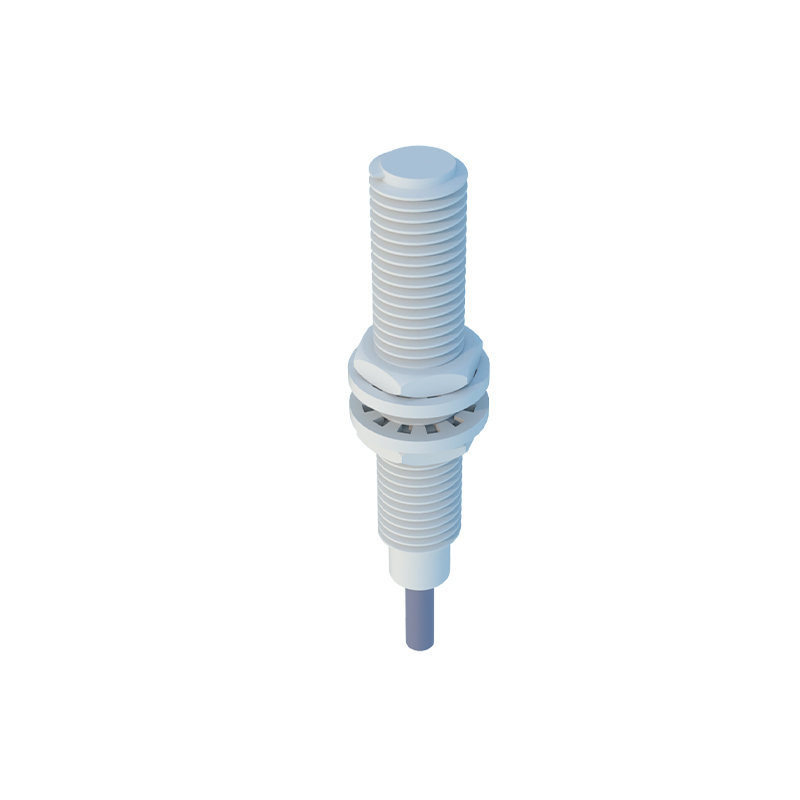
For applications involving non-metallic materials—such as plastic, wood, glass, or liquid containers—capacitive proximity sensors are the preferred choice. These sensors detect changes in capacitance formed between the sensor's active surface and the target object. They can sense a wider variety of materials but are more susceptible to environmental factors like humidity and temperature fluctuations. Proper installation and tuning are crucial to avoid false triggers from background objects.
Magnetic proximity sensors, often utilizing reed switches or Hall-effect elements, are specifically designed to detect permanent magnets. They are frequently used in robotic applications for detecting cylinder piston position in pneumatic actuators or as limit switches where a small, embedded magnet is attached to a moving part. They offer very long operational life and high reliability in harsh conditions.
Photoelectric sensors, which use a light beam (visible, infrared, or laser) to detect objects, provide the longest sensing ranges among common proximity sensors. In robotics, they are essential for long-range detection, small part sensing, and color or contrast differentiation. Variants include through-beam (separate emitter and receiver), retro-reflective (bounces light off a reflector), and diffuse (reflects light directly off the target) types. While offering great flexibility, they can be affected by ambient light, dust, and the color or reflectivity of the target object.
Ultrasonic sensors measure the time-of-flight of high-frequency sound waves to determine distance to an object. They excel in applications requiring precise distance measurement, level sensing of bulk materials, or detecting objects with complex shapes or varying surface properties (like transparent glass or liquid surfaces) that challenge photoelectric sensors. They are less affected by color, dust, or light but can be influenced by temperature gradients and air turbulence.
Selecting the right proximity sensor for a robotic application requires a meticulous analysis of several parameters. The sensing range, or the nominal distance at which a standard target is detected, must be carefully chosen to ensure reliable operation without unnecessary oversizing. The target material (metal, plastic, liquid) directly dictates the technology choice (inductive, capacitive, etc.). Environmental conditions are paramount: factors like exposure to welding sparks, cutting fluids, high-pressure washdowns, extreme temperatures, or heavy vibration will determine the required housing material (often stainless steel or PBT plastic) and ingress protection (IP) rating.
Electrical characteristics must match the robot's controller interface. This includes the output type (PNP vs. NPN sinking/sourcing for DC, or relay/SSR for AC), voltage rating, and whether a discrete on/off signal or an analog (4-20 mA, 0-10V) output for distance measurement is needed. Physical form factors, such as cylindrical barrels (M8, M12, M18, M30 threaded barrels) or rectangular block styles, must fit the mounting constraints on the robot's arm or end-of-arm tooling (EOAT).
Finally, performance specifications like repeatability (the consistency of the sensing point), response time (how quickly the sensor reacts), and hysteresis (the difference between the switch-on and switch-off points) are critical for high-speed, high-precision robotic operations. A sensor with a slow response time can become a bottleneck in a fast-paced production cycle.
In practice, successful integration involves more than just selecting a sensor. Mounting is critical; sensors on a robot arm must be positioned to avoid damage from collisions and shielded from electromagnetic interference (EMI) from motors and drives. Cabling must be