In the realm of industrial automation and safety systems, proximity sensors are ubiquitous. These devices, which detect the presence or absence of an object without physical contact, are fundamental to countless processes. A question that occasionally arises in specific applications, particularly in sectors like aviation, agriculture, and facility management, is: Can proximity sensors detect birds? The answer is nuanced and depends heavily on the sensor technology, the specific application, and the environmental conditions.
Proximity sensors operate on various principles, primarily inductive, capacitive, ultrasonic, and photoelectric (optical). Each type interacts with the physical world differently, which directly impacts its ability to detect an object as small, lightweight, and variably composed as a bird.
Inductive Proximity Sensors are designed to detect metallic objects. They generate an electromagnetic field and react to changes caused by eddy currents induced in a metal target. A bird, being a non-metallic organic entity, is essentially invisible to a standard inductive sensor. Therefore, for the purpose of detecting birds, inductive sensors are not suitable.
Capacitive Proximity Sensors can detect both metallic and non-metallic materials by sensing changes in capacitance. They can theoretically detect a bird if the sensor is sufficiently sensitive and the bird is close enough to alter the electrostatic field. In controlled environments, such as detecting birds on a specific perch or in a confined space, a carefully calibrated capacitive sensor might be employed. However, in open or industrial environments, factors like humidity, dust, and other non-target materials can cause significant false triggering, making them generally unreliable for bird detection outdoors.
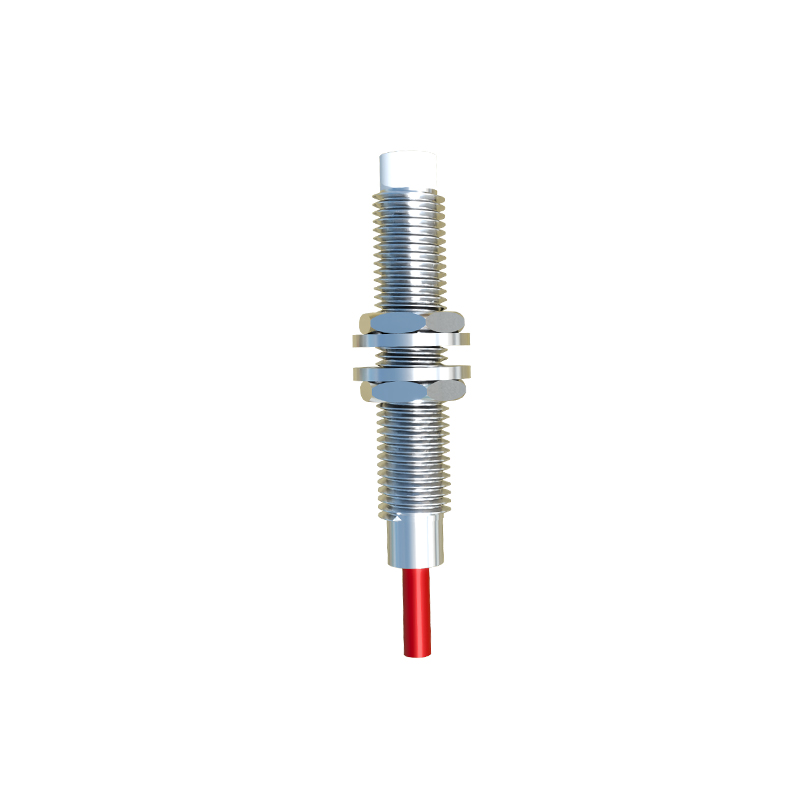
Ultrasonic Proximity Sensors emit high-frequency sound waves and measure the time it takes for an echo to return. They can detect objects of virtually any material, provided the object reflects sound waves adequately. Birds, with their feathers and flesh, do reflect ultrasonic waves. This makes ultrasonic sensors a more plausible candidate. They are sometimes used in applications like monitoring bird activity near wind turbines or in certain agricultural settings. However, their effectiveness can be diminished by environmental factors like wind, temperature gradients, and background noise. Furthermore, their resolution and beam angle may not be ideal for detecting small, fast-moving birds at a distance.
Photoelectric Sensors (Optical) are perhaps the most common and versatile type considered for bird detection. These sensors use a light beam (visible, infrared, or laser) and detect interruptions in that beam. Beam-break photoelectric sensors can effectively detect a bird passing through a defined plane, such as an entry to a building or a specific zone. Reflective and retro-reflective types can also be configured for area monitoring. Advanced systems using infrared arrays or laser curtains are employed in critical areas like airport runways or wildlife preserves to monitor for bird intrusions. The limitation here is that they typically detect movement through a specific line or in a specific spot; they do not provide a broad-area surveillance image unless deployed in a complex, networked array.
Beyond these standard industrial sensors, specialized systems exist explicitly for avian detection and deterrence. These often integrate multiple technologies:
Radar Systems: Used primarily at airports, specialized avian radar can track flocks of birds over large distances.
Thermal Imaging Cameras: Detect birds based on their heat signature, effective day and night.
Audio Analysis Systems: Use microphones to identify specific bird calls or flock noises.
For an engineer specifying a sensor for bird detection, the key considerations are:
1. Detection Objective: Is the goal to count birds, trigger a deterrent (like a sound or light), or simply log an intrusion event?
2. Environment: Is it indoors or outdoors? What are the levels of dust, moisture, light, and acoustic noise?
3. Range and Coverage: What is the required detection distance and the size of the area to be monitored?
4. Target Characteristics: What size of bird? Is it individual birds or flocks?
5. Reliability and False Triggers: Can the system distinguish birds from leaves, insects, or rain?
In conclusion, while standard industrial proximity sensors like inductive types are ineffective, capacitive sensors are niche, and ultrasonic or photoelectric sensors can be configured for bird detection under specific conditions, they are often not the optimal standalone solution. For reliable, large-scale, or critical bird detection, purpose-built systems integrating radar, optics, and acoustics are typically required. The role of the proximity sensor in avian management is often as a component within a larger, more intelligent system designed to address the unique challenges posed by detecting biological entities in dynamic environments. The engineering challenge lies not in making a sensor "see" a bird, but in designing a system that can do so reliably, consistently, and with minimal operational interference.