Proximity sensors and switches are fundamental components in modern industrial automation, providing non-contact detection of objects within a defined sensing range. Their ability to operate without physical contact makes them exceptionally reliable, durable, and suitable for harsh environments where mechanical wear, contamination, or high-speed operation would compromise traditional limit switches. This article delves into the core operating principles of the most common types of proximity sensors, explaining their underlying technology and typical applications.
The most widely used category is the inductive proximity sensor. This sensor generates an electromagnetic field using a coiled oscillator circuit. When a metallic object (the "target") enters this oscillating field, eddy currents are induced on the surface of the metal. These eddy currents draw energy from the sensor's oscillator, causing a reduction in the oscillation amplitude. An internal detection circuit monitors this amplitude change. Once the amplitude drops below a predetermined threshold—indicating the presence of a metal target within the nominal sensing distance—the sensor's output state switches. This output can be a solid-state transistor (PNP or NPN sourcing/sinking) or a relay contact, signaling to a Programmable Logic Controller (PLC) or other control system. Inductive sensors are ideal for detecting ferrous and non-ferrous metals, with sensing ranges typically from a few millimeters to about 60 millimeters. Common applications include part presence verification on conveyor lines, end-of-travel detection on cylinders, and metal counting.
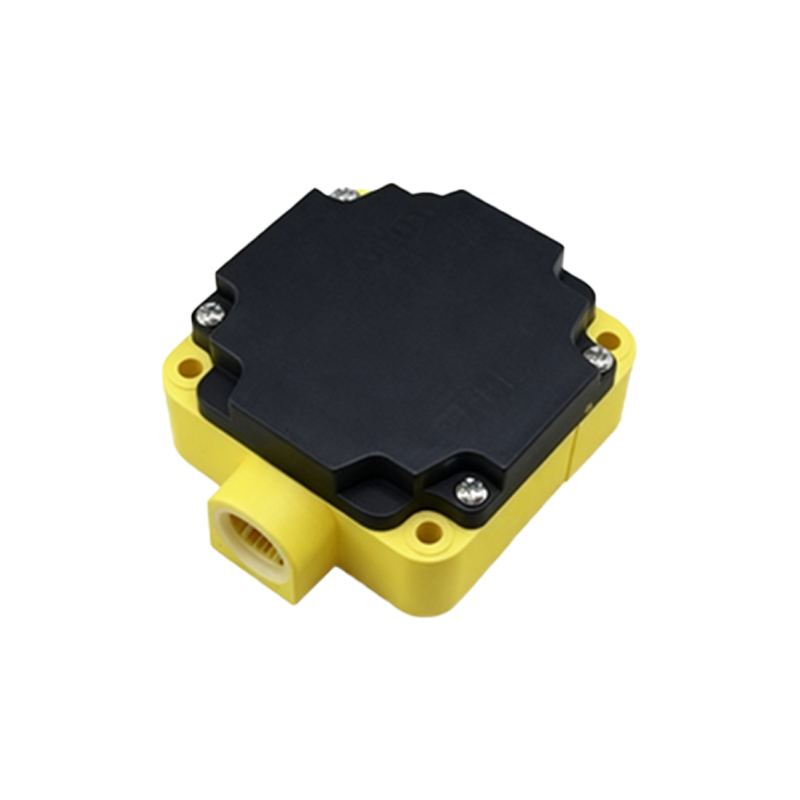
In contrast, capacitive proximity sensors can detect both metallic and non-metallic materials, including liquids, plastics, wood, and granular substances. They operate on the principle of capacitance change. The sensor's active face forms one plate of a capacitor, with the target object acting as the other plate, and the air gap as the dielectric. The sensor's internal oscillator measures the capacitance of this system. When any material with a dielectric constant different from air approaches the sensing face, it alters the capacitance of the system. This change is detected, triggering the output switch. Capacitive sensors often feature a sensitivity adjustment potentiometer to compensate for different materials or to ignore background objects. They are extensively used in level detection for liquids and bulk solids, material handling for non-metallic parts, and presence detection of filled containers.
Another key type is the photoelectric sensor, which uses light to detect objects. It consists of a light emitter (usually an LED producing visible red, infrared, or laser light) and a receiver. There are three primary operational modes. The through-beam (or opposed) mode has separate emitter and receiver units placed opposite each other. An object is detected when it interrupts the light beam. This mode offers the longest sensing range and high reliability. The retro-reflective mode uses a single unit containing both emitter and receiver, along with a reflector. The emitted light bounces off the reflector back to the receiver. An object breaking this reflected beam triggers detection. The diffuse (or proximity) mode also uses a single unit, but it detects light reflected directly off the target object itself. The sensitivity depends on the target's color, reflectivity, and surface texture. Photoelectric sensors are versatile for detecting objects of almost any material at varying distances.
Ultrasonic proximity sensors operate similarly to sonar. They emit high-frequency sound pulses (inaudible to humans) and measure the time for the echo to return from a target. By calculating the time-of-flight, the sensor can determine the presence and often the precise distance to an object. They are excellent for detecting sound-reflective objects regardless of color, transparency, or material, and are commonly used for distance measurement, level sensing in tanks, and detecting clear glass or liquid-filled bottles.
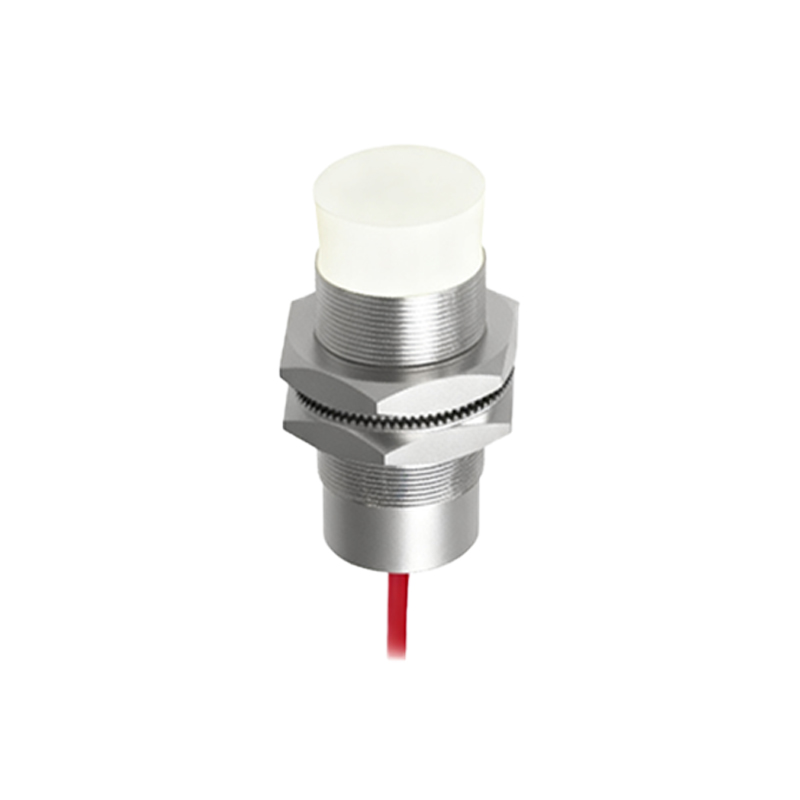
Magnetic proximity switches, or reed switches, are a simpler technology. They consist of two ferromagnetic, sealed reeds inside a glass tube. When a permanent magnet (often mounted on a moving machine part like a pneumatic cylinder piston) approaches, the reeds magnetize and attract each other, making contact and closing the circuit. They are highly reliable for position sensing in cylinders.
Key selection criteria for any proximity sensor include the target material, required sensing distance, environmental conditions (temperature, washdown, chemicals), output type, electrical requirements, and housing style. Understanding these fundamental principles empowers engineers and technicians to select, install, and troubleshoot these critical devices effectively, ensuring robust and efficient automation system performance.