In the realm of industrial automation and machinery control, proximity sensor switches play a pivotal role in enabling non-contact detection of objects. Among the myriad of options available, the ALX1204 stands out as a reliable and widely utilized component. This article delves into the technical specifications, operational principles, typical applications, and key considerations for integrating the ALX1204 proximity sensor switch into various systems.
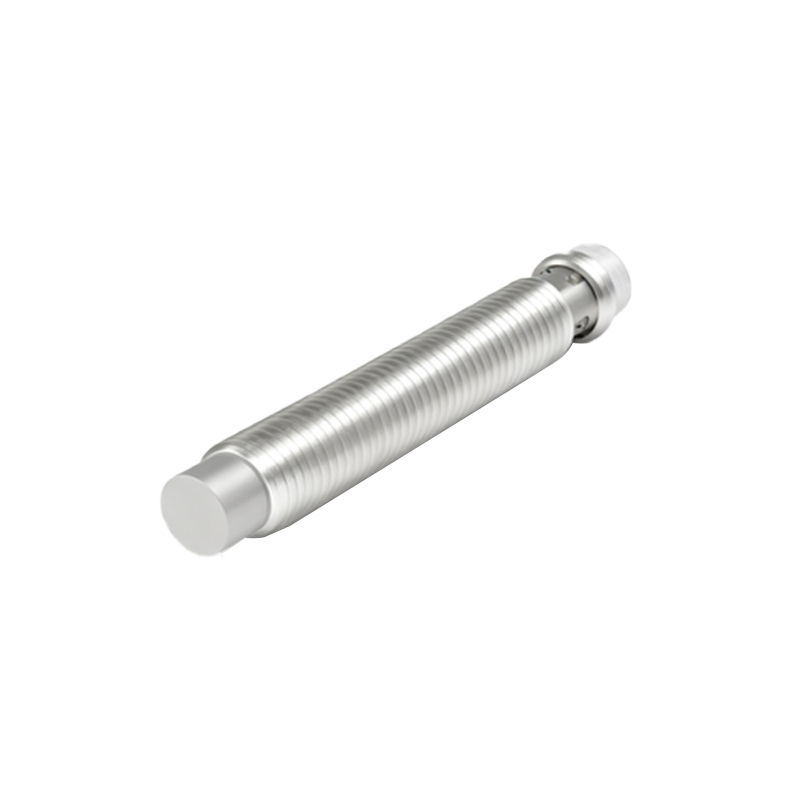
The ALX1204 is an inductive proximity sensor designed to detect metallic objects without physical contact. It operates on the principle of electromagnetic induction. The sensor generates a high-frequency oscillating electromagnetic field from its active face. When a metallic target enters this field, eddy currents are induced in the target, causing a change in the oscillation amplitude. This change is detected by the sensor's internal circuitry, which subsequently triggers a solid-state switch—typically providing a digital output signal. This non-contact nature ensures minimal wear and tear, leading to high reliability and a long operational lifespan, even in demanding industrial environments.
Key technical features of the ALX1204 often include a defined sensing range, which is typically a few millimeters, optimized for precise detection. It commonly operates on a standard DC voltage supply, such as 10-30V DC, making it compatible with most industrial control systems. The output is frequently configured as a PNP (sourcing) or NPN (sinking) transistor, allowing seamless interface with programmable logic controllers (PLCs), counters, or other control devices. Its housing is usually constructed from robust materials like nickel-plated brass or stainless steel, offering excellent resistance to mechanical impacts, oils, and coolants. Many models also feature built-in protection against short-circuits, reverse polarity, and electrical noise, ensuring stable performance.
The applications for the ALX1204 proximity sensor are extensive across factory automation. Common use cases include position sensing, such as detecting the presence or absence of a metal part on a conveyor belt, verifying if a machine component like a cylinder has reached its end position, or counting metallic objects passing a specific point. It is also employed in rotary speed monitoring by detecting gear teeth or keyways, and in safety interlock systems to confirm the closure of metal guards or doors before machine operation. Industries ranging from automotive manufacturing and packaging to material handling and machine tooling frequently rely on sensors like the ALX1204 for critical detection tasks.
Selecting and installing the ALX1204 requires attention to several factors. First, the sensing distance must be appropriate for the application, considering factors like target material (ferrous metals are detected at the nominal range, while non-ferrous metals may reduce it) and size. The installation environment is crucial; while the sensor is robust, excessive dust, metallic chips, or strong electromagnetic interference from nearby motors or welding equipment can affect performance. Proper mounting, often flush or non-flush as specified in the datasheet, ensures the stated sensing characteristics are achieved. Electrical wiring must adhere to the manufacturer's guidelines, correctly connecting the power supply, load, and ground. Regular maintenance, though minimal, involves keeping the sensing face clean from debris and periodically checking for secure mechanical mounting and electrical connections.
In summary, the ALX1204 inductive proximity sensor switch is a fundamental component for reliable, non-contact metal detection in automated systems. Its robust design, consistent performance, and versatility make it a preferred choice for engineers and technicians. By understanding its operating principles, specifications, and correct implementation practices, professionals can effectively leverage this sensor to enhance machine efficiency, safety, and productivity. As technology evolves, such sensors continue to form the backbone of precise and responsive industrial control architectures.