In the realm of industrial automation and process control, liquid level monitoring is a critical parameter across numerous sectors, including chemical processing, water treatment, food and beverage production, and pharmaceutical manufacturing. Traditionally, methods such as float switches, capacitive sensors, ultrasonic sensors, and pressure transducers have been widely employed. However, with the continuous advancement of sensor technology, infrared (IR) proximity sensors have emerged as a potential candidate for certain liquid level control applications. This article delves into the feasibility, working principles, advantages, limitations, and practical considerations of utilizing infrared proximity sensors for liquid level detection and control.
Infrared proximity sensors operate based on the principle of emitting an infrared light beam and detecting the reflection from a target object. Typically, these sensors consist of an IR LED (light-emitting diode) that emits infrared radiation and a photodetector, such as a phototransistor or photodiode, that senses the reflected light. The intensity of the reflected signal is analyzed to determine the presence or absence of an object within a specified sensing range. For liquid level detection, the liquid surface acts as the target. When the sensor is positioned above the liquid, the IR beam is reflected off the liquid surface back to the detector. As the liquid level rises or falls, the reflection characteristics change, allowing the sensor to detect the level.
One of the primary advantages of using IR proximity sensors for liquid level control is their non-contact nature. Since the sensor does not physically touch the liquid, it avoids issues like contamination, corrosion, or mechanical wear, which are common concerns with float-based or conductive probes. This makes IR sensors particularly suitable for applications involving sterile environments, aggressive chemicals, or high-purity liquids where maintaining integrity is paramount. Additionally, IR sensors generally offer fast response times, enabling real-time monitoring and control. They are also relatively immune to factors like foam or vapor above the liquid surface, depending on the specific design and wavelength used, as infrared light can often penetrate thin layers of non-opaque substances.
However, the effectiveness of infrared proximity sensors in liquid level control is heavily dependent on the optical properties of the liquid. For instance, clear, transparent liquids like water or certain solvents reflect infrared light well, providing a strong and consistent signal. In contrast, opaque, dark, or highly turbid liquids (such as crude oil, milk, or muddy water) may absorb or scatter the IR radiation, leading to weak or unreliable reflections. This can result in detection failures or inaccurate readings. Therefore, it is crucial to evaluate the liquid's opacity, color, and surface characteristics before selecting an IR sensor. Some advanced IR sensors utilize modulated signals or specific wavelengths to improve performance in challenging conditions.
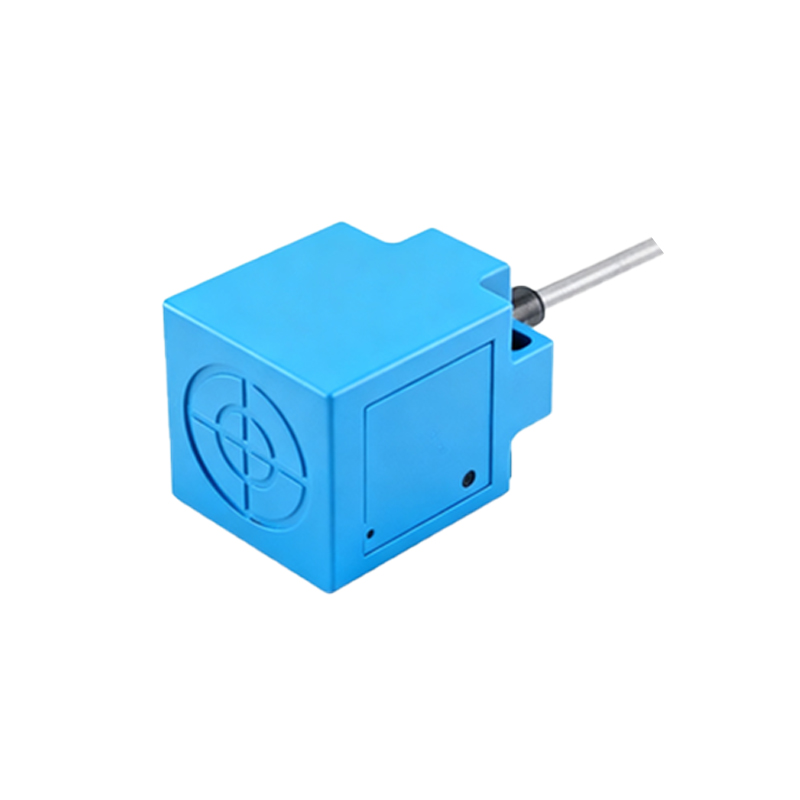
Another consideration is the installation environment. Factors like ambient light, dust, steam, or temperature fluctuations can interfere with IR sensor operation. Sunlight or strong artificial light sources containing infrared components may saturate the photodetector, causing false triggers. To mitigate this, many industrial IR proximity sensors incorporate modulation/demodulation techniques, where the emitted IR beam is pulsed at a specific frequency, and the detector is tuned to recognize only that frequency, effectively filtering out ambient noise. Enclosures or housings with protective windows can also shield the sensor from environmental contaminants.
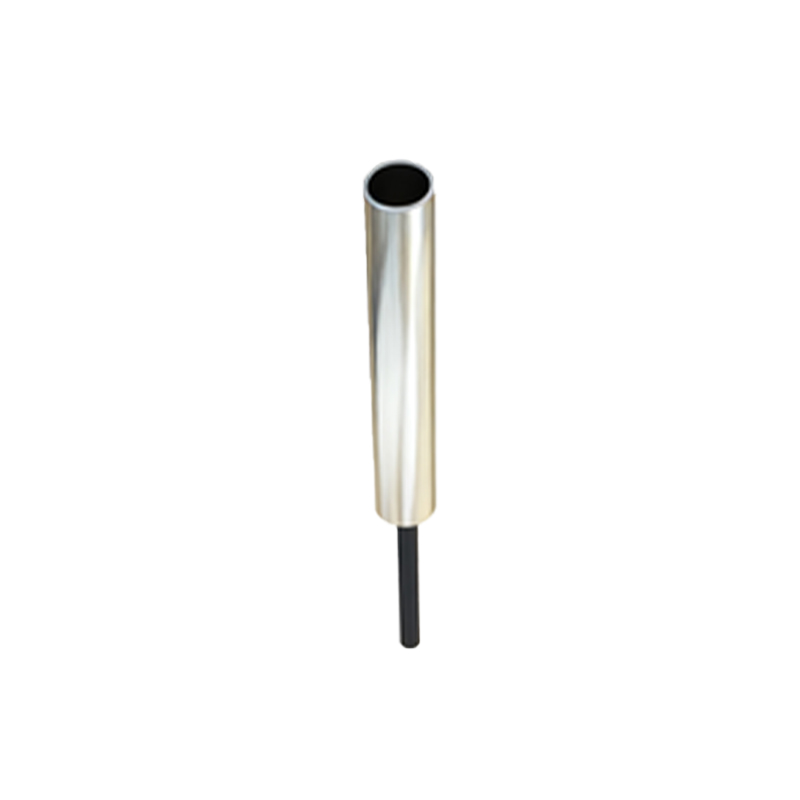
In practical applications, infrared proximity sensors are often used for point-level detection rather than continuous level measurement. For example, they can be installed at high and low points in a tank to trigger alarms or control pumps when the liquid reaches those levels. For continuous monitoring, multiple sensors may be arrayed vertically, or specialized versions with analog outputs (e.g., 4-20 mA or 0-10 V) that correlate to distance/level can be employed. However, for precise continuous measurement, other technologies like ultrasonic or radar sensors might be more appropriate due to their ability to handle a wider range of liquid properties and provide higher accuracy over varying distances.
Calibration and setup are vital for reliable operation. The sensor must be correctly positioned at the desired detection point, and the sensitivity adjusted to account for the specific reflectivity of the liquid surface. Many modern IR sensors feature teach-in functions or programmable settings to simplify this process. Regular maintenance, such as cleaning the lens to prevent buildup from splashes or condensation, ensures long-term accuracy.
In conclusion, infrared proximity sensors can indeed be used for liquid level control in specific scenarios. They offer a non-contact, fast, and durable solution, especially for clear liquids and point-level detection tasks. However, their suitability is conditional on the liquid's optical properties and environmental factors. Engineers must conduct thorough testing under actual operating conditions to validate performance. For complex or critical applications, integrating IR sensors with other sensing technologies in a hybrid system may provide optimal reliability and precision. As sensor technology evolves, enhanced IR designs with improved signal processing and adaptive algorithms are likely to expand their role in liquid level management across industries.