AC proximity switch sensors are essential components in modern industrial automation, offering non-contact detection of metallic objects. These sensors operate on alternating current (AC) power supplies, typically ranging from 20V to 250V, and are widely used in manufacturing, packaging, and material handling systems. Unlike their DC counterparts, AC proximity sensors generate an electromagnetic field that oscillates at the frequency of the applied AC power. When a metallic target enters this field, eddy currents are induced, causing a change in the sensor's oscillation amplitude. This change is detected by the internal circuitry, triggering an output signal to control machinery or alert operators.
One of the key advantages of AC proximity switches is their robustness in harsh environments. They are less susceptible to electrical noise interference compared to DC sensors, making them ideal for applications near heavy machinery or high-voltage equipment. Additionally, AC sensors often feature built-in surge protection and can withstand voltage fluctuations common in industrial settings. Their typical sensing distances vary from 1 mm to 25 mm, depending on the sensor size and target material. For instance, ferrous metals like iron and steel are detected at longer ranges than non-ferrous metals such as aluminum or copper.
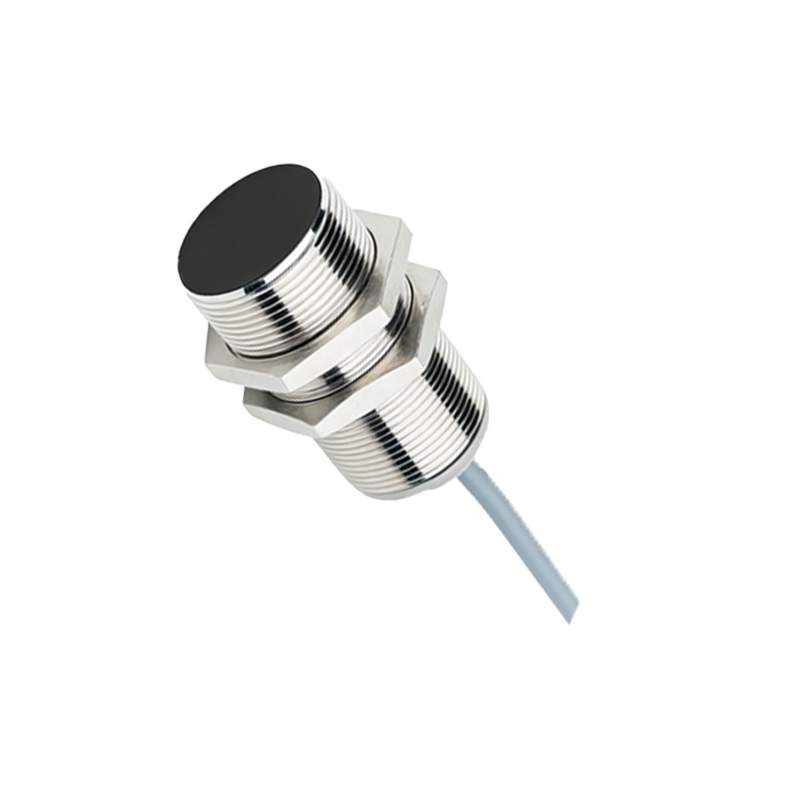
Installation and wiring of AC proximity sensors require attention to detail. They are usually connected in series with the load, and proper grounding is crucial to prevent malfunction. Most AC sensors come with two or three wires: live, neutral, and output. The output is often a solid-state switch, such as a triac, which can handle AC loads directly without additional relays. However, users must ensure compatibility with the load current and voltage ratings to avoid premature failure. Regular maintenance involves checking for physical damage, cleaning the sensing face, and verifying output signals with a multimeter.
In applications like conveyor systems, AC proximity sensors detect the presence of metal parts, ensuring smooth operation and preventing jams. In machine tools, they serve as limit switches to control the movement of slides and spindles. Their fast response time, often in milliseconds, allows for high-speed counting and positioning tasks. Despite their reliability, limitations exist. AC sensors may generate heat during continuous operation and are generally larger than DC models. They also consume more power, which can be a consideration in energy-sensitive installations.
Advancements in technology have led to improved AC proximity sensors with enhanced features. Some models now include diagnostic LEDs, short-circuit protection, and extended temperature ranges from -25°C to 70°C. When selecting an AC proximity sensor, factors such as environmental conditions, target material, required sensing distance, and output type must be evaluated. In summary, AC proximity switch sensors play a vital role in industrial automation by providing durable, noise-immune detection for metallic objects. Their design and functionality continue to evolve, supporting efficient and safe operations across various sectors.