In the realm of precision measurement and digital reality capture, 3D laser scanning sensors stand as a transformative technology. These devices emit laser beams to rapidly and accurately measure the physical world, creating dense point clouds that form a detailed digital representation of objects, structures, and environments. Unlike traditional measurement tools, they capture millions of data points per second, enabling comprehensive documentation with unprecedented speed and detail.
The core technology typically involves either time-of-flight or phase-shift measurement principles. Time-of-flight scanners calculate distance by measuring the round-trip time of a laser pulse, making them ideal for long-range applications like topographic surveys and large-scale industrial plants. Phase-shift scanners, on the other hand, modulate the amplitude of the laser beam and determine distance by the phase difference between the emitted and reflected signals, offering higher accuracy for medium-range tasks such as architectural documentation and complex machinery inspection.
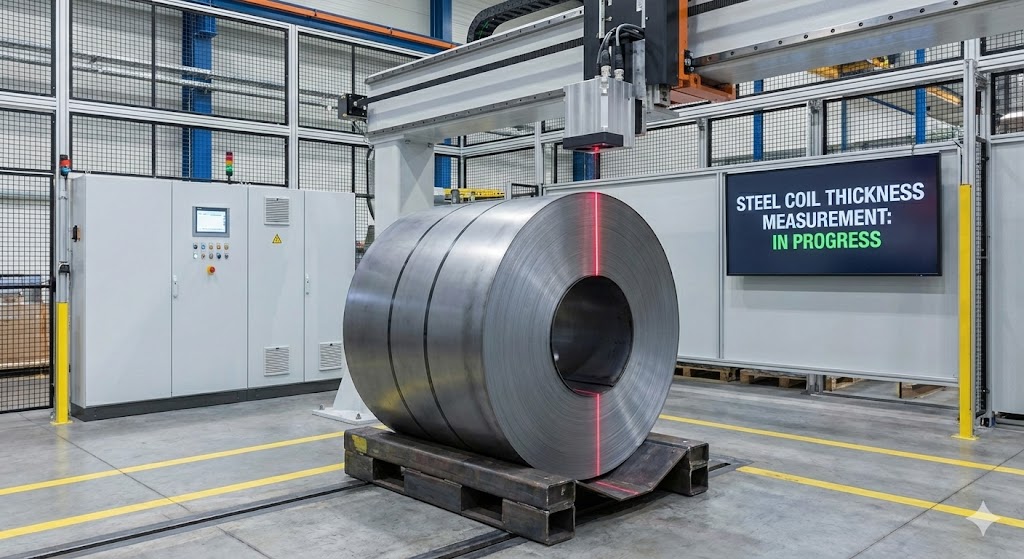
The applications of 3D laser scanning sensors are vast and growing. In construction and architecture, they are used for as-built documentation, clash detection, and renovation planning, significantly reducing errors and rework. The manufacturing sector relies on them for quality control, reverse engineering, and guiding robotic assembly lines, ensuring parts meet exact specifications. Cultural heritage preservation has been revolutionized, allowing for the non-invasive, high-fidelity digital archiving of historical sites and artifacts. Furthermore, they are indispensable in forensic investigations for crime scene reconstruction and in the film industry for creating immersive digital environments.
A key advantage is the seamless integration of the captured data with Building Information Modeling (BIM) software and Computer-Aided Design (CAD) systems. This workflow allows the point cloud data to be converted into intelligent 3D models, facilitating design, analysis, and simulation. The rise of mobile and handheld scanners has further increased accessibility, enabling data capture in confined spaces or on moving platforms.
Despite their power, challenges remain. The initial cost of high-end systems can be significant, and processing the massive datasets requires robust computing hardware and specialized software expertise. Environmental factors like direct sunlight or highly reflective surfaces can also interfere with data quality. However, ongoing advancements in sensor miniaturization, processing algorithms, and automation are steadily lowering barriers and expanding capabilities.

Looking ahead, the convergence of 3D laser scanning with other technologies like artificial intelligence for automatic feature recognition and the Internet of Things for real-time monitoring promises even greater automation and insight. As these sensors become faster, more accurate, and more affordable, their role in shaping industries—from creating digital twins of cities to guiding autonomous vehicles—will only become more central. They are not merely measurement tools but fundamental enablers of the digital transformation across the global economy.