In today's interconnected world of smart devices and industrial automation, proximity sensors play a crucial, often invisible role. From preventing smartphone screen touches during calls to enabling complex robotic assembly lines, their function is foundational. However, a persistent and critical challenge faced by engineers and product developers is insufficient proximity sensor accuracy. This issue manifests not as a single problem but as a cascade of performance failures, impacting user experience, safety, and operational efficiency.
At its core, insufficient accuracy means the sensor cannot reliably and consistently detect an object's presence or distance within its specified range and tolerance. The symptoms are varied and frustrating. A smartphone might fail to turn off its display when held to the ear, leading to accidental cheek-dials or battery drain. In an automotive context, a parking assist system with an inaccurate sensor may provide late warnings or fail to detect a low curb, resulting in costly damage. On a factory floor, a robotic arm relying on a flawed sensor might misalign components, causing production defects or even hazardous collisions.
The root causes of this inaccuracy are multifaceted, often interlinked, and rarely attributable to a single component. Environmental interference is a primary culprit. Ambient light, especially infrared from sunlight or artificial sources, can flood the sensor's receiver, masking the reflected signal it's trying to measure. Dust, moisture, or condensation on the sensor lens can scatter or absorb the emitted signal, distorting readings. Electrical noise from nearby motors, power lines, or other electronic components can introduce signal noise, making the true detection signal difficult to isolate.
Inherent sensor limitations and design choices also contribute significantly. The choice of technology—whether infrared (IR), ultrasonic, capacitive, or laser-based (LiDAR)—carries inherent trade-offs in range, resolution, and susceptibility to environmental factors. A low-cost IR sensor selected for a consumer device will naturally have different performance characteristics than an industrial-grade LiDAR unit. Component tolerances, the quality of the emitter and receiver, and the stability of the power supply all introduce potential error margins. Furthermore, the sensor's firmware and algorithms are critical. A poorly calibrated or simplistic detection algorithm may not effectively filter out noise or compensate for known environmental variables, leading to erratic behavior.
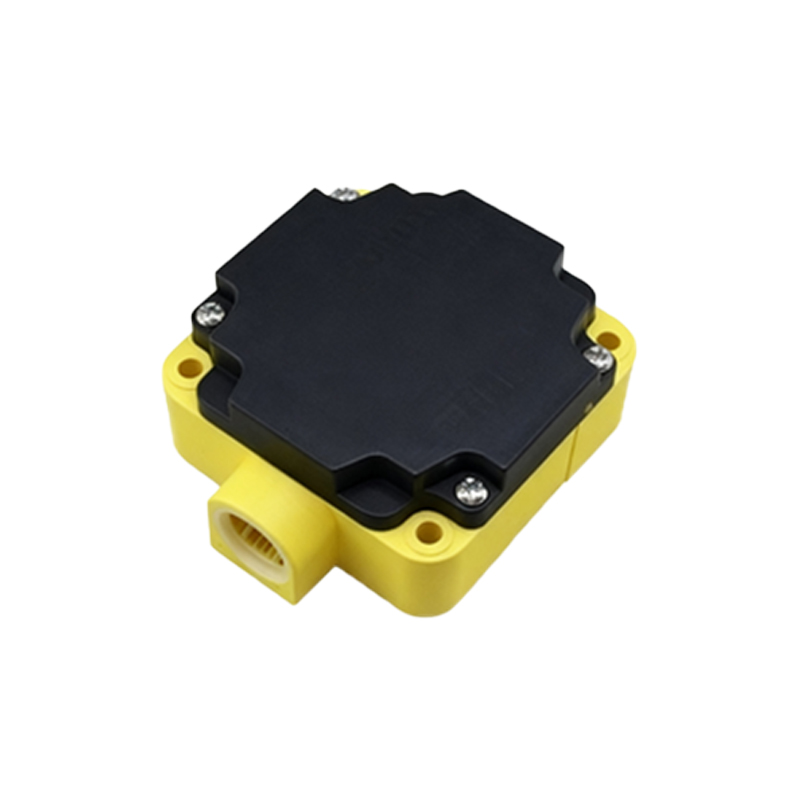
The path to mitigation and solution requires a systematic approach, starting at the design phase. Sensor Selection and Integration: The first step is choosing the right technology for the application. For environments with high ambient light, a modulated IR sensor or ultrasonic sensor might be more robust than a basic IR model. Considering the physical installation is equally important; recessing the sensor or using a specialized lens or filter can protect it from contaminants and direct light interference. Circuit Design and Shielding: Proper printed circuit board (PCB) layout is essential. Sensitive analog signal paths should be shielded and kept away from noisy digital lines or power regulators. Using dedicated voltage regulators for the sensor can prevent noise from other subsystems from affecting its performance. Advanced Signal Processing and Calibration: This is where significant gains in accuracy are often made. Implementing sophisticated algorithms in software can dramatically improve reliability. Techniques like dynamic baseline adjustment, where the sensor continuously recalibrates its "no object" reading to account for environmental drift, are highly effective. Multi-pulse or frequency-modulated sensing methods can help distinguish the true signal from ambient noise. Context-aware calibration, where other device sensors (e.g., an ambient light sensor) provide data to inform the proximity sensor's algorithm, is a powerful tool in mobile devices.
Finally, rigorous testing under real-world conditions is non-negotiable. This goes beyond checking functionality in a lab. Sensors must be tested across the full operational temperature range, under various lighting conditions (direct sun, darkness, fluorescent light), and in the presence of expected contaminants. Only through such comprehensive validation can the true performance boundaries be understood and the design be hardened against the causes of inaccuracy.
Addressing insufficient proximity sensor accuracy is not merely a technical exercise; it is a commitment to product quality and reliability. By understanding the complex interplay of environmental factors, hardware limitations, and software intelligence, developers can transform a unreliable component into a robust and trustworthy interface between the digital and physical worlds. The solution lies not in seeking a perfect sensor, but in engineering a resilient system that anticipates, compensates for, and overcomes the real-world challenges that lead to inaccuracy.