In the world of industrial automation and smart devices, sensors act as the critical interface between the physical and digital worlds. Among the diverse sensor families, contact proximity sensors hold a fundamental and irreplaceable position. Unlike their non-contact counterparts that detect objects from a distance using magnetic fields, ultrasound, or light, contact proximity sensors operate on a simple, physical principle: they require direct mechanical contact or extremely close physical interaction with a target object to trigger a signal.
The core mechanism of a contact proximity sensor is elegantly straightforward. It typically consists of a mechanically actuated switch or a sensing element whose electrical properties change upon physical contact or the application of minimal force. The most classic and ubiquitous example is the limit switch. When an object, such as a machine part on a conveyor, makes contact with the actuator arm or plunger of the switch, it physically moves the internal mechanism. This movement either opens or closes an electrical circuit, sending a clear "on" or "off" signal to a controller like a PLC (Programmable Logic Controller). This binary signal is used to confirm position, count objects, or serve as a safety interlock.
Another common type is the tactile or touch sensor, often based on force-sensitive resistors or micro-switches. These sensors detect the presence of an object through direct touch, measuring the slight pressure or deformation caused by contact. The change in resistance or the state of the switch is then translated into an electrical signal.
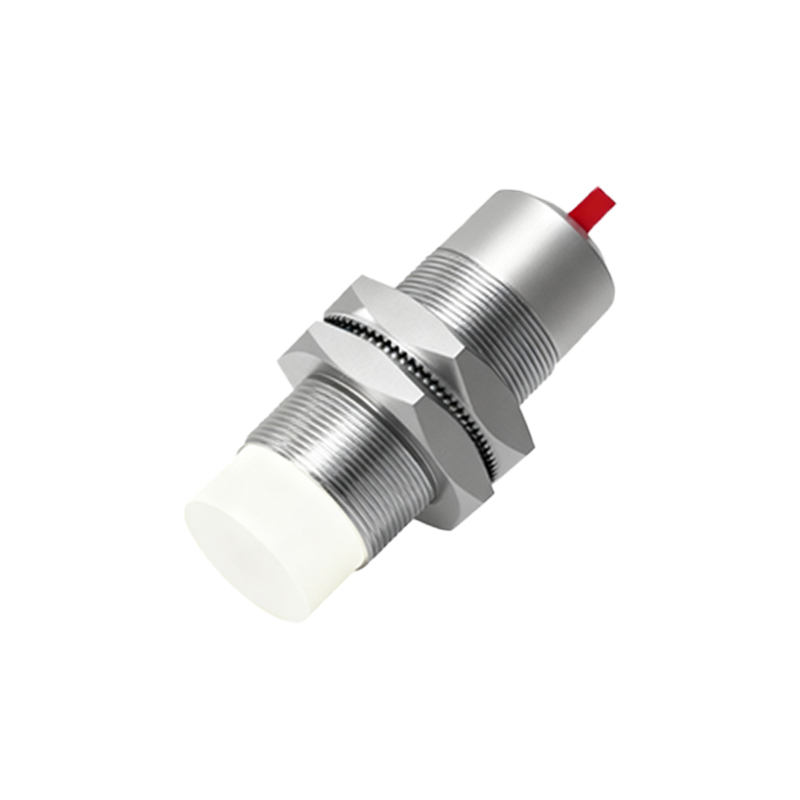
The defining characteristic of these sensors is the necessity for physical interaction. This is both their primary strength and their key limitation. Because they rely on contact, they are generally immune to environmental factors that plague non-contact sensors. They are not fooled by color, transparency, or surface finish of the target object. Dust, oil, ambient light, or acoustic noise typically have no effect on their operation, making them exceptionally robust in harsh industrial environments like machining, stamping, or heavy assembly lines. Their output signal is usually simple, reliable, and requires minimal signal conditioning.
However, the requirement for contact introduces considerations of wear and tear. Mechanical parts like actuator arms and springs are subject to fatigue over millions of cycles. In high-speed applications, the physical impact can lead to reduced lifespan or failure. Furthermore, they cannot detect objects without making contact, which limits their use in applications requiring detection of fragile materials or where maintaining a sterile, non-contact environment is crucial.
The applications for contact proximity sensors are vast and critical. In manufacturing, limit switches are the workhorses for end-of-travel detection on linear actuators, robotic arms, and automated doors. They ensure a machine component does not move beyond its safe mechanical limits. They are used for precise part positioning on indexing tables, verifying that a part is correctly seated in a fixture before a machining operation begins. In packaging lines, they count bottles or boxes as a physical tab on a conveyor trips the switch.
Beyond heavy industry, they are found in everyday consumer products. The humble doorbell is a contact sensor—pressing the button completes a circuit. Many appliance buttons, especially on older models, are simple tactile switches. In the realm of robotics, contact sensors in robotic grippers provide basic feedback to determine if an object has been successfully grasped, preventing damage from excessive force.
While non-contact sensors like inductive, capacitive, or photoelectric models often capture attention for their "high-tech" appeal, the contact proximity sensor remains a pillar of reliability. Its operation is easy to understand, troubleshoot, and implement. For engineers and designers, the choice often comes down to the specific application demands. When the environment is dirty, the target object is metallic and non-delicate, and absolute positional certainty is required from a simple, cost-effective device, the contact proximity sensor is frequently the optimal and most dependable solution. It exemplifies the principle that in engineering, the simplest, most direct solution is often the most effective for the task at hand.