In the high-stakes world of precision manufacturing, particularly within electronics assembly, semiconductor packaging, and medical device fabrication, the demand for micron-level accuracy in fluid dispensing is non-negotiable. At the heart of achieving this relentless precision lies a critical component: the laser displacement sensor. Integrated into automated dispensing machines, these sensors have revolutionized the process, transitioning it from a largely manual, skill-dependent operation to a highly reliable, automated, and data-driven one. This article delves into the operational principles, key benefits, and application nuances of laser displacement sensors within dispensing systems.
Fundamentally, a laser displacement sensor operates on the principle of optical triangulation. The sensor emits a focused beam of laser light onto the target surface—be it a printed circuit board (PCB), a substrate, or a complex 3D component. The reflected light is then captured by a receiving element (like a CCD or CMOS linear array) within the sensor. As the distance to the target changes, the position of the reflected light spot on the receiver shifts proportionally. This shift is processed by the sensor's internal circuitry to calculate the exact distance or displacement with exceptional speed and accuracy, often in the sub-micron range. In a dispensing context, this real-time distance data is fed to the machine's motion controller, enabling dynamic Z-axis adjustment of the dispenser nozzle.
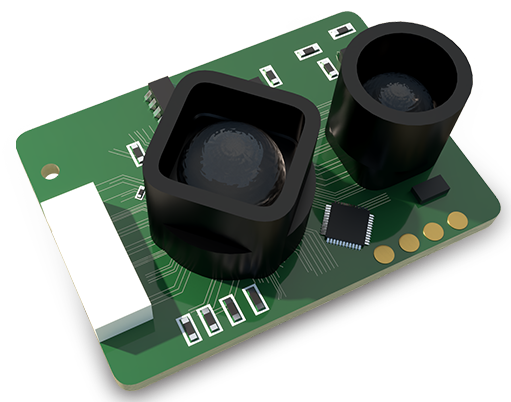
The integration of this technology addresses several perennial challenges in dispensing. First and foremost is compensation for surface topography. No production surface is perfectly flat. PCBs have warpage, components create height variations, and substrates may have inherent unevenness. A traditional fixed-height dispenser would apply too much adhesive on low spots and too little on high spots, leading to inconsistent bead geometry, voids, or spillover. A laser sensor continuously scans the surface ahead of the nozzle, creating a height map. The dispensing head then adjusts its Z-height in real-time, maintaining a constant, optimal standoff distance. This ensures a uniform bead width and deposit volume regardless of surface irregularities, drastically improving yield and reliability.
Secondly, it enables true 3D dispensing on contoured surfaces. Modern products, from automotive sensors to wearable devices, often feature complex, non-planar geometries. Laser displacement sensors allow the dispensing path to be programmed not just in X and Y coordinates, but with synchronized Z-axis movements derived from the sensor's height data. This allows for precise adhesive application along curved paths, over edges, and into grooves, unlocking new design possibilities and assembly techniques that were previously impractical or required costly, bespoke solutions.
Another critical advantage is process control and traceability. Modern laser sensors do more than just provide distance feedback; they are integral to a closed-loop quality assurance system. By monitoring the height data during dispensing, the system can detect anomalies such as missing components (which present a different height profile), severe board warpage exceeding tolerances, or even deviations in the adhesive dot height itself. This data can be logged for each unit produced, creating a digital trace that is invaluable for process optimization, failure analysis, and compliance with stringent industry regulations in fields like aerospace and medical devices.
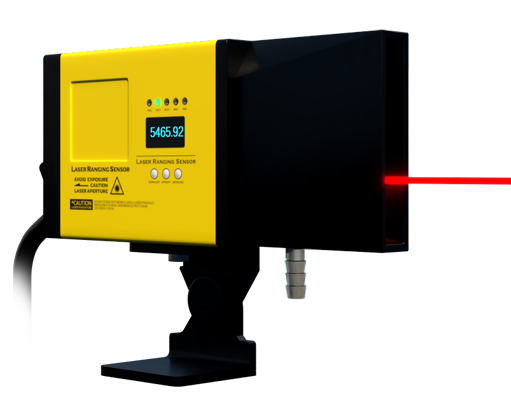
When selecting a laser displacement sensor for a dispensing application, engineers must consider several specifications. Measurement range and resolution are paramount; the range must accommodate the expected maximum height variation, while the resolution determines the fineness of control. Spot size is crucial for targeting small features or dealing with highly reflective or absorbent materials. Sampling rate must be high enough to keep pace with the dispensing machine's traverse speed without aliasing. Furthermore, robustness against environmental factors like ambient light, dust, and vibrations common in factory settings is essential. Sensors with built-in algorithms to handle varying surface colors and reflectivity (through automatic gain control or multi-peak detection) are highly preferred to maintain stable performance on heterogeneous production lines.
In practice, the implementation strategy is key. Sensors are typically mounted on the moving gantry, just ahead of the dispensing nozzle. Calibration against a known master surface is a critical step to ensure absolute accuracy. The sensor data is integrated with the dispensing machine's software, allowing for easy programming of scanning routines, tolerance setting for error alarms, and data output formats compatible with Manufacturing Execution Systems (MES).
Looking ahead, the evolution continues. The convergence of laser displacement sensing with other technologies like machine vision for 2D alignment and AI-powered analytics for predictive maintenance is creating the next generation of "smart" dispensing cells. These systems will not only react to surface variations but also predict and compensate for tool wear, material property changes, and other process drifts.
In conclusion, the laser displacement sensor is far more than an optional accessory for a modern dispensing machine; it is the cornerstone of precision, flexibility, and intelligence in fluid dispensing applications. By providing real-time, non-contact measurement of surface topography, it empowers manufacturers to achieve unprecedented levels of consistency, tackle complex geometries, and embed quality control directly into the production process. As miniaturization and complexity in manufacturing continue to advance, the role of this sophisticated optical technology will only become more central, driving quality and efficiency in industries where every micron counts.