In the field of industrial automation and electrical engineering, proximity sensors play a crucial role in detecting the presence or absence of objects without physical contact. Among the various specifications that define their functionality, the distinction between Normally Open (NO) and Normally Closed (NC) positions is fundamental. This article delves into the technical aspects of NO and NC configurations in proximity sensors, explaining their operational principles, applications, and selection criteria to aid engineers in optimizing system design.
Proximity sensors, including inductive, capacitive, and photoelectric types, operate based on changes in an electrical circuit when a target object enters their sensing range. The terms "Normally Open" and "Normally Closed" refer to the default state of the sensor's output contacts when no target is detected. In a Normally Open (NO) configuration, the output circuit remains open in the absence of a target, meaning no current flows through it. When a target object approaches within the sensor's specified range, the circuit closes, allowing current to pass and signaling the detection event. This setup is commonly used in applications where an action is triggered upon detection, such as starting a conveyor belt or activating a warning light. For instance, in a manufacturing line, an NO proximity sensor might be employed to initiate a process when a part arrives at a specific station, ensuring seamless automation.
Conversely, in a Normally Closed (NC) configuration, the output circuit is closed by default when no target is present, permitting current flow. When a target object enters the sensing zone, the circuit opens, interrupting the current and indicating detection. NC positions are often preferred in safety-critical systems where a failure or break in the circuit must trigger an alarm or shutdown. For example, in machinery guarding applications, an NC proximity sensor can monitor the position of a safety door; if the door opens unexpectedly, the circuit opens, immediately halting the equipment to prevent accidents. This fail-safe characteristic makes NC sensors vital for ensuring operational safety and compliance with industry standards like ISO 13849.
The choice between NO and NC positions depends on several factors, including the specific application requirements, system logic, and safety considerations. In control systems, NO contacts are typically used for "start" or "activate" functions, as they provide a signal only when needed, reducing energy consumption and minimizing wear on components. On the other hand, NC contacts are ideal for "stop" or "interlock" functions, where continuous monitoring is essential to detect faults or unauthorized access. Engineers must also consider the wiring and programming implications; for instance, programmable logic controllers (PLCs) may require different input configurations based on whether NO or NC sensors are deployed. Additionally, some proximity sensors offer dual-channel outputs with both NO and NC options, providing flexibility for complex automation setups.
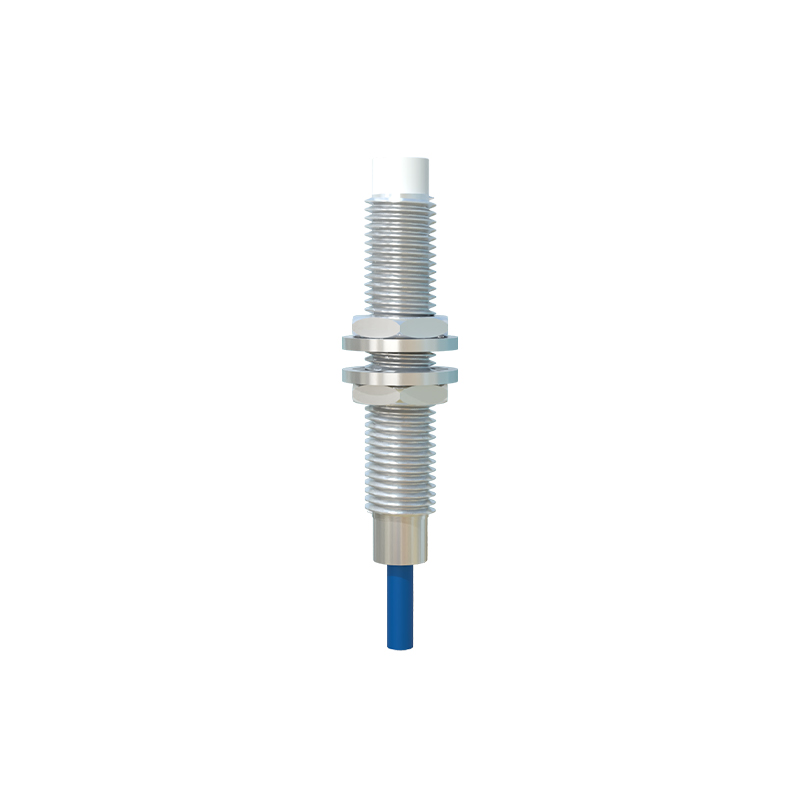
From a technical perspective, the internal switching mechanism of proximity sensors involves solid-state or relay-based outputs. Solid-state sensors, which use transistors for switching, often support both NO and NC modes through configurable settings, allowing for easy adaptation in the field. Relay-based sensors, while slower in response, provide galvanic isolation and can handle higher loads, making them suitable for harsh environments. When selecting a sensor, it is important to review datasheet specifications, such as output type (e.g., PNP or NPN for DC sensors), voltage ratings, and switching capacity, to ensure compatibility with the control system. Misconfiguring NO and NC positions can lead to system malfunctions, so thorough testing during installation is recommended.
In practice, understanding NO and NC positions enhances system reliability and efficiency. For example, in automotive assembly lines, NO proximity sensors might detect components for robotic welding, while NC sensors could monitor emergency stops. Regular maintenance, including checking for sensor alignment and environmental factors like dust or moisture, helps prevent false triggers or failures. As Industry 4.0 advances, smart proximity sensors with diagnostic capabilities are becoming more prevalent, enabling real-time monitoring of NO/NC statuses via industrial networks like IO-Link.
In summary, the distinction between Normally Open and Normally Closed positions in proximity sensors is a key aspect of electrical engineering design. By grasping their operational differences and applications, engineers can make informed decisions to improve automation performance and safety. Whether optimizing a simple machine or a complex industrial network, selecting the appropriate NO or NC configuration ensures robust and reliable sensor integration.