Laser distance measurement sensors, often referred to as laser rangefinders or laser displacement sensors, have become indispensable tools in modern industrial automation and quality control. These devices operate on the principle of emitting a focused laser beam toward a target object and measuring the time it takes for the reflected light to return to the sensor, known as the time-of-flight (ToF) method. Alternatively, some models utilize phase-shift analysis or triangulation for enhanced precision in specific applications. The core advantage lies in their non-contact nature, allowing for accurate measurements without physical interaction, which is crucial for delicate surfaces, high-speed processes, or hazardous environments.
In industrial settings, laser sensors are deployed across a diverse range of tasks. One primary application is in positioning and guidance systems within automated manufacturing lines. For instance, in robotic assembly, these sensors provide real-time feedback on component placement, ensuring precise alignment and reducing errors. They are also integral to warehouse automation, where they measure parcel dimensions for efficient sorting and storage. Another critical use is in quality inspection processes. By scanning surfaces, laser sensors can detect deviations in thickness, warping, or presence of defects with micron-level accuracy, far surpassing manual inspection capabilities.
The selection of an appropriate laser sensor depends on several technical parameters. Measurement range is a fundamental consideration, with options available from a few millimeters to several hundred meters. Resolution, which defines the smallest detectable change in distance, is vital for high-precision tasks. Environmental factors such as ambient light, dust, temperature fluctuations, and target surface properties (like color, reflectivity, or transparency) significantly influence performance. Modern sensors often incorporate advanced features like background suppression, which filters out irrelevant reflections, and integrated data processing for direct output of measurement values via interfaces like IO-Link, Ethernet/IP, or analog signals.
Installation and maintenance require careful planning. Proper mounting ensures the laser beam is perpendicular to the target surface to avoid cosine errors. Regular calibration against known standards is necessary to maintain accuracy over time. While laser sensors are generally robust, their optical components must be kept clean from contaminants like oil or debris. Safety is another paramount aspect; although most industrial sensors use Class 2 or Class 3R lasers, which are considered low-risk for incidental exposure, appropriate safety guidelines and labeling should always be followed to protect operators.
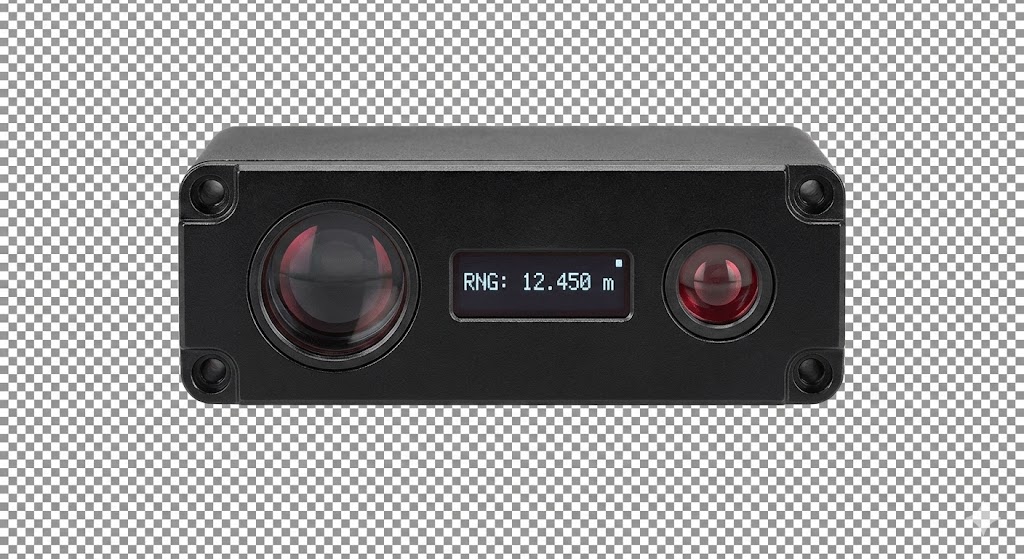
Looking ahead, advancements in laser technology and signal processing continue to push the boundaries. The integration of artificial intelligence enables smarter sensors capable of adaptive learning and anomaly detection. Miniaturization trends allow for embedding sensors into more compact machinery. Furthermore, the rise of Industry 4.0 and the Industrial Internet of Things (IIoT) sees these sensors not just as measurement tools but as data nodes, feeding critical dimensional information into centralized systems for predictive maintenance and process optimization. This evolution underscores the growing role of laser distance measurement in building smarter, more efficient, and highly reliable industrial ecosystems.